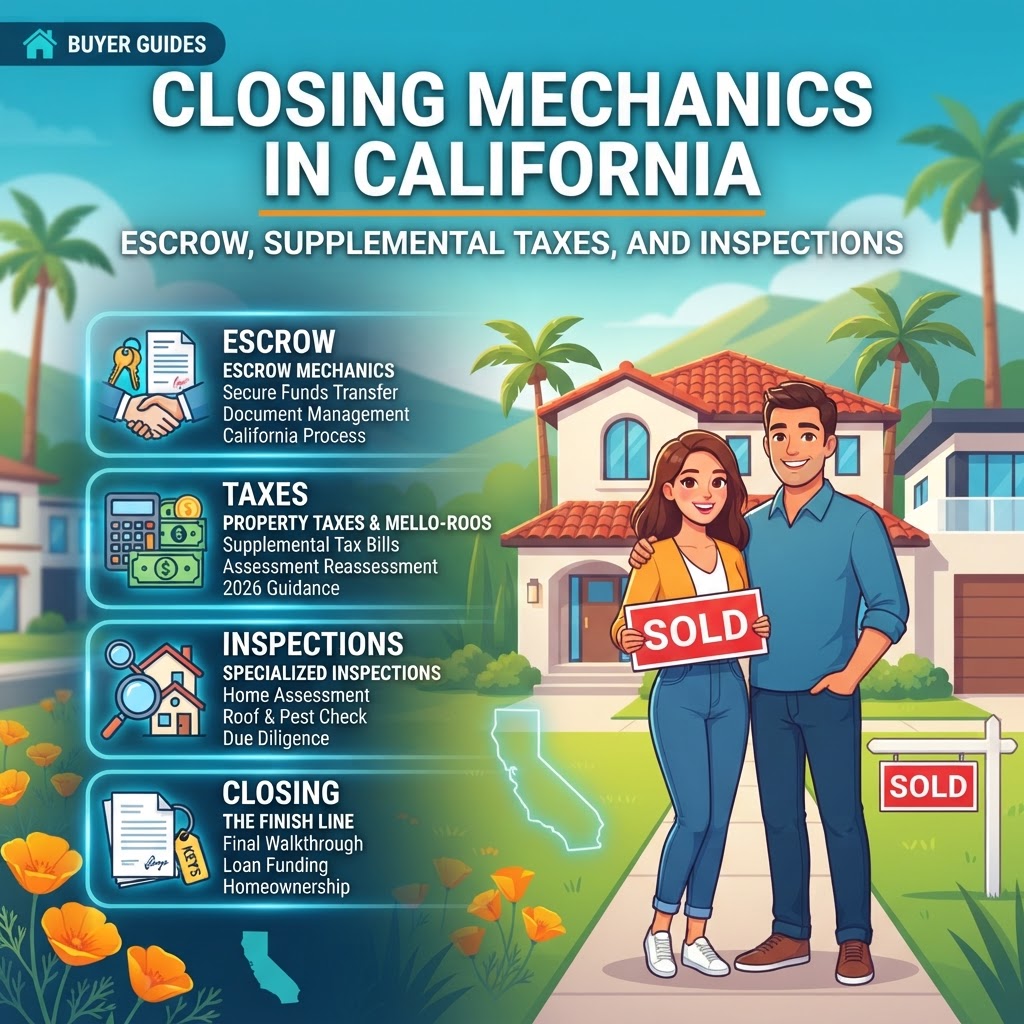
The 2026 Financial Landscape for California Buyers
As we reach the midpoint of 2026, the California real estate market has transitioned from the volatility of the early 2020s into a period of high-floor stability. With the National Association of Realtors (NAR) reporting a statewide median home price holding firm near $840,000, the primary challenge for buyers is no longer just finding inventory, but architecting a financial structure that accounts for California's unique loan limits and tax implications. This guide focuses on the specific financial mechanics required to successfully acquire property in the current high-cost environment.
Mastering the High-Balance Conforming Threshold
For 2026, the Federal Housing Finance Agency (FHFA) has adjusted conforming loan limits to reflect localized appreciation. In many California coastal counties, the 'High-Balance' conforming limit now exceeds $1.15 million. Navigating the gap between a standard conforming loan, a high-balance loan, and a true Jumbo loan is critical. Practical Takeaway: Buyers should prioritize 'High-Balance' products over Jumbo loans when possible, as they typically offer lower down payment requirements—often 10-15%—and more flexible reserve requirements compared to the 20-25% often demanded by private Jumbo lenders in the current credit environment.
The Appraisal Gap: Strategic Cash Allocation
While the market has reached a relative equilibrium, data from the California Association of Realtors (CAR) indicates that approximately 22% of transactions in high-demand pockets like Silicon Valley and coastal Orange County still encounter appraisal shortfalls. In 2026, a practical purchase strategy must include a capital allocation plan for the appraisal gap. Rather than maximizing the down payment to reduce the monthly note, savvy buyers are retaining 3-5% of their liquid capital in a 'Gap Reserve.' This ensures that if the bank's valuation comes in lower than the negotiated price, the deal can proceed without a traumatic renegotiation or a cancellation that results in the loss of earnest money.
Leveraging Proposition 19 for Move-Up Buyers
A frequently overlooked component of the California purchase process is the long-term impact of Proposition 19 on the tax basis. For buyers who are over 55, severely disabled, or victims of wildfires and natural disasters, the ability to transfer their property tax base from a previous California residence to a new one is a massive financial lever. In 2026, this can result in annual tax savings exceeding $10,000 for those moving from legacy homes into higher-valued primary residences. Buyers must ensure they file the 'Claim for Transfer of Base Year Value' with the local county assessor within three years of the purchase to realize these gains. This portability is often the difference between a comfortable retirement and being 'house poor' in the California market.
Checklist for the 2026 California Buyer
- Verify Limits: Check the specific 2026 High-Balance limit for your target county (e.g., Los Angeles vs. Fresno) to avoid the stricter underwriting of Jumbo products.
- Capital Reserves: Maintain a liquid 'Appraisal Gap' fund equal to 3% of the purchase price, separate from your closing costs and down payment.
- Tax Consultation: Confirm with a CPA if your move qualifies for a Proposition 19 tax base transfer before listing your current primary residence.
- Lender Certification: Ensure your lender provides a 'Certified Pre-Approval' which includes a full underwriter review, giving your offer the weight of a cash bid in competitive 2026 micro-climates.