The End of the Insurance 'Blackout'
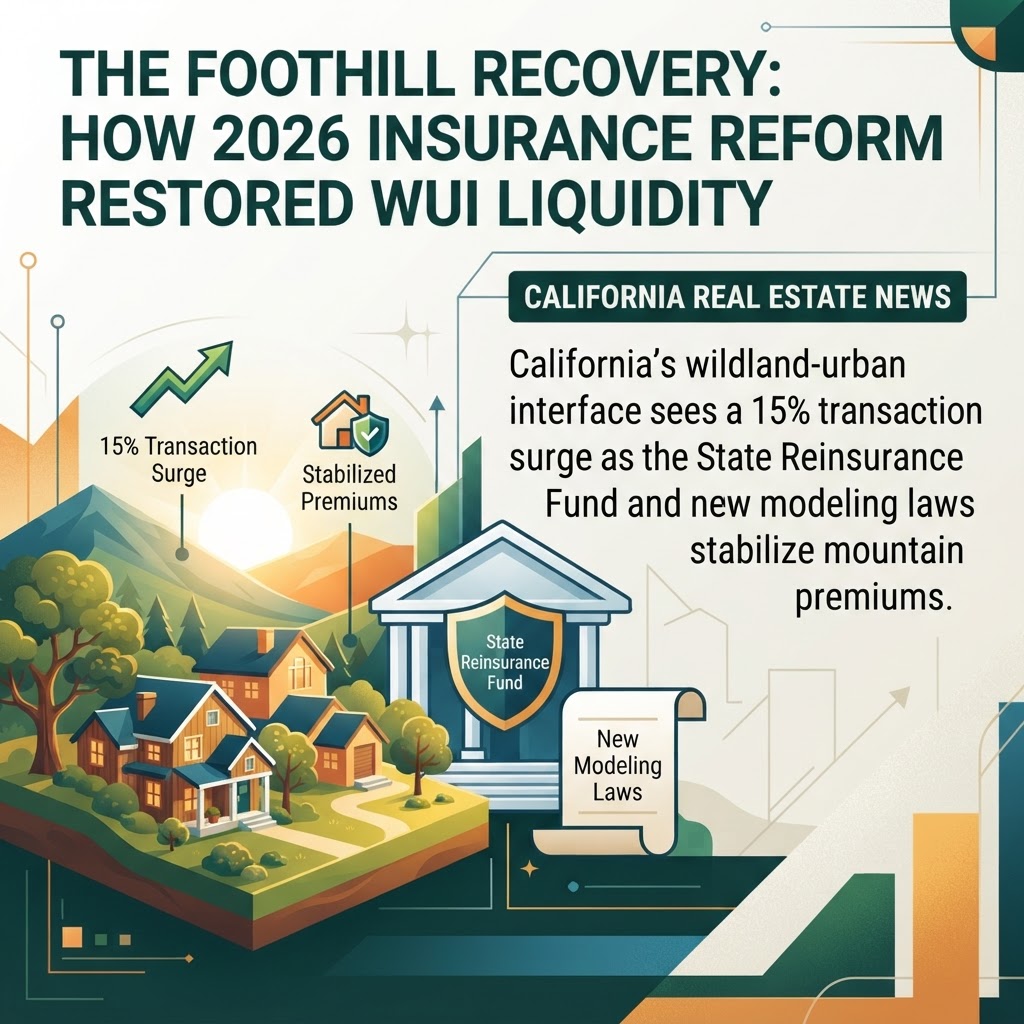
For nearly five years, the California wildland-urban interface (WUI) functioned as a frozen market. High-risk zones in the Sierra Foothills and Santa Cruz Mountains saw inventory sit for hundreds of days as private insurers fled, leaving buyers unable to secure traditional financing. However, July 2026 data from the California Association of Realtors (CAR) reveals a dramatic shift: transaction volume in fire-prone zip codes has surged 14.8% year-over-year. This rebound is directly attributed to the Insurance Stability Act of 2026, which established a state-backed reinsurance layer and mandated that carriers use transparent, community-level risk modeling.
Data Points: A Market Thawing
According to the California Department of Insurance (CDI), July marks the third consecutive month where private carrier 're-entry' outpaced non-renewals. Key metrics include:
- Placer and El Dorado Counties: Closed sales are up 15.2% compared to July 2025, with median prices rising 6% as bidding wars return to the foothills.
- FAIR Plan Migration: Enrollments in the state’s insurer of last resort have dropped by 22% since January, as homeowners migrate back to comprehensive private policies.
- Premium Stabilization: While costs remain higher than 2020 levels, the average annual premium increase has slowed to a predictable 3.1%, down from the 25% spikes seen in 2024.
The Transparency Mandate and 'Hardened' Value
A critical component of the 2026 legislative framework is the 'Home Hardening Disclosure.' Sellers are now required to provide a standardized 'Resilience Score' based on roof material, ember-resistant venting, and defensible space. This has created a bifurcated market: 'Hardened' homes are selling at an 8% premium and closing 20 days faster than non-compliant neighbors. Institutional lenders have also responded, with several major banks introducing 'WUI-Preferred' mortgage rates for properties that exceed the state's Class A fire-resistance standards.
Practical Takeaways for Market Participants
For Buyers
Focus on properties with existing 'Fire-Wise' certifications. These homes not only offer lower insurance premiums but are increasingly the only assets eligible for the new 2026 'Assumable Insurance' riders, which allow a buyer to take over the seller's stabilized policy rate.
For Sellers
Before listing, invest in a professional resilience audit. Data suggests that spending $10,000 on mandated home hardening (such as 1/16th inch mesh venting and non-combustible zone-zero landscaping) yields a 2.5x return on the final sale price in the current insurance-conscious climate.
For Investors
The 'Insurance Gap' is closing. Properties in the Sierra and Inland Empire that were previously unfinanceable are now viable for value-add plays. Investors who specialize in retrofitting older WUI stock to meet 2026 standards are finding significant equity spreads as these homes become eligible for traditional conventional lending once again.