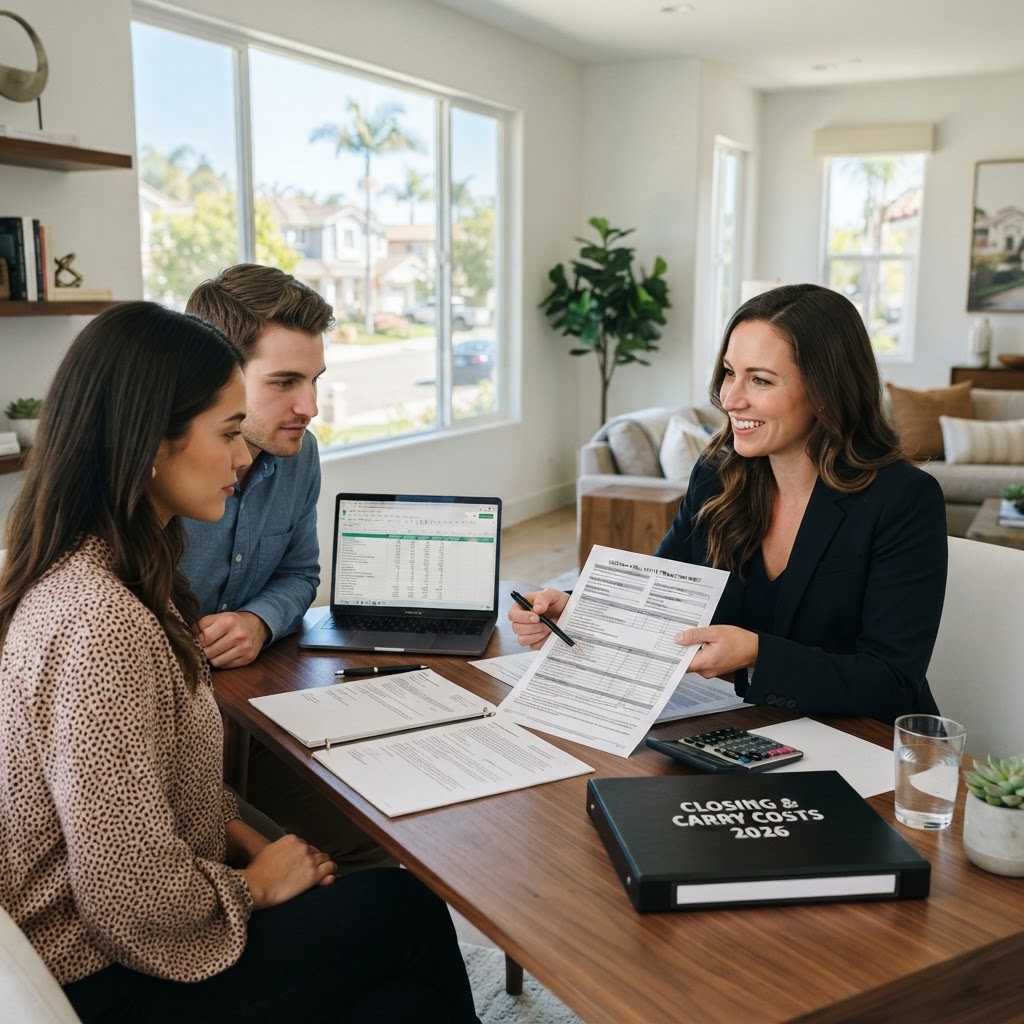
The Rising Cost of the California Close
In the 2026 real estate landscape, California home buyers have largely adapted to stabilized mortgage rates, but many are still blindsided by the "secondary friction" of the transaction. According to the California Association of Realtors (C.A.R.) Q2 2026 data, the statewide median home price has reached $895,000. In this price bracket, closing costs and immediate post-closing obligations are no longer negligible—they are a critical component of a buyer’s liquidity strategy.
The North-South Divide in Customary Fees
A fundamental step for any California buyer is understanding who pays for what, as these customs vary significantly by geography. In Southern California (Los Angeles, Orange, and San Diego counties), it is customary for the buyer and seller to split escrow fees, while the seller typically pays for the owner’s title insurance policy. Conversely, in Northern California (San Francisco, Alameda, and Santa Clara counties), the buyer often pays for both the title insurance and the lion's share of escrow fees.
With title and escrow fees increasing by an average of 12% since 2024 due to enhanced digital security protocols and administrative overhead, a Northern California buyer on a $1.2 million property may need to budget an additional $4,000 to $7,000 compared to their Southern California counterparts for the same services.
Navigating Hyper-Local Transfer Taxes
While the standard California documentary transfer tax is $1.10 per $1,000 of the sale price, many municipalities have implemented "tiered" or "mansion" taxes that apply well below luxury levels in 2026. For example, buyers in the City of Los Angeles must account for Measure ULA, but smaller municipalities in the Bay Area have also adopted graduated transfer taxes to fund local infrastructure.
Before submitting an offer, buyers should request a Preliminary Title Report to identify specific city transfer taxes. In certain high-velocity zones, these taxes can represent an additional 0.5% to 1.5% of the purchase price, often negotiated as a buyer expense in competitive multiple-offer scenarios.
The "Supplemental Surprise": Budgeting for the Tax Reset
Perhaps the most misunderstood aspect of the California purchase is the Supplemental Property Tax Bill. Under Proposition 13, property taxes are capped at 1% of the assessed value (plus local bonds), but that assessment resets upon sale. Buyers are often prepared for the new annual tax rate, but they fail to account for the supplemental bill—the difference between the seller’s old tax rate and the buyer’s new rate for the remainder of the fiscal year.
In a 2026 market where many sellers have held their homes for over a decade, the jump in assessed value can be several hundred thousand dollars. Buyers should maintain a "Tax Reserve" equal to at least 1.25% of the purchase price in a liquid account to cover these bills, which typically arrive 4 to 10 months after closing.
Practical Takeaways for the 2026 Buyer
- Request a "Net Sheet" Early: Ask your lender or escrow officer for a localized closing cost estimate based on the specific city and county where you are bidding, not a generic state average.
- Audit the Title Custom: If you are moving between Northern and Southern California, do not assume the fee-splitting customs are the same; negotiate these terms explicitly in the California Residential Purchase Agreement (RPA).
- Identify the "Mansion Tax" Thresholds: Be aware of local price triggers (like the $5 million mark in LA or tiered rates in San Jose) that can exponentially increase transfer costs.
- Calculate the Supplemental Gap: Use the current fiscal year’s tax rate to estimate your supplemental bill immediately after your offer is accepted to avoid a liquidity crisis in your first year of ownership.