The Mid-2026 Urban Resurgence: Decoding the Adaptive Reuse Credit
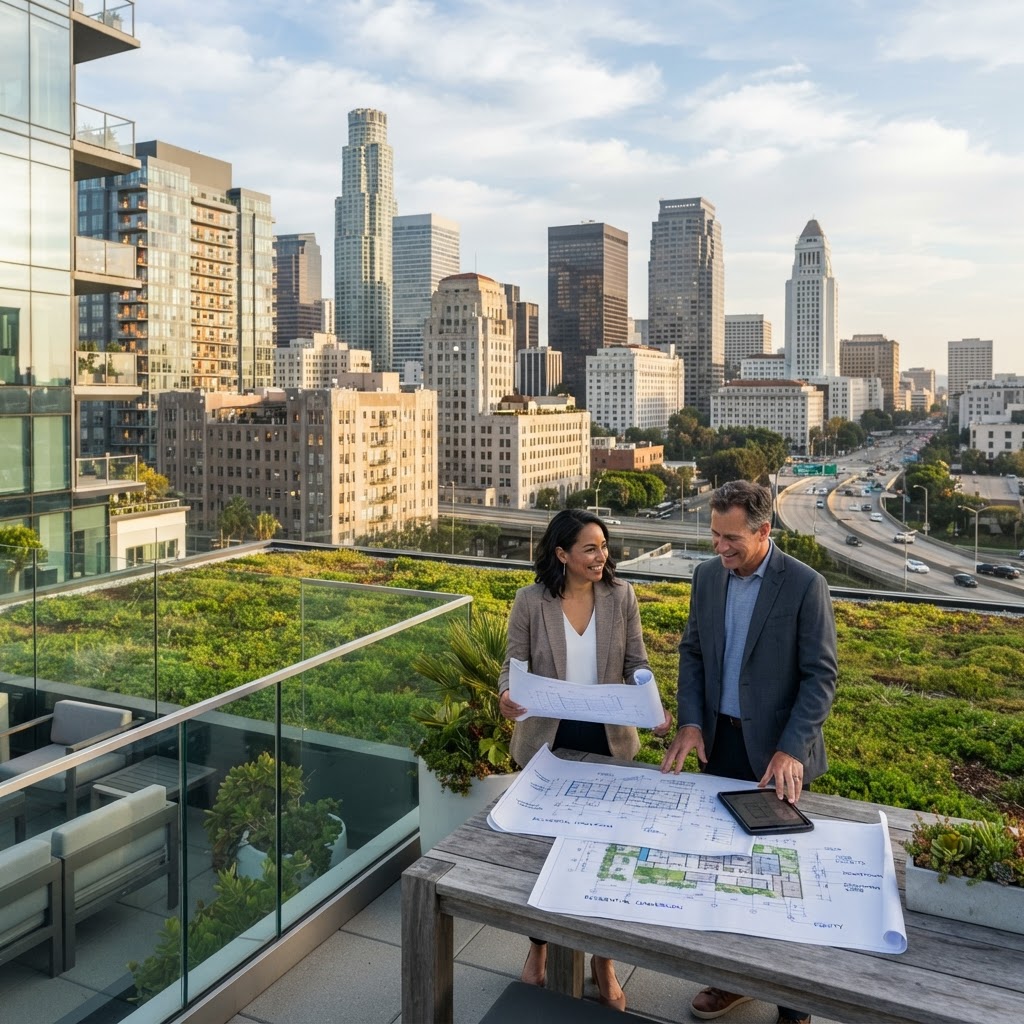
As of Monday, July 13, 2026, the skylines of San Francisco and Los Angeles are no longer just symbols of post-pandemic office vacancy. The full activation of the California Adaptive Reuse Credit (ARC) this quarter has fundamentally altered the math of urban redevelopment. For the first time in a decade, the cost-per-square-foot to convert 'Class B' office space into residential 'missing middle' housing is outperforming the cost of ground-up suburban development in the state's most expensive markets.
The $4.2 Billion Financing Bridge
According to a July report from CBRE Research, California’s commercial vacancy rate peaked in early 2026 at 31.2% in San Francisco and 26.8% in downtown Los Angeles. Previous attempts at conversions were stymied by prohibitive seismic retrofitting costs and plumbing complexities. However, the ARC program, funded through the 2025 Budget Surplus Allocation, provides a direct 22% tax credit for structural decarbonization and residential conversion costs in buildings over 20 years old.
Data from the California Department of Housing and Community Development (HCD) shows that as of today, July 13, over 14.5 million square feet of office space has been successfully permitted for residential transition since January. This represents a projected 18,000 new housing units slated to hit the market by 2028, specifically targeting the workforce demographic that had been priced out of coastal city centers.
Why Investors are Pivoting
Institutional capital that previously exited the state during the 2023-2024 interest rate hikes is returning with a specific focus on these 'Conversion Corridors.' The appeal lies in the existing infrastructure: high-speed fiber, established transit connections, and now, significantly lowered entry costs via state subsidies. 'We are seeing a 150-basis-point yield premium on these converted assets compared to traditional suburban multi-family builds,' says Marcus Thorne, a lead analyst at the Real Estate Research Council of Southern California. 'The speed-to-market is the primary driver; converting an existing shell is 30% faster than new construction under current environmental review timelines.'
Practical Takeaways for the 2026 Market
- For Developers: Prioritize buildings constructed between 1960 and 1985. These 'Legacy Steel' structures are yielding the highest ARC approval rates due to their ease of floor-plate reconfiguration compared to older masonry or newer glass-curtain-wall designs.
- For Residential Buyers: Keep an eye on the 'Downtown-Adjacent' residential zones. As massive office towers convert to high-density housing, local service economies—grocery, retail, and healthcare—are seeing a secondary investment wave, likely leading to 5-7% higher appreciation in surrounding existing condos over the next 24 months.
- For Institutional Investors: The window for the 'Early Adopter Bonus'—an additional 3% credit for projects started before December 2026—is closing. Aggregating distressed commercial assets in mid-market cities like Sacramento and San Jose is the priority for the Q3-Q4 cycle.
The Bottom Line
The 2026 real estate story is one of internal transformation rather than outward expansion. By incentivizing the repurposing of existing vertical footprints, California is attempting to solve its housing deficit without the sprawl that has defined its growth for a century. As we move into the second half of the year, the success of these urban hubs will be the primary bellwether for the state's economic resilience in a high-rate environment.