The New Land Calculus: Density as the Primary Value Driver
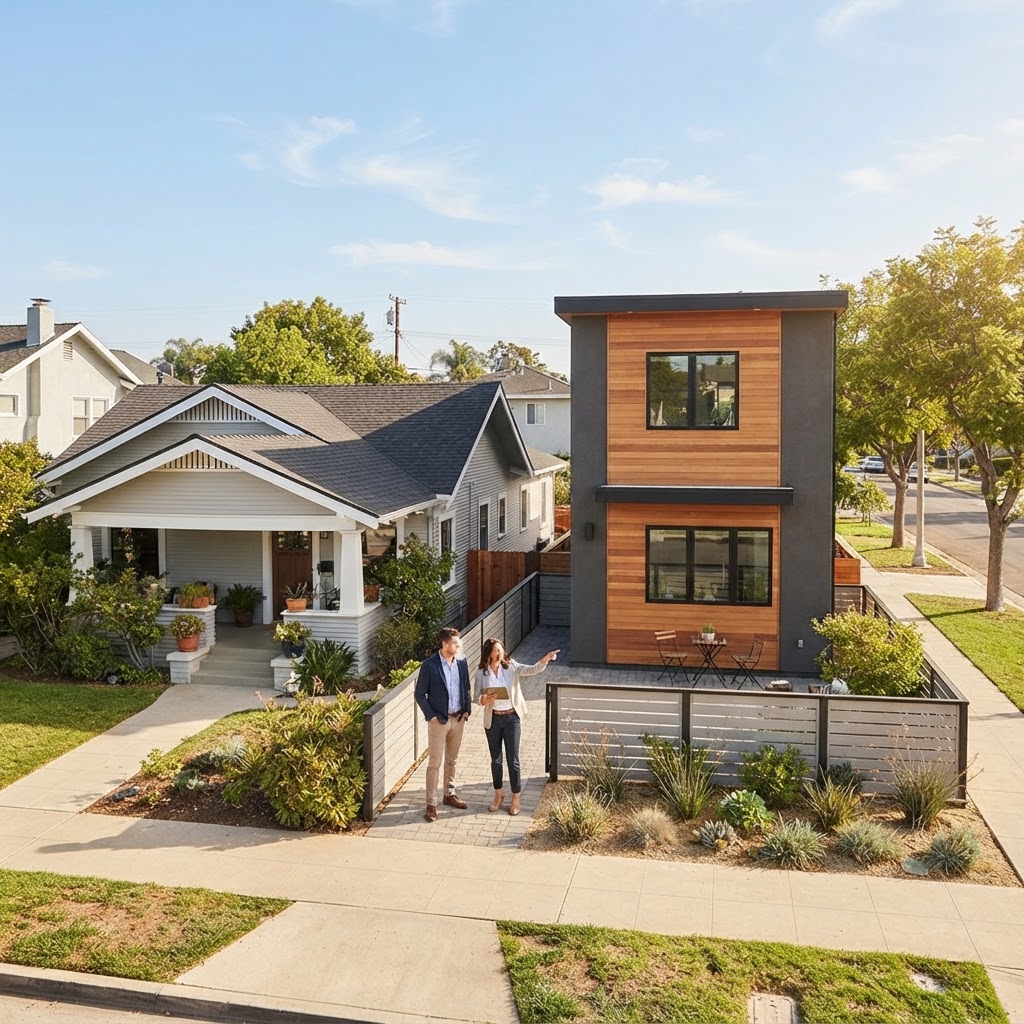
As we navigate the California real estate market in July 2026, a fundamental shift has occurred in how buyers evaluate residential property. While previous years focused on finished square footage, the current high-interest rate environment and inventory shortages have shifted the focus toward land utility. Specifically, savvy buyers are now targeting properties that qualify for Senate Bill 9 (SB 9) lot splits and urban infill, effectively turning a single-family purchase into a multi-unit development play.
Understanding the 2026 SB 9 Landscape
Since its inception, SB 9 has been refined by subsequent legislation and local municipal compliance. In 2026, the California Department of Housing and Community Development (HCD) reports that over 65% of coastal municipalities have finally adopted 'objective design standards,' removing the discretionary hurdles that previously stalled lot-split applications. This transparency allows buyers to calculate their Return on Investment (ROI) with far greater precision during the escrow period.
Identifying High-Density Potential
When scouting for property in 2026, the value is no longer just in the 'bones' of the house, but in the dimensions and zoning of the dirt. Buyers should look for three specific criteria:
- The 1,200 Square Foot Rule: SB 9 allows for the creation of two lots of at least 1,200 square feet each. Look for parcels exceeding 5,000 square feet with appropriate street frontage to ensure both resulting lots remain marketable.
- Exclusion Zone Verification: Data from the 2025 Revised Fire Hazard Severity Zone maps is critical. Properties in Very High Fire Hazard Severity Zones (VHFHSZ) are often exempt from SB 9 density bonuses unless they meet specific mitigation standards.
- The 'Urbanized Area' Requirement: Ensure the property is within a US Census-designated urban area. As of 2026, many 'fringe' suburbs have been reclassified, opening up new inventory for density plays that were ineligible two years ago.
The Practical Due Diligence Checklist
Traditional inspections are no longer enough for the 2026 California buyer. To capture value through density, your due diligence must include:
- Sewer Capacity Study: Many older California neighborhoods have 'aging infrastructure' limits. Before closing, verify with the local public works department that the existing sewer main can handle two to four additional fixtures.
- Easement Analysis: A standard title report may show utility easements that bisect a backyard, rendering a lot split impossible. Request a 'color-coded' easement map during your contingency period.
- Owner-Occupancy Affidavits: Remember that SB 9 requires the applicant to sign an affidavit stating they intend to occupy one of the units as their principal residence for at least three years—a crucial factor for investors to consider.
Strategic Takeaways for Buyers
The 2026 market rewards those who buy for what a property can become rather than what it currently is. According to recent MLS data, properties with 'split-potential' are trading at a 12-18% premium over standard single-family homes, but the resulting equity from a successful subdivision can often exceed 40% of the initial purchase price. For the 2026 buyer, the goal is to secure a primary residence that functions as a self-contained land bank, utilizing the state's pro-density mandates to offset the high cost of California entry.