Navigating the Second-Ring Pivot in the 2026 Market
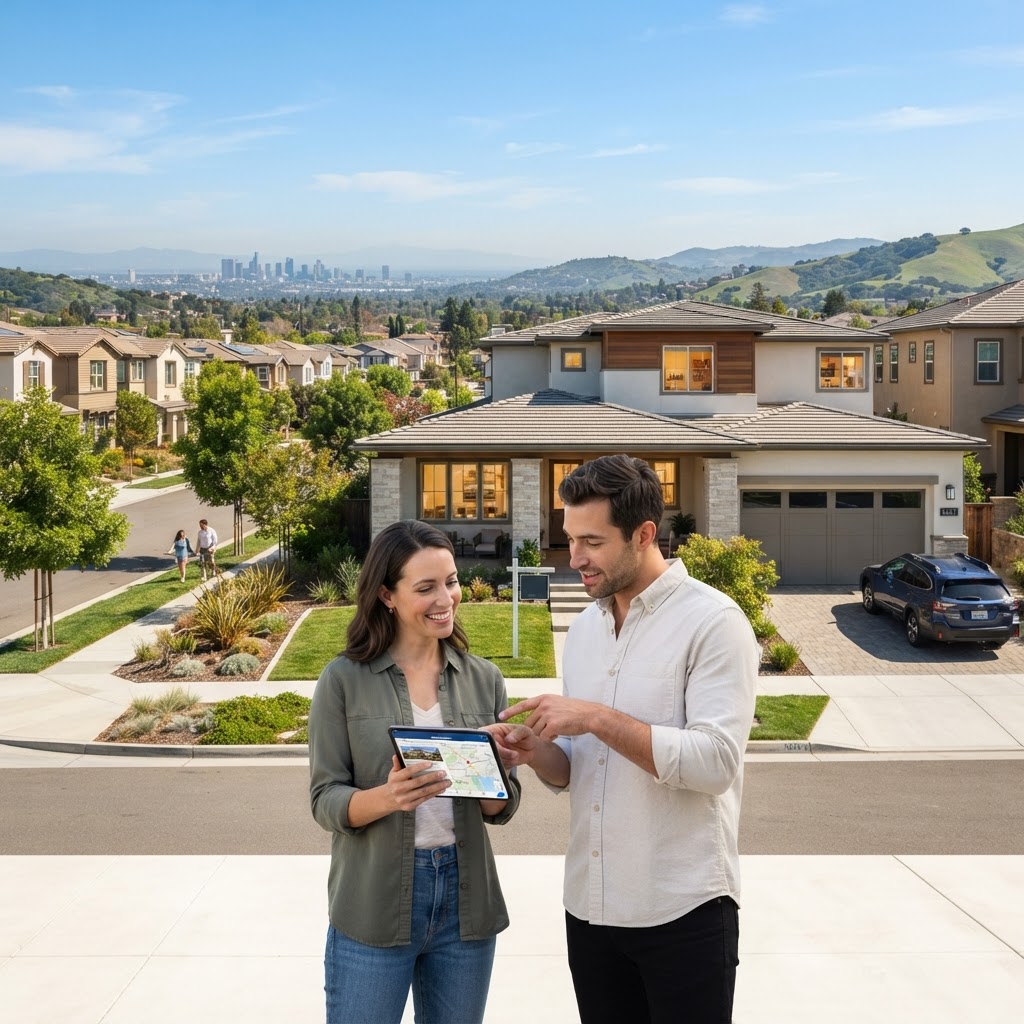
As of July 2026, the California real estate landscape has reached a new equilibrium. Following years of inventory volatility, the California Association of Realtors (C.A.R.) reports a statewide median home price of approximately $918,000. However, this figure masks a significant geographic divergence. While coastal hubs like San Francisco and Santa Monica have seen price appreciation slow to a modest 2.1% annually, 'Second-Ring' suburbs—areas located 45 to 90 minutes from major employment centers—are experiencing robust demand driven by the permanent integration of hybrid work models.
Identifying the 2026 Growth Corridors
The 2026 buyer is no longer choosing between a short commute and an affordable home; they are leveraging 'Geographic Arbitrage.' According to recent U.S. Census Bureau migration patterns, counties such as Placer, Riverside, and San Joaquin are seeing the highest net inflows of domestic residents. Key 'Second-Ring' targets include:
- The Greater Sacramento Infill: Cities like Roseville and Rocklin, which offer modernized infrastructure and high-performing schools at a 35% discount compared to the Bay Area.
- The Inland Empire North: Areas like Fontana and Ontario, benefiting from the 2025-2026 expansion of regional rail links and logistics-based employment growth.
- Central Coast Satellites: Communities such as Paso Robles and Orcutt, which have become primary residences for remote professionals fleeing the Santa Barbara and SLO price ceilings.
The 2026 Total Cost of Ownership (TCO) Audit
In the current market, the mortgage payment is only one component of the affordability equation. Buyers must conduct a rigorous TCO audit to account for 2026-specific variables:
1. Title 24 and Energy Efficiency
California’s Title 24 Building Energy Efficiency Standards were significantly updated in 2025. Homes built or substantially remodeled in 2026 now require expanded battery storage capacity alongside solar mandates. For buyers of older stock, the 'Energy Arbitrage'—the cost of retrofitting versus the long-term utility savings—is a primary negotiation point. Data shows all-electric homes in the Central Valley now command a 4% premium due to lower monthly operational costs.
2. The Commute-to-Equity Ratio
With gas prices and EV charging costs stabilized but high, buyers are utilizing a 'Commute-to-Equity' calculation. In 2026, for every 15 minutes added to a one-way commute, buyers are seeking a minimum $75,000 reduction in purchase price to justify the time and transportation expenditure.
The Evolution of Buyer Representation
The post-settlement era of 2026 has fully normalized the use of transparent Buyer Broker Agreements (BBAs). Buyers should expect to negotiate their agent’s compensation directly. Practical Tip: In a competitive Second-Ring market, a 'Success Fee' structure is becoming common, where the agent’s compensation is tied to specific performance metrics, such as securing a price below the appraised value or successfully negotiating seller-funded rate buydowns.
Strategic Takeaways for the July 2026 Buyer
- Lock in the 'Inland Alpha': Look for properties in zip codes where infrastructure projects (like the 2026 Caltrans widening projects or new regional tech hubs) are within 18 months of completion.
- Prioritize High-Bandwidth Zones: In the hybrid era, fiber-optic availability is a non-negotiable utility. Verify provider maps before entering escrow, as 'dark zones' in rural-suburban fringes significantly impact resale value.
- Leverage Seasonal Inventory: Historically, the July 4th holiday marks a brief mid-summer lull in California listing activity. Use this window to target 'stale' listings (30+ days on market) that missed the spring rush.
The 2026 California market rewards the mobile and the informed. By shifting focus from the high-density coast to the strategically positioned second ring, buyers can capture both immediate lifestyle quality and long-term equity growth.