The Transparency Turning Point
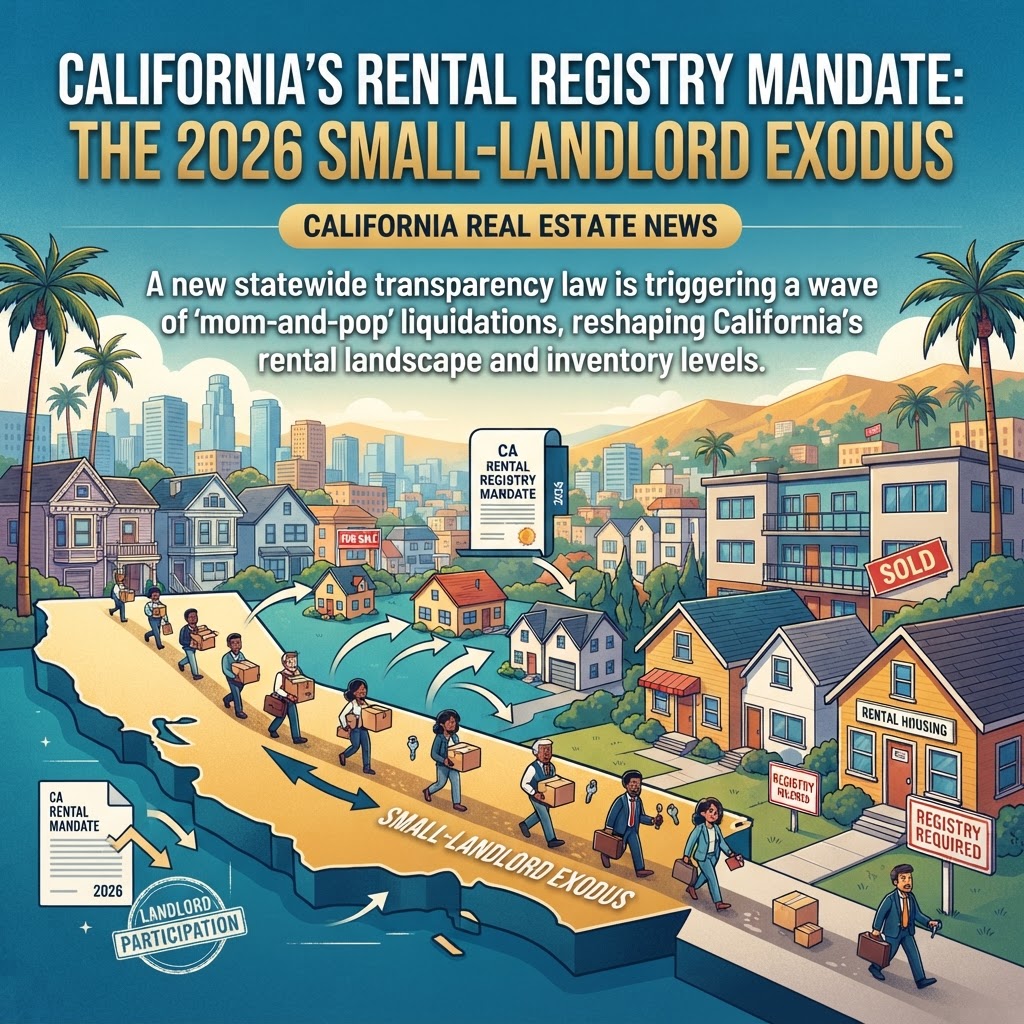
As of July 2, 2026, the California rental market is grappling with the full implementation of the Residential Transparency and Accountability Act (RTAA). This landmark legislation, which requires every landlord to register units in a centralized state database, is doing more than just collecting data—it is triggering a significant structural shift in property ownership across the Golden State.
Data-Driven Market Displacement
According to the California Association of Realtors (CAR), there has been a 14.5% year-over-year increase in the listing of single-family rental homes (SFRs) since the registry's compliance deadline passed last quarter. While the law was intended to curb illegal evictions and track rent spikes, the administrative burden and disclosure requirements have prompted a 'liquidation event' among non-professional landlords.
A recent HCD (Department of Housing and Community Development) report suggests that nearly 22% of small-scale landlords—those owning four units or fewer—have opted to exit the market rather than navigate the new compliance protocols. This has injected a much-needed, albeit localized, surge of inventory into the entry-level home-buying market, particularly in the Inland Empire and Central Valley.
The Professionalization of the Rental Sector
While small landlords exit, institutional and mid-tier 'syndicate' investors are filling the vacuum. These entities, equipped with robust legal and compliance departments, are acquiring the vacated assets at a rapid pace. This shift is leading to what economists call the 'professionalization' of California housing. While this may lead to more standardized property maintenance and clearer legal recourse for tenants, it also risks a 'hard floor' on rental pricing that small landlords used to negotiate more flexibly.
Practical Takeaways for 2026 Stakeholders
- For Prospective Homebuyers: Monitor 'Non-Owner Occupied' listings in the MLS. Many former rentals are hitting the market with deferred maintenance, providing 'sweat equity' opportunities for first-time buyers who were previously priced out.
- For Small Landlords: Consider 1031 exchanges into REITs or 'Fractional Ownership' models if the administrative costs of the RTAA are eroding your Net Operating Income (NOI).
- For Renters: Be prepared for more rigid lease enforcement. Professional management firms are less likely to accept informal payment arrangements but are more likely to comply with state-mandated habitability standards.
Looking Ahead
The consolidation of the rental market is expected to continue through the end of 2026. As the 'mom-and-pop' era of California real estate wanes, the focus shifts to how these new institutional clusters will impact neighborhood stability and long-term price appreciation.