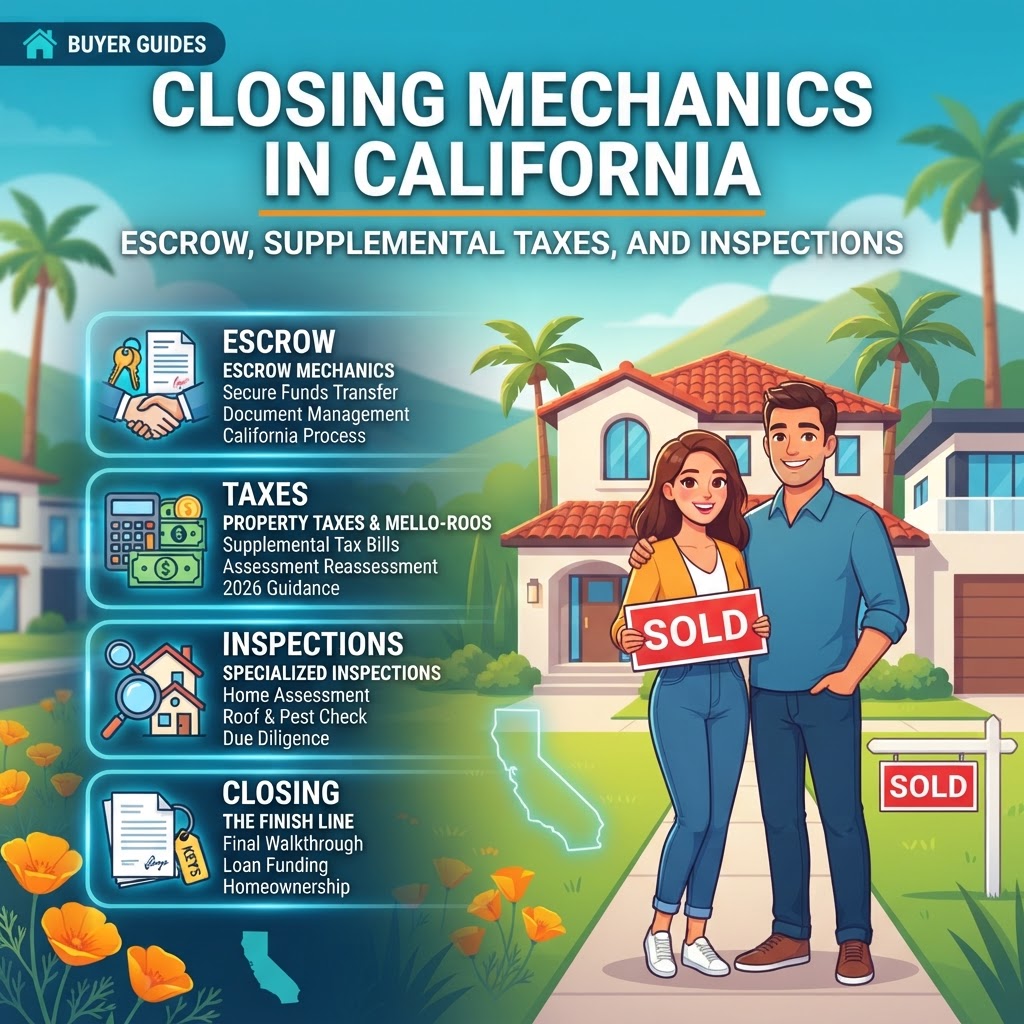
The 2026 California Acquisition Landscape
As of July 2026, the California real estate market has transitioned from the erratic fluctuations of the early 2020s into a period of 'performance-based' stability. According to data from the California Association of Realtors (CAR), the statewide median home price has stabilized at approximately $842,000, while inventory levels have seen a modest 12% increase year-over-year. However, the complexity of the transaction has grown. Today’s buyer must navigate not just high valuations, but a sophisticated regulatory environment regarding representation and taxation.
The New Standard: Buyer Representation Agreements
By 2026, the fallout from national commission settlements has fully integrated into the California Purchase Agreement (RPA) workflow. It is now mandatory for buyers to execute a Buyer Representation and Broker Compensation Agreement (BRBC) before touring homes. Practical Takeaway: Buyers should treat this as a negotiation of value. Ensure your agreement specifies the scope of service, whether it includes off-market 'pocket' listings, and clearly defines the 'Success Fee'—typically ranging from 2% to 2.5% in the current market—and how it will be requested as a credit from the seller.
The 'Welcome Stranger' Tax: Calculating Prop 19 Realities
One of the most common pitfalls for new California homeowners is underestimating the supplemental tax bill. Under California’s Prop 13 and the subsequent Prop 19 adjustments, property taxes are capped at roughly 1% of the assessed value, plus local bonds. However, the 'assessment gap'—the difference between the seller’s old tax basis and your new purchase price—triggers a supplemental bill. Data Point: In high-growth counties like Riverside or Placer, this one-time bill can exceed $5,000 for a median-priced home. Use a 1.25% multiplier of the purchase price to estimate your total annual carrying cost to avoid a first-year liquidity crisis.
Decoding the Mello-Roos and Special Assessment Districts
In 2026, as California continues to fund infrastructure through Community Facilities Districts (CFDs), checking for Mello-Roos is non-negotiable. These are special taxes added to the property tax bill to fund specific local infrastructure like schools or roads. What to Look For: Always request the 'Notice of Special Tax' early in the 17-day contingency period. Homes in newer developments (post-2015) often carry Mello-Roos liens that can add $200–$600 to a monthly mortgage payment, significantly impacting your debt-to-income (DTI) ratio and loan eligibility.
The 2026 Contingency Timeline: The 10-Day Performance Goal
While the standard CAR Residential Purchase Agreement defaults to a 17-day period for inspections and a 21-day period for loan and appraisal, the 2026 market rewards 'accelerated performance.' Winning offers are increasingly seen with 10-day inspection periods. Practical Takeaway: Do not waive contingencies in this market; instead, shorten them. Have your inspection team (general, sewer lateral, and roof) on standby before you submit an offer. This demonstrates a 'high-certainty' profile to the seller without the catastrophic risk of waiving your right to cancel over structural defects.
Closing Costs and Liquid Reserves
California is a 'split-cost' state, but customs vary by county. In Southern California, the seller typically pays for the owner’s title policy and county transfer taxes, while in Northern California, these are often buyer-paid. Market Trend: In mid-2026, we are seeing a 'Seller-Covered Closing' trend where buyers leverage the lack of frenzy to negotiate a 1% credit toward recurring and non-recurring closing costs. Always maintain a reserve equal to 3% of the purchase price specifically for these fees, separate from your down payment.