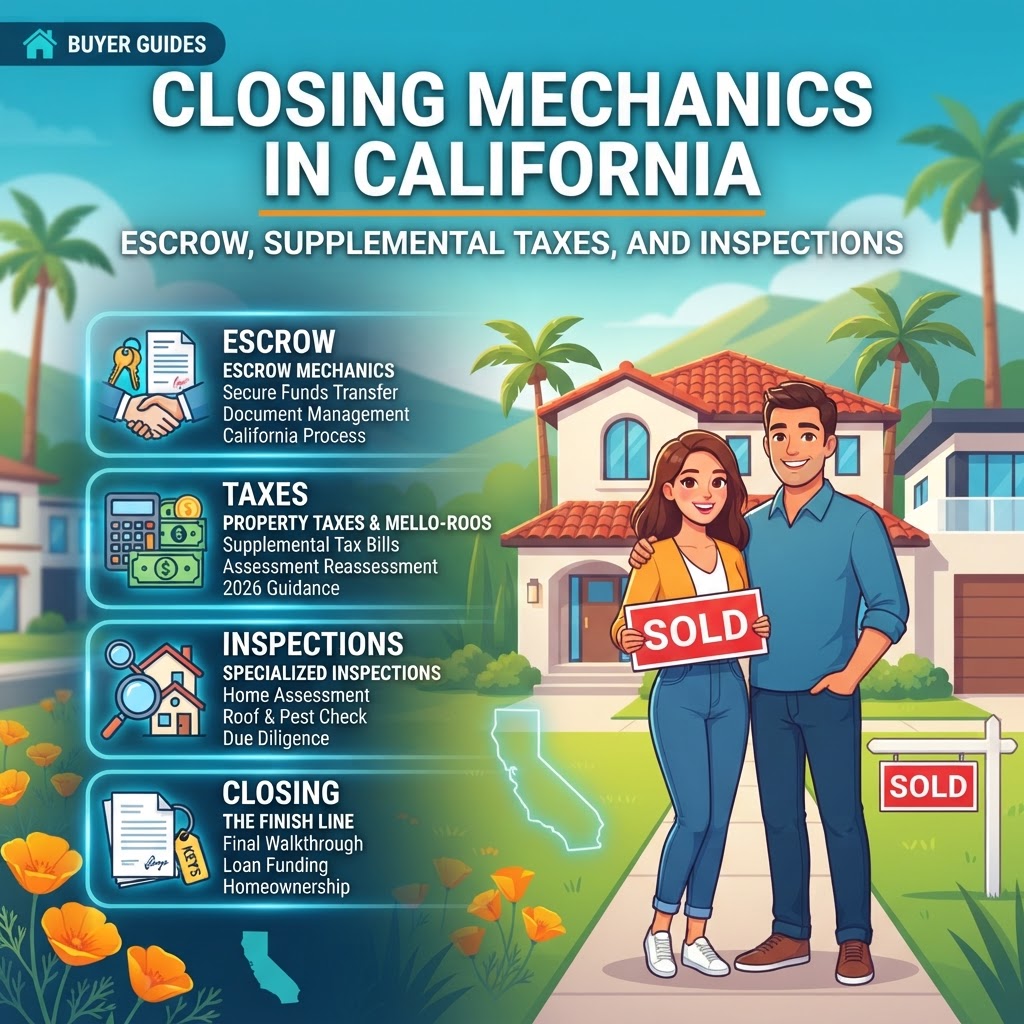
The 2026 Financial Landscape: Strategy Over Speed
As of July 1, 2026, the California real estate market has transitioned from the frenetic pace of previous years into a calculated 'Credit-First' environment. According to June 2026 data from the California Association of Realtors (C.A.R.), the statewide median home price has stabilized at $915,400, a 3.4% year-over-year increase. However, with mortgage rates hovering in the mid-6% range, the primary hurdle for the modern buyer is no longer just the down payment, but the monthly debt-to-income (DTI) ratio. In this climate, successful buyers are shifting focus from price negotiations to structural financial concessions.
The Seller Credit Revolution: 3-2-1 Buydowns
In 2026, the '3-2-1 Buydown' has emerged as the most powerful tool for California buyers. This strategy involves a seller-funded credit that reduces the buyer's interest rate by 3% in the first year, 2% in the second, and 1% in the third. On a $900,000 mortgage, this can represent a savings of over $1,500 per month in year one. Data from MLS aggregators suggests that 42% of successful California closings in Q2 2026 included some form of seller-paid rate subsidy. Buyers should prioritize homes with more than 30 days on market (DOM), where sellers are statistically 60% more likely to agree to these credits in lieu of a standard price reduction.
Mastering the Appraisal Gap in 2026
Despite more inventory, California’s coastal and tech-hub pockets still experience valuation friction. An 'Appraisal Gap Guarantee' remains a critical component of the 2026 California Residential Purchase Agreement (RPA). Instead of a blind waiver, sophisticated buyers are utilizing a 'Tiered Contingency.' This specifies a maximum out-of-pocket amount (e.g., $20,000) the buyer will cover if the appraisal falls short of the purchase price. This protects the earnest money deposit while signaling strength to the seller. Analysts at CBRE note that in high-demand zones like Silicon Beach and Roseville, properties are currently appraising within 2% of the list price, making the risk profile for these gaps lower than in the 2021-2022 era.
The New Buyer Representation Standard
Following the industry-wide legal shifts of 2024 and 2025, the 2026 buyer must approach representation with clarity. Under current California law and NAR-aligned protocols, buyers must sign a Buyer Representation Agreement (BRA) before touring properties. In 2026, the strategic buyer uses this agreement to define how their agent's fee will be covered—often by requesting a 'Buyer Agency Credit' in the initial offer. This ensures that the commission does not eat into the buyer’s liquid cash reserves, which are better utilized for the aforementioned buydowns or property improvements.
Practical Takeaways for the 2026 Buyer
- Target the 'Days on Market' (DOM) Sweet Spot: Focus on properties at the 25-40 day mark to maximize leverage for 3-2-1 buydown requests.
- Calculate the Net Effective Rate: Work with a lender to compare a $20,000 price reduction versus a $20,000 seller credit for a rate buydown; in 2026, the credit typically offers 3x the monthly savings.
- Formalize the Agency Credit: Ensure your offer explicitly requests that the seller covers the negotiated buyer-broker fee to preserve your cash-to-close.
- Use Tiered Appraisal Caps: Move away from full waivers to capped guarantees to protect your liquidity in a stabilizing market.