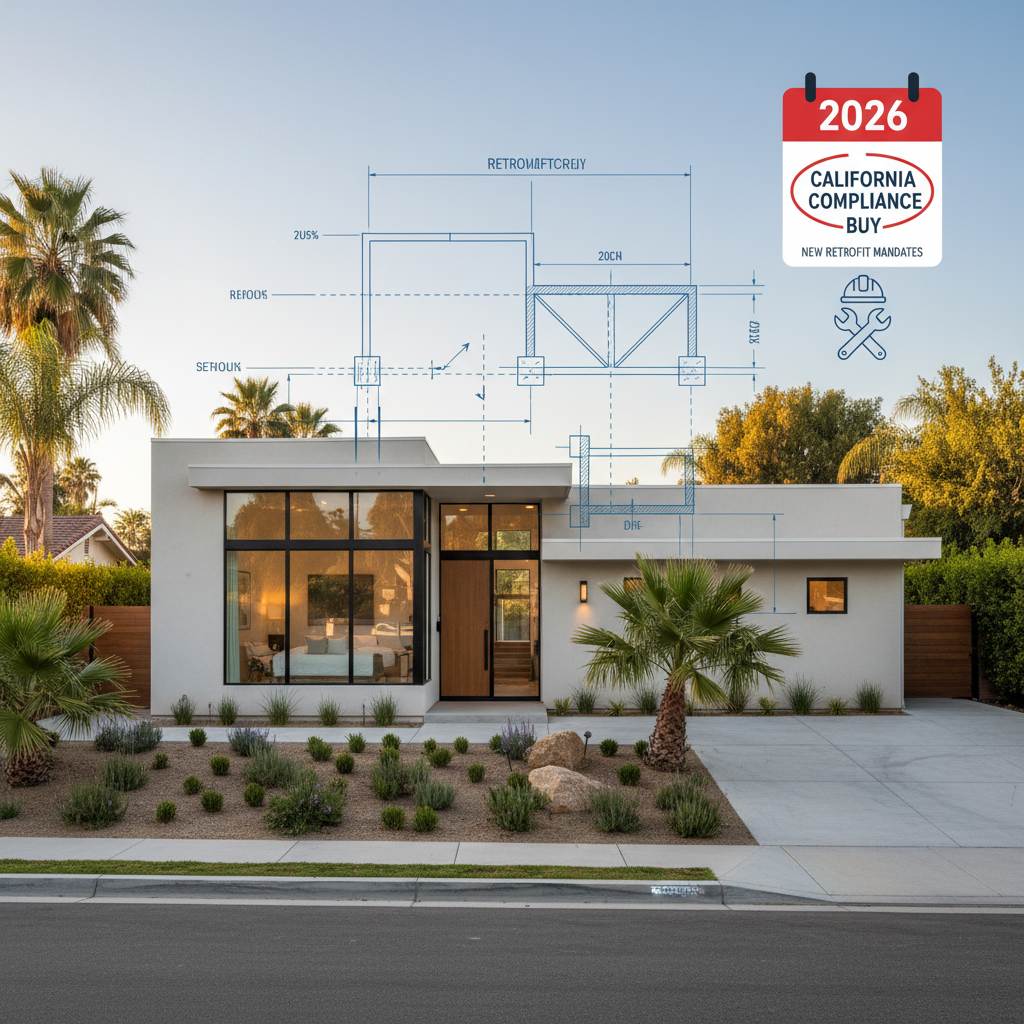
The 2026 Shift: Buying Beyond the Inspection
As of June 2026, the California real estate landscape has moved beyond the traditional 'as-is' purchase. With the state's median home price hovering near $890,000 according to the latest California Association of Realtors (CAR) data, the risk profile for buyers has shifted from simple structural integrity to regulatory compliance. Buyers in 2026 are no longer just looking for mold and termites; they are navigating a complex web of energy-efficiency mandates and decarbonization requirements that can add five-figure costs immediately after closing.
The Mandatory Energy Audit Disclosure
A critical development for the 2026 market is the widespread adoption of local 'Time-of-Sale' energy disclosure ordinances. Following the precedents set by cities like Berkeley and San Francisco, several major municipalities in the Inland Empire and Los Angeles County now require an Energy Asset Rating. This report, which must be provided to the buyer within the first 10 days of escrow, outlines the home's thermal envelope efficiency and HVAC carbon footprint.
For the 2026 buyer, this document is as vital as the Natural Hazard Disclosure (NHD). If a home scores in the bottom 20th percentile, certain jurisdictions are now triggering mandatory 'weatherization' retrofits—such as attic insulation or duct sealing—that must be completed within 12 months of the title transfer.
The 'All-Electric' Transition and Your Offer
California’s Title 24 building standards have reached a tipping point in 2026. While existing homes are often grandfathered in, any significant renovation (typically defined as impacting more than 50% of the home) now triggers a mandatory transition to high-efficiency electric heat pumps and induction cooktops. For buyers planning a 'fixer-upper' strategy, this adds a 'Decarbonization Tax' to their budget.
- Data Point: Building Industry Association (BIA) reports suggest that retrofitting a 1970s-era California ranch to meet 2026 electric-ready standards costs an average of $18,000 to $24,000, including panel upgrades.
- Market Trend: Buyers are increasingly using 'Panel Capacity Audits' as a secondary contingency, ensuring the existing electrical service can handle EV chargers and heat pumps without a $5,000 utility-side upgrade.
Practical Takeaways for the 2026 Buyer
1. Audit the Panel, Not Just the Plugs
In the 2026 market, a 100-amp electrical panel is a liability. Ensure your general inspection includes a specific load calculation for future electrification. If the panel is maxed out, use the cost of a 200-amp upgrade as a point of negotiation in the Request for Repairs (RR).
2. Review the HERS Report History
Ask for the Home Energy Rating System (HERS) records from any HVAC work performed after 2024. If the previous owner failed to permit a replacement or didn't meet the 2025 duct-leakage standards (now capped at 5%), you may inherit a compliance lien or a red-tagged system upon your first permitted renovation.
3. Leverage the 'Compliance Credit'
Rather than asking for price reductions in a competitive market, savvy buyers are requesting 'Compliance Credits.' This involves the seller contributing to a dedicated escrow holdback specifically for energy-efficiency upgrades required by local law, which can be more palatable to sellers than a straight price cut.
The Strategic Outlook
The 2026 California buyer must be a semi-expert in building science. As the state moves toward its 2030 'Net Zero' milestones, the value of a home is increasingly tied to its energy performance. By prioritizing compliance during the due diligence period, buyers can avoid 'regulatory sticker shock' and ensure their investment remains liquid in a market that increasingly prizes sustainability over square footage.