Navigating the Mid-2026 California Real Estate Landscape
As of June 2026, the California housing market has entered a 'hybrid' phase. Unlike the frenzy of 2021 or the stagnation of 2023, today’s market is characterized by a 14% year-over-year increase in active listings, according to California Association of Realtors (C.A.R.) data, coupled with a stabilized interest rate environment hovering around 6.2%. For buyers, this means more choice but higher requirements for strategic precision. This guide outlines the essential steps for securing a home in the current California climate.
1. The Pre-Search Audit: Beyond the Pre-Approval
In 2026, a standard pre-approval letter is insufficient for competitive Tier 1 markets like the Bay Area, San Diego, or Los Angeles. Sellers now prioritize 'Fully Underwritten TBD' approvals. This process involves a lender verifying your income, assets, and tax returns through underwriting before you even identify a property. According to recent MLS data, offers backed by fully underwritten approvals have a 22% higher acceptance rate in multiple-offer scenarios. Additionally, ensure your lender can provide a 'Closer Guarantee'—a commitment to a 17-day or 21-day close, which remains the gold standard for California's Residential Purchase Agreement (RPA).
2. Decoding the 2026 Disclosure Package
California is a disclosure-heavy state, and in 2026, two specific reports have taken center stage: the Natural Hazard Disclosure (NHD) and the Seismic Supplemental. With the implementation of the 2025 California Home Hardening statutes, buyers must look specifically for the 'AB-38 Compliance' status in the NHD. If a home is in a High Fire Severity Zone, the seller must provide documentation of defensible space compliance. Practical Tip: Always cross-reference the NHD with your insurance quote early in the 17-day contingency period; premiums for homes lacking these certifications have risen by an average of 35% this year.
3. The Hybrid Offer Strategy
While 2026 has seen a return of the inspection contingency, 'as-is' remains the default language for most sellers. To win without sacrificing protection, many buyers are now utilizing the 'Information-Only' inspection contingency. This allows the buyer to conduct all necessary tests but stipulates they will not request repairs under a certain dollar threshold (e.g., $5,000). This provides the seller with certainty while protecting the buyer from major structural or environmental defects. Data from the National Association of Realtors (NAR) suggests that 'hybrid' offers—those with shortened but not waived contingencies—are currently the most successful in the $800,000 to $1.5 million price bracket.
4. Understanding Supplemental Taxes and Mello-Roos
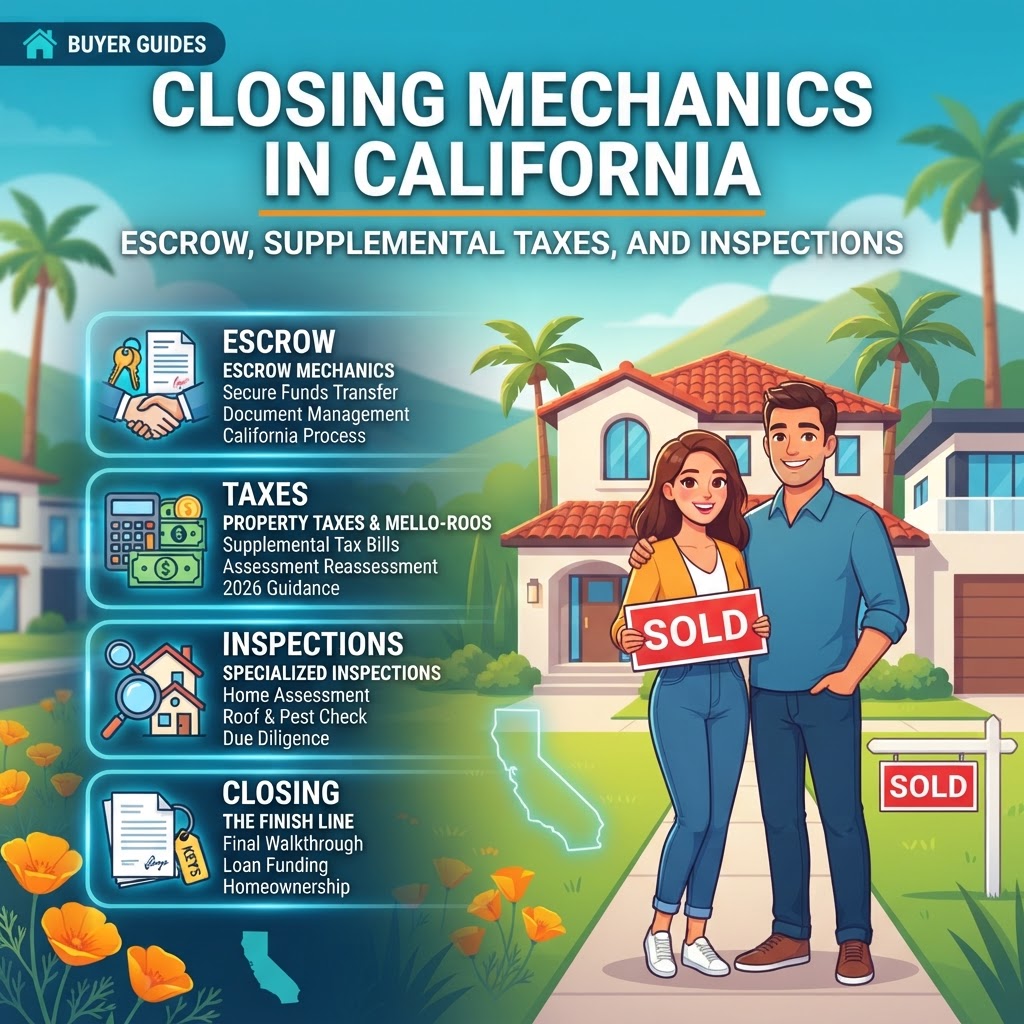
One of the most common pitfalls for new California buyers is failing to account for the 'Supplemental Tax Bill.' In California, property taxes are reassessed at the time of purchase (typically 1.1% to 1.25% of the sales price). However, the first bill you receive may be based on the previous owner’s lower assessed value. Expect a 'supplemental' bill 6–10 months after closing to cover the difference. Furthermore, if you are looking at newer developments (post-1982), check for Mello-Roos assessments—special taxes used to fund local infrastructure. These can add $200–$600 per month to your carrying costs and do not expire for 20 to 40 years.
Practical Takeaways for 2026 Buyers
- Prioritize Seismic and Electric: With California’s 2026 'All-Electric' building mandates, homes already retrofitted with 200-amp panels and heat pump systems command a 4-6% premium but save significant long-term renovation costs.
- The 72-Hour Window: In competitive markets, aim to view a property within 72 hours of it hitting the MLS. The 'First Weekend' strategy remains dominant in CA, with many sellers setting offer deadlines for the following Tuesday.
- Verification of Square Footage: 2026 has seen an uptick in discrepancies between MLS listings and tax records due to unpermitted ADU conversions. Always verify square footage via a private appraisal if the layout feels inconsistent with the paperwork.