The Shift from Acquisition to Adaptation
As we enter the summer of 2026, the California real estate market has pivoted. While interest rate stabilization has improved affordability slightly, the primary hurdle for today’s buyer is no longer just the mortgage—it is the regulatory ceiling on property evolution. With the California Association of Realtors (C.A.R.) June 2026 report showing a median home price of $942,000 and a constrained 2.8-month supply of inventory, many buyers are looking toward 'fixer-uppers' or older assets. However, in 2026, the ability to expand or even renovate a California home is strictly governed by two evolving frameworks: Local Coastal Programs (LCPs) and Wildland-Urban Interface (WUI) compliance.
The SB 272 Factor: Coastal Zoning Realities
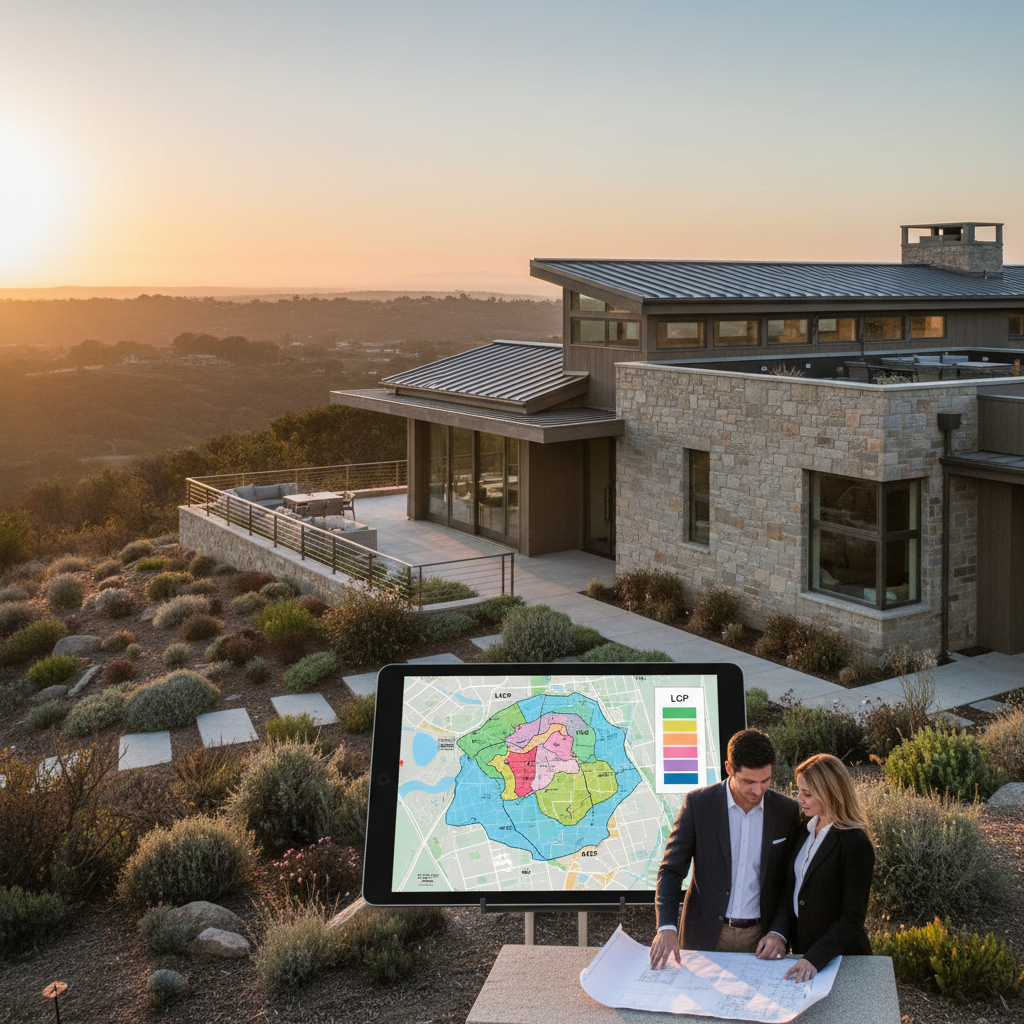
Under Senate Bill 272, which reached a critical implementation milestone in early 2026, coastal jurisdictions across California have updated their LCPs to account for sea-level rise and coastal erosion. For a buyer in 2026, this means that a 'beachfront' or 'coastal-adjacent' property may carry significant 'non-conforming' risks. Many updated LCPs now include 'managed retreat' provisions or strict limits on the square footage of additions. Before removing contingencies, buyers must verify if the property falls within a 'Hazard Overlay Zone,' which can trigger mandatory setbacks that supersede local municipal zoning.
WUI Hardening: The Hidden Cost of the 'Value-Add'
The 2026 market has seen a surge in 'Value-Add' investing in the foothills and canyon regions. However, the Board of Forestry and Fire Protection’s latest standards (updated for 2026) now require that any significant renovation (defined in many counties as exceeding 25% of the home's value) triggers a full-property WUI hardening. This includes not just Class A roofing, but the installation of ember-resistant vents, multi-pane tempered glass, and 5-foot non-combustible zones around the entire perimeter. Data from the 2026 CBRE Residential Construction Index suggests these mandates add an average of $45,000 to $70,000 to standard renovation budgets in High Fire Hazard Severity Zones (HFHSZ).
Market Data Points for June 2026
- Median Price: $942,000 (up 4.2% year-over-year).
- Inventory: Active listings are up 12% compared to June 2025, but 'renovation-ready' stock is often overpriced relative to compliance costs.
- Days on Market: 22 days for 'Resilience-Certified' homes vs. 48 days for non-hardened homes.
Practical Takeaways for the 2026 Buyer
- Audit the LCP: If buying within five miles of the coast, do not rely on the 2020-era zoning maps. Demand the 2026 Climate Adaptation Update from the local planning department to see if future expansions are legally permissible.
- The 25% Threshold: Calculate your renovation budget carefully. If your planned upgrades exceed 25% of the assessed structure value, be prepared for mandatory WUI retrofits required by state law.
- Verify 'Venting' Compliance: During the physical inspection, specifically check for ASTM E2886 compliant vents. In the 2026 market, lack of compliant venting is a primary reason for the denial of the California Fair Plan or private insurance 'Resilience Discounts.'
- Consult a Land-Use Consultant: In a high-equity market, the most valuable member of your due diligence team is no longer just the home inspector, but a land-use consultant familiar with the 2026 state-mandated local updates.
Buying in California in 2026 requires looking past the aesthetic and into the legislative DNA of the lot. By focusing on resilience compliance during the escrow period, buyers can protect their long-term equity from the rising costs of climate-related regulatory shifts.