The Legal Siege Ends: Concrete Pours in Coastal Strongholds
For decades, California’s wealthiest coastal enclaves utilized local zoning ordinances as a fortress against density. However, as of June 18, 2026, those walls have effectively crumbled. The 'Builder’s Remedy'—a legal provision in the 1990 Housing Accountability Act that allows developers to bypass local zoning if a city fails to meet state-mandated housing goals—has transitioned from a legal threat to a physical reality across the Golden State.
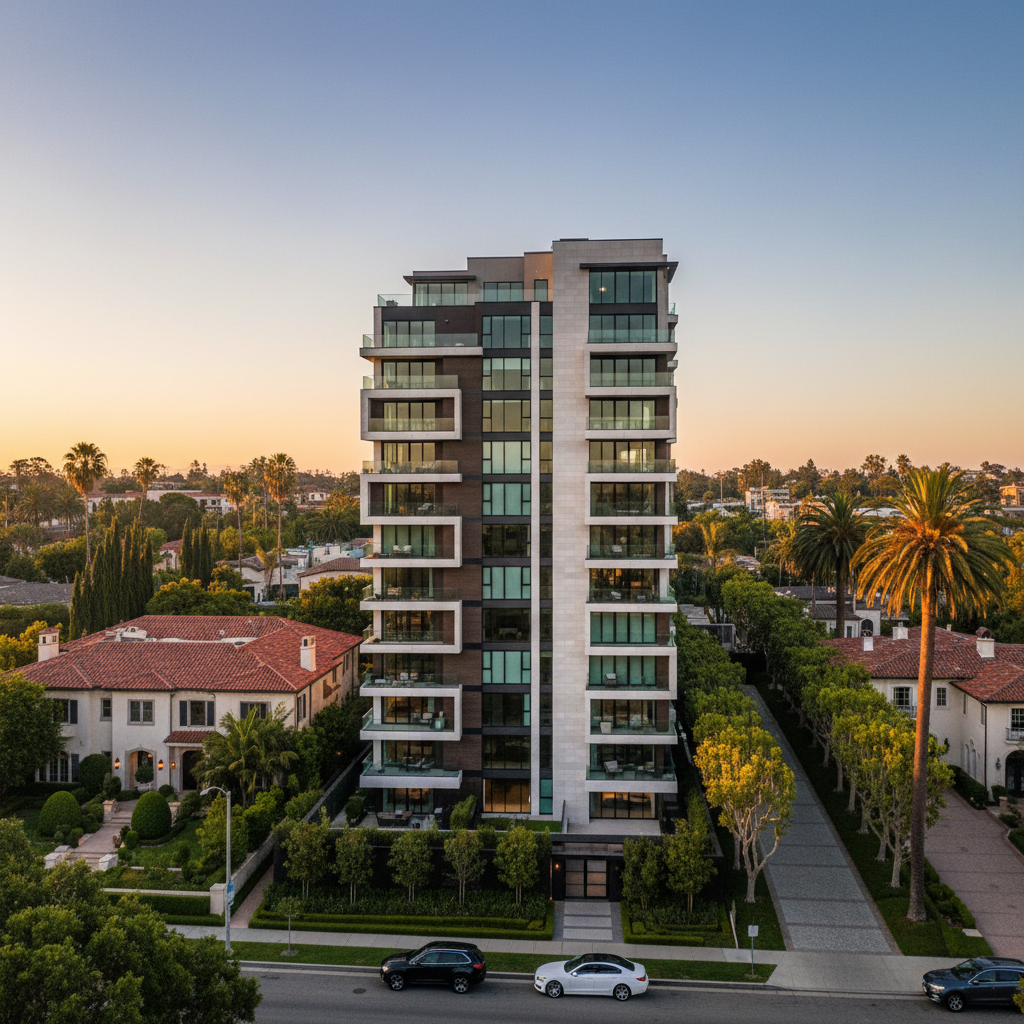
According to the California Department of Housing and Community Development (HCD), over 14,000 units across 82 high-income municipalities are currently under construction or in final permitting via the Builder’s Remedy. In cities like Beverly Hills, Santa Monica, and Huntington Beach, which spent years in litigation to block these developments, the first wave of 'infill' projects is reaching vertical construction, fundamentally altering the real estate landscape.
The Market Shift: Inventory vs. Exclusivity
Data from the California Association of Realtors (CAR) suggests a dual-track market emerging in these zones. While the median price for a single-family home (SFH) in these zip codes remains high, the 'exclusivity premium' has begun to soften. Neighborhoods that once strictly prohibited anything other than single-family residences on half-acre lots are now seeing six-story, mixed-use residential blocks integrated into their perimeters.
“We are seeing a 4.8% year-over-year cooling in SFH price appreciation in 'impacted zones' compared to a 6.1% statewide average,” says a senior analyst at the Pacific Real Estate Institute. “Conversely, the land value for transit-adjacent parcels has surged by 22%, as institutional investors compete for the few remaining lots that qualify for streamlined state approval.”
Supply-Side Economics Meet 2026 Realities
The injection of supply is most visible in the 'Luxury Entry' segment. In Santa Monica, the first 450-unit complex approved under the remedy is slated for occupancy by Q4 2026. This project alone introduces more units than the city approved in the entire five-year period between 2015 and 2020. This surge is creating a rare phenomenon in California real estate: a 'renter’s market' in premium coastal zip codes, with initial lease pro-formas showing a 10% reduction in forecasted rents due to the sudden competition.
Practical Takeaways for Market Participants
- For Investors: Focus on 'Secondary Infill.' The massive Builder's Remedy projects are the headline, but smaller, medium-density opportunities under the same state streamlining rules offer better margins for mid-market developers.
- For Luxury Sellers: The 'neighborhood character' argument is losing its market value. If your property is adjacent to a newly approved high-density site, emphasize interior amenities, privacy tech, and soundproofing in your listing to differentiate from new, dense neighbors.
- For Entry-Level Buyers: Keep a close eye on 'Inclusionary Units.' Many Builder's Remedy projects are required to set aside 20% of units for low-to-moderate-income households. This is providing a backdoor into premium school districts that were previously financially inaccessible.
Looking Ahead: The Sunset of Local Veto Power
As the June 2026 construction cycle proves, the state’s enforcement of the Regional Housing Needs Allocation (RHNA) is no longer a paper tiger. With the California Supreme Court recently upholding the state's power to override local 'charter city' protections, the Builder's Remedy has become a permanent fixture of the development playbook. For the California homeowner, this means the 'suburban' feel of the 1990s is officially being replaced by the 'urbanized' reality of the 2030s.