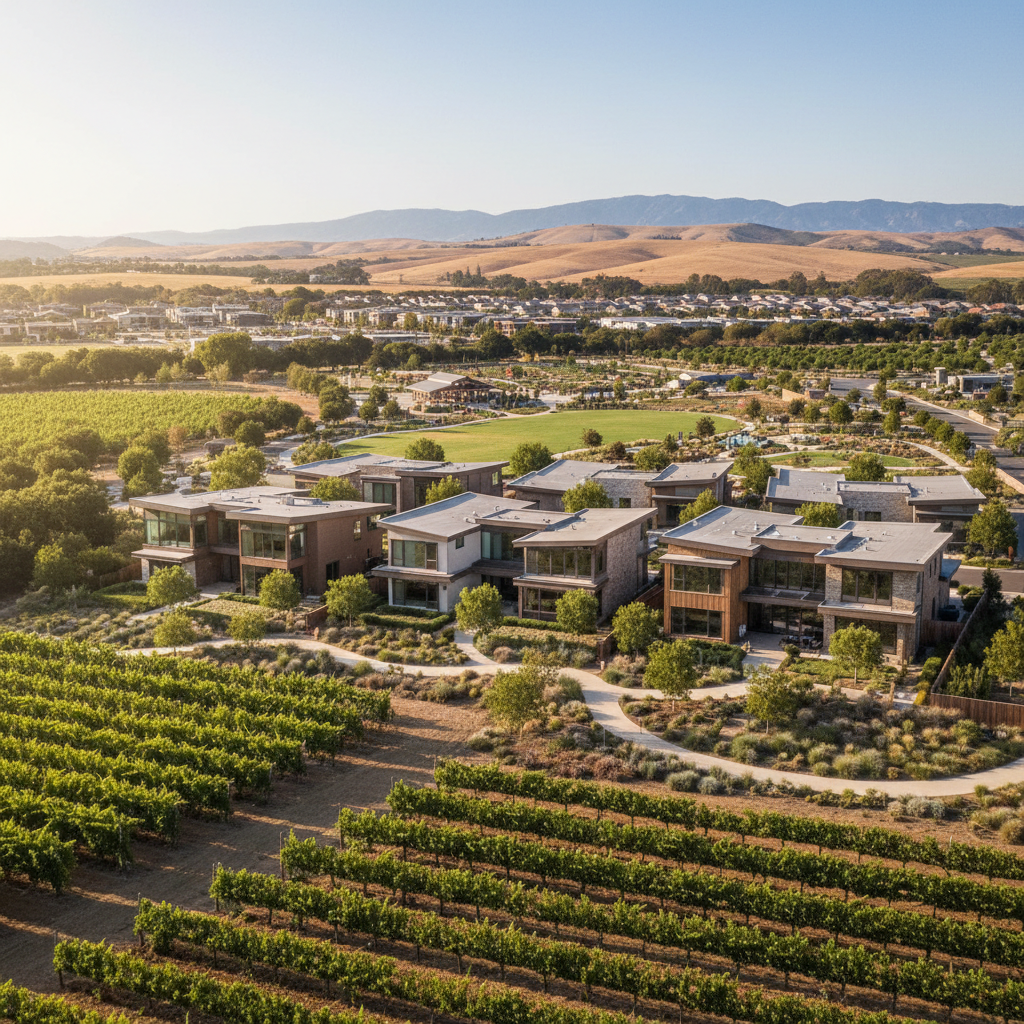
The Shift from Sprawl to Stewardship
As of June 12, 2026, the California real estate landscape is witnessing a profound shift in how suburban boundaries are defined. Following the implementation of Senate Bill 44 (The Sustainable Fringe Act), which streamlined the conversion of 'buffer zones' between agricultural land and residential tracts, a new asset class has emerged: the California Agri-Hood. These developments, which integrate professional-grade organic farming with high-density luxury housing, are now outpacing traditional suburban appreciation rates across the state.
Data-Backed Growth in the Fringe
According to May 2026 data from the California Association of Realtors (CAR), homes located within designated 'Agri-Urban' zones have seen a 14.2% year-over-year price increase, significantly higher than the 5.8% statewide average for single-family residences. Data from the MLS suggests that the 'days on market' for these properties has plummeted to just 11 days, as buyers prioritize food security, open space, and the sustainable infrastructure mandates required by the 2025 building code updates.
The Regulatory Catalyst
The primary driver of this trend is the 2025 'Green-Lining' initiative. This regulation provides property tax abatements for developers who dedicate at least 30% of their land to active, community-managed agriculture. For the first time, the California Department of Food and Agriculture (CDFA) has partnered with local municipalities to offer 'water-use credits' to these developments, effectively exempting them from the tiered drought surcharges that have cooled the market in more arid, traditional subdivisions.
Investor and Buyer Takeaways
For those navigating the current market, the emergence of Agri-Hoods offers several strategic advantages:
- For Investors: Land-use conversion plays in the Central Valley and North Bay are yielding high returns. Properties that qualify for SB 44 rezoning are seeing immediate valuation lifts upon entitlement.
- For Buyers: Look for 'Agri-Urban' certifications. These homes often come with lower long-term HOA fees because the community-supported agriculture (CSA) components generate revenue that offsets maintenance costs.
- For Sellers: Highlighting sustainable water infrastructure and 'edible landscaping' is no longer a niche marketing tactic; it is a value-multiplier in the 2026 market.
Future Outlook
The California Department of Finance projects that by 2028, over 20% of new residential starts in the Inland Empire and Greater Sacramento regions will fall under the Agri-Hood umbrella. As remote-work stability allows buyers to move further from urban cores, the demand for high-amenity, self-sustaining communities is expected to remain the primary engine of California's mid-decade real estate growth.