The 2026 Prefab Pivot
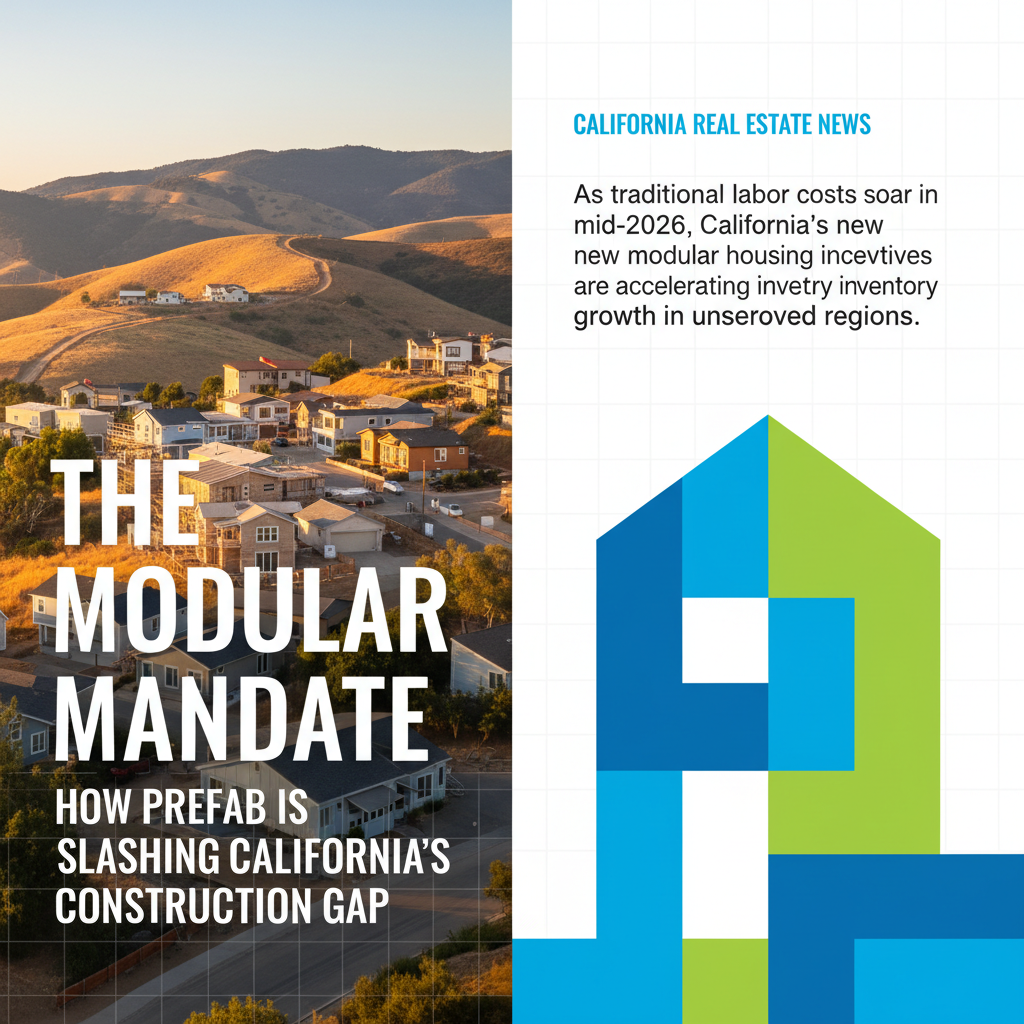
As of June 9, 2026, the California real estate landscape is undergoing a structural transformation. With traditional stick-built construction costs exceeding $450 per square foot in coastal metros, the industry has turned toward the 'Modular Mandate'—a series of state-level reforms passed in late 2025 that have reached full implementation this quarter. This shift is finally addressing the supply-demand imbalance that has plagued the Golden State for decades.
The SB 1440 Effect and Permitting Speed
The core driver of this movement is Senate Bill 1440, which established a unified state building code for factory-built components. According to recent data from the California Department of Housing and Community Development (HCD), modular housing permits increased by 28% in the first five months of 2026 compared to the same period in 2025. By bypassing redundant local inspections for factory-certified modules, developers are shaving an average of 10 months off project timelines. This efficiency is crucial as the California Association of Realtors (CAR) reports that active inventory levels, while rising, still remain 15% below the historical average needed for a balanced market.
Market Data: A Shifting Inventory Profile
- Inventory Surge: The California Association of Realtors (CAR) June 2026 report highlights a 4.2% month-over-month increase in active listings, the sharpest June rise in a decade, largely attributed to the completion of several large-scale modular projects.
- Cost Efficiency: CBRE analysis suggests that modular integration has reduced the 'affordability gap' for new multi-family units by approximately 18% in the Inland Empire and Greater Sacramento areas.
- Institutional Interest: Venture capital into California’s 'PropTech' manufacturing sector has reached a record $3.2 billion year-to-date, signaling long-term confidence in off-site construction.
Practical Takeaways for Market Participants
For Buyers: Keep an eye on 'Hybrid-Build' developments in secondary markets like Fresno, Riverside, and Santa Rosa. These units are entering the market at price points 10-12% lower than traditional builds, offering a rare window for first-time buyers to secure new construction with modern warranties.
For Investors: Portfolio diversification into modular-ready land parcels is becoming a high-yield strategy. Properties zoned for multi-family that utilize these new fast-track codes offer significantly higher Internal Rates of Return (IRR) due to reduced carry costs and faster time-to-market.
For Sellers: The influx of high-quality, precision-engineered modular homes is raising the bar for the 'starter home' category. If you are selling an older, un-renovated property, focus on smart-home integrations and cosmetic refreshes to compete with the high-tech finishes of 2026 prefab designs.
As we move into the second half of 2026, the ability to build 'faster and smarter' is no longer just a trend—it is the primary engine of California’s residential recovery.