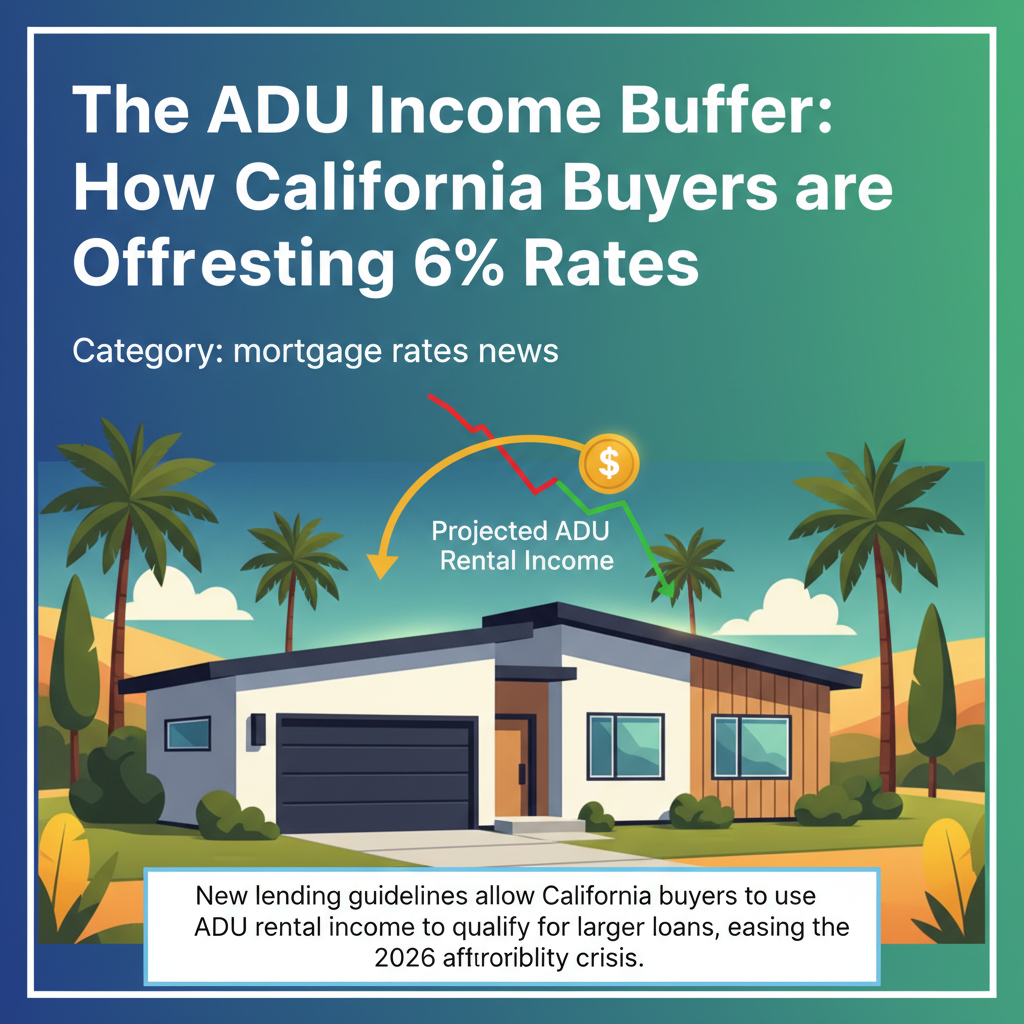
Bridging the Affordability Gap in a High-Rate Summer
As of June 9, 2026, the national average for a 30-year fixed-rate mortgage has settled into a stubborn plateau of 6.4%, according to Freddie Mac. In California, where the median home price has climbed another 4.2% year-over-year to approximately $940,000, the gap between aspirations and affordability has never been wider. However, a significant shift in lending policy regarding Accessory Dwelling Units (ADUs) is providing a new pathway for buyers to secure high-balance financing.
The Regulatory Shift: Rent as a Qualification Lever
The core of this summer’s lending trend is the expanded acceptance of projected rental income from ADUs. Historically, many lenders required a two-year history of rental income before considering it toward a borrower’s Debt-to-Income (DTI) ratio. Under the latest 2026 updates to Fannie Mae and Freddie Mac guidelines, buyers of primary residences can now use up to 75% of the appraised market rent from an existing or soon-to-be-completed ADU to qualify for their mortgage.
Data from the California Association of Realtors (CAR) suggests that for every $1,000 in additional qualifying monthly income, a buyer's purchasing power increases by roughly $135,000 at current interest rates. In markets like Los Angeles or the Bay Area, where a permitted ADU can command $2,000 to $3,500 in monthly rent, this ‘income buffer’ is the difference between qualifying for a modest condo or a multi-generational single-family home.
Why California is the Testing Ground
California’s aggressive legislative push—most notably through SB 9 and SB 10—has streamlined the permitting process for ADUs, making them a standard feature in new inventory. According to the California Department of Housing and Community Development, ADUs now account for nearly 20% of all housing permits issued statewide. Lenders are responding to this supply shift by treating these structures not just as value-adds, but as essential components of the borrower's repayment capacity.
Strategic Takeaways for Today’s Market
- Target Properties with ‘Permitted’ Potential: Buyers should prioritize homes with existing detached garages or bonus rooms that meet the specific criteria for conversion. Appraisers now have a more robust dataset of ADU comps than they did two years ago, ensuring that the 'projected rent' reflects realistic market conditions.
- Consult an ADU-Specialist Appraiser: Not all appraisals are created equal. When utilizing projected rents, ensure your lender uses an appraiser familiar with the local ADU rental market to maximize the qualifying income figure.
- Factor in the ‘Occupancy Multiplier’: While interest rates remain high, the net effective mortgage payment (total mortgage minus ADU rent) often rivals the 3% interest rates seen earlier this decade, providing a sustainable way to carry a $1 million+ loan.
By leveraging future rental income today, California buyers are finding a way to navigate the 2026 rate environment without waiting for a Federal Reserve pivot that may remain months or years away.