The Sunset of Local Veto Power
As of June 3, 2026, the California Department of Housing and Community Development (HCD) reports that over 115 jurisdictions across the state remain out of compliance with state-mandated housing elements. This legal vacuum has triggered a massive resurgence of the 'Builder’s Remedy' provision, which allows developers to bypass local zoning codes in non-compliant cities, provided the project includes an affordable housing component. Unlike the experimental filings seen three years ago, the 2026 wave is characterized by sophisticated institutional backing and a clear legal path established by recent California Supreme Court rulings that have stripped municipal 'anti-density' defenses.
Market Data: The 2026 Density Premium
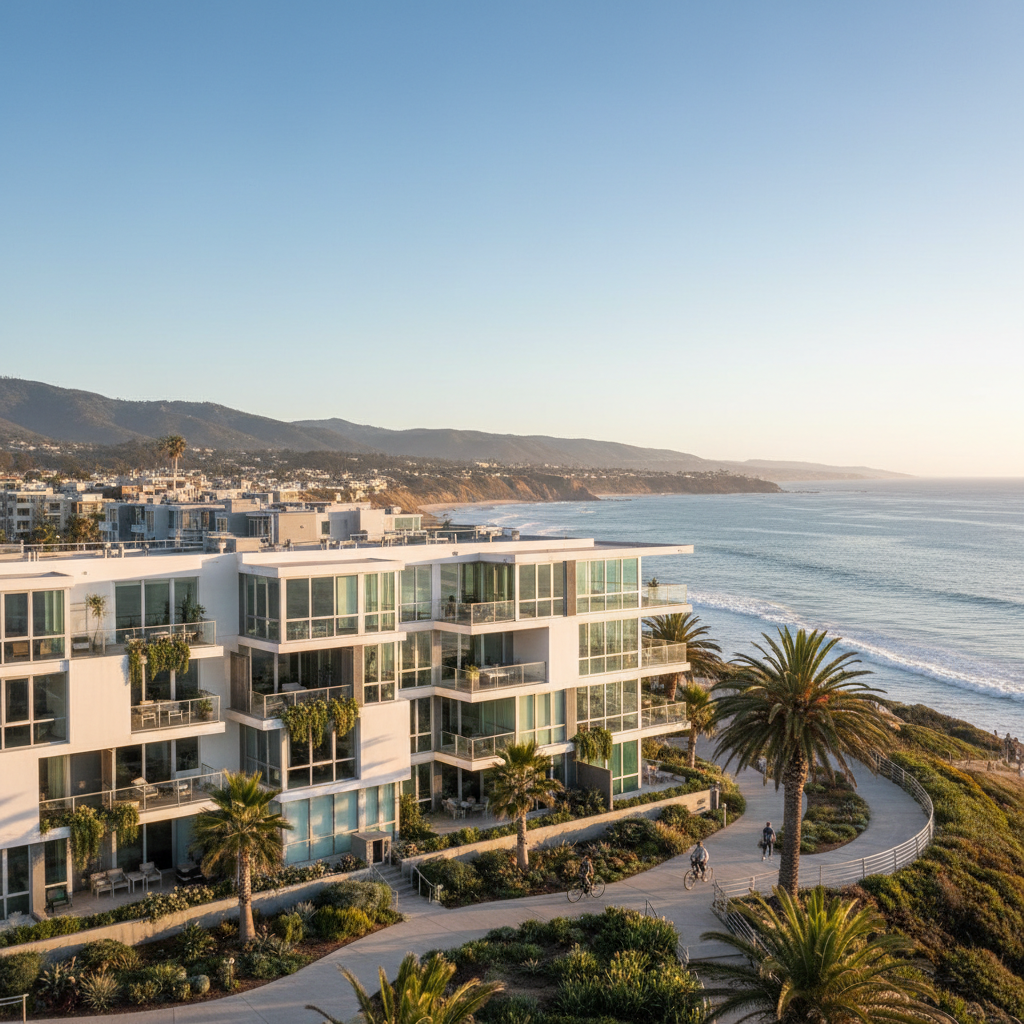
The impact on land valuations is stark. Recent MLS data for the second quarter of 2026 indicates that in 'non-compliant' coastal hubs like Huntington Beach, La Jolla, and parts of the San Francisco Peninsula, land parcels zoned for single-family use that qualify for density bonuses are fetching premiums of 22% above 2025 valuations. According to CBRE research, the average price per buildable unit in these high-barrier-to-entry markets has risen to $145,000, as developers race to vest rights before cities can regain compliance and re-implement restrictive zoning. This has created a 'density arbitrage' where the underlying land value for a multi-family project far exceeds the value of the existing luxury single-family structure.
Strategic Takeaways for Market Participants
- For Property Owners: If your asset is located in a non-compliant jurisdiction, its highest and best use may no longer be residential. Sellers should consult with land-use attorneys to see if their lot qualifies for the Builder’s Remedy before entering a standard escrow.
- For Investors: Focus on 'Tier 2' coastal pockets where local resistance to state mandates remains high. These areas offer the highest arbitrage potential between current use and high-density entitlement, provided the developer has the capital to navigate the initial CEQA hurdles.
- For Buyers: Be aware that single-family neighborhoods in non-compliant cities are in a state of flux. A neighboring lot could be transformed into a 20-unit complex regardless of local zoning, making due diligence on the city’s HCD compliance status essential.
The Legislative Outlook
Sacramento shows no signs of slowing down. With the 2026 legislative session focusing on 'Right to Build' expansions, the threshold for cities to regain control is getting higher. For the first time in California history, the state is effectively treating housing supply as a civil right that supersedes local aesthetic preferences. For the savvy real estate player, 2026 is the year where the legal 'map' of California determines ROI more than the physical one.