The Adaptive Reuse Frontier: California’s Office-to-Residential Pivot
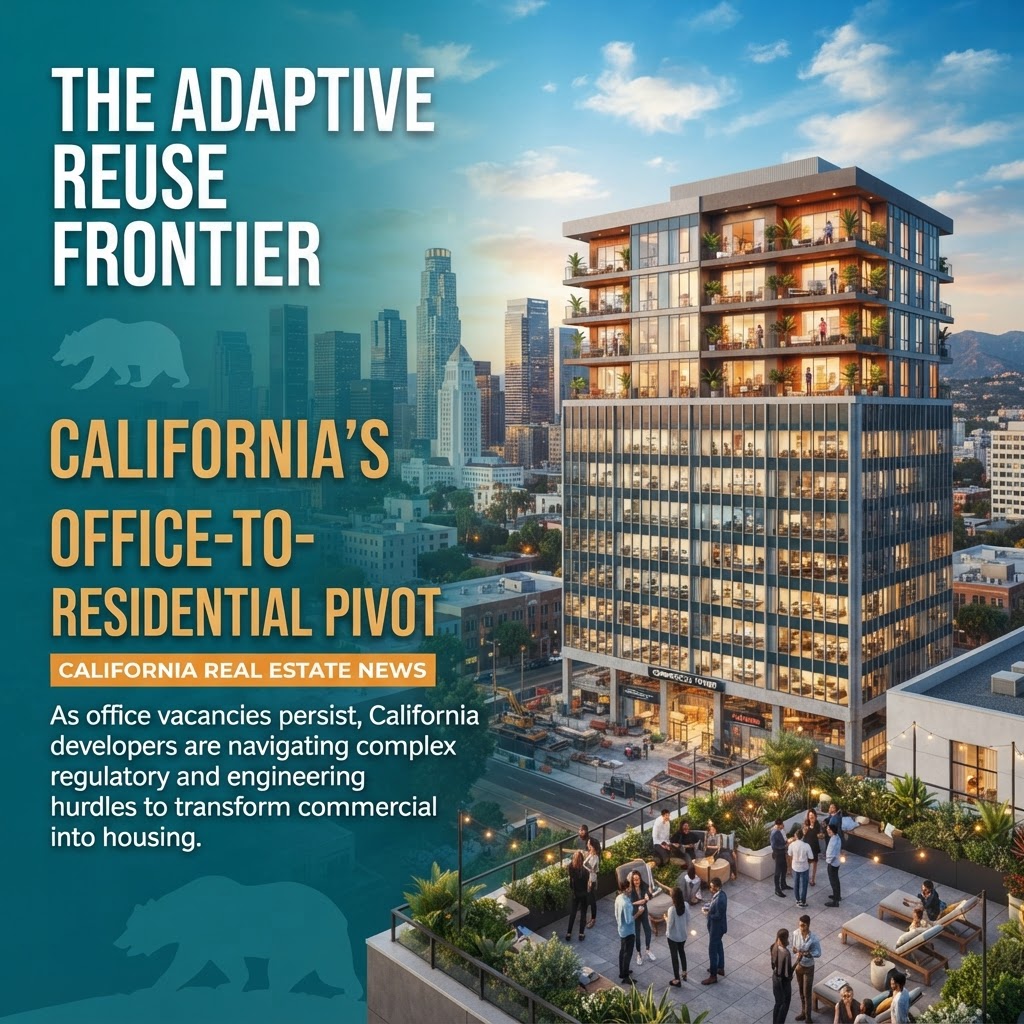
As of November 2026, California’s commercial real estate landscape is undergoing a structural transformation. With office vacancy rates in major hubs like San Francisco hovering near 26.7% and other Western markets struggling to maintain occupancy, the state is increasingly looking toward adaptive reuse as a primary tool to address both the housing shortage and the decline of traditional downtown office districts.
The Regulatory and Engineering Gauntlet
While the concept of converting vacant office towers into residential units is theoretically sound, the execution remains fraught with challenges. Recent guidance from the Los Angeles Department of Building and Safety (Bulletin IB-BC-2026-164) underscores the technical rigor required for these projects. Developers must now navigate strict compliance with the California Existing Building Code, particularly regarding sound-rated assemblies and energy efficiency standards for mechanical and plumbing systems.
Beyond the code, the physical limitations of office floor plates remain a significant barrier. Industry experts suggest that only 20% to 30% of existing office inventory is structurally suitable for residential conversion. Factors such as building depth—ideally 68 to 70 feet for a double-loaded corridor—and the need for new shafts for kitchen and bath ventilation often render many older buildings economically unfeasible for conversion without significant public-sector intervention.
Policy Levers and Financial Incentives
The state is attempting to bridge the feasibility gap through programs like Homekey, which facilitates the conversion of commercial properties into permanent housing. Furthermore, cities like San Jose have expanded housing incentive programs to specifically target conversion projects, such as the $74.1 million financing secured for the historic Bank of Italy tower conversion. However, developers continue to cite the California Environmental Quality Act (CEQA) and high local impact fees as primary deterrents that can stall projects for years.
Practical Takeaways for Stakeholders
- For Investors: Focus on assets with favorable floor-plate depths and proximity to transit. The "conversion premium" is high, but projects that leverage state-level incentives or local density bonuses are seeing increased viability.
- For Developers: Early engagement with local planning departments is critical. Understanding the specific "work area method" requirements under the California Existing Building Code can prevent costly redesigns during the permitting phase.
- For Market Observers: Watch for the "bifurcation" of the office market. While older, Class B and C office buildings are prime candidates for residential conversion, high-end, modern office spaces are likely to remain in the commercial sector, potentially leading to a shrinking but more specialized office footprint in California’s major metros.
As the state moves into 2027, the success of these conversions will depend less on the desire to repurpose space and more on the ability of policymakers to streamline the regulatory path for developers attempting to navigate the complex intersection of historic preservation, modern building codes, and the urgent need for housing.