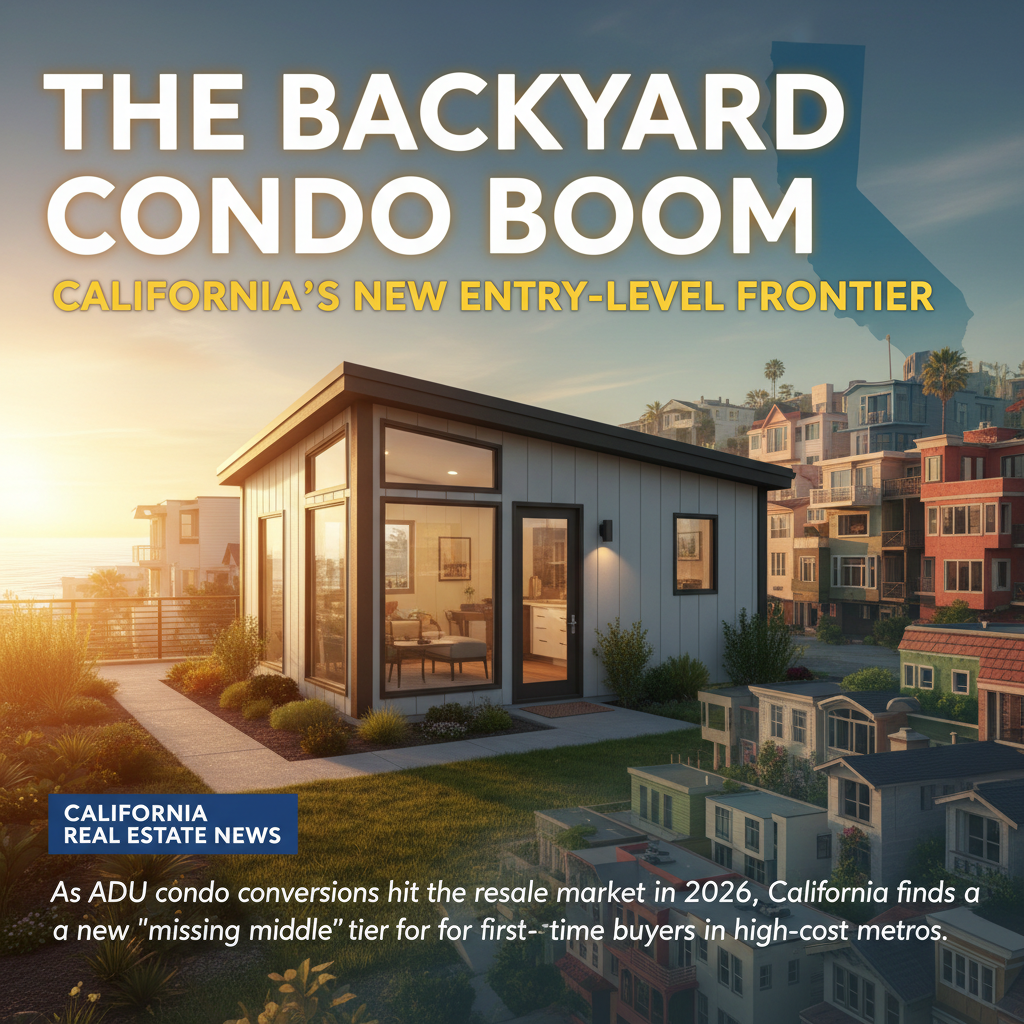
The Rise of the Fee-Simple Accessory Dwelling Unit
For decades, California’s Accessory Dwelling Units (ADUs) were strictly rental stock or multigenerational housing solutions. However, as of May 2026, a significant shift in property rights is reshaping the state’s entry-level market. Under the matured framework of Assembly Bill 1033, which allowed local governments to permit the separate sale of ADUs as condominiums, the first major wave of 'Backyard Condos' has officially hit the MLS, creating a distinct price tier between traditional apartments and detached single-family homes.
Data Points: A New Market Segment Emerges
According to the California Association of Realtors (CAR) May 2026 report, 'detached condo' registrations in San Jose, San Diego, and parts of Los Angeles have surged by 18% year-over-year. Data from the California Department of Housing and Community Development (HCD) indicates that nearly 4,500 ADUs were converted to condo status in the first quarter of 2026 alone. These units are currently trading at roughly 60% to 70% of the price of the primary residence on the same lot, providing a critical entry point for buyers who have been priced out of traditional suburban inventory.
The Regulatory Catalyst
The acceleration of this trend stems from the late-2025 adoption of AB 1033 ordinances by major municipalities. While the law was signed years ago, the 'statutory lag'—the time required for cities to draft Homeowners Association (HOA) guidelines and utility separation requirements—only ended recently. In cities like Berkeley and San Diego, homeowners are now leveraging their equity to build ADUs not just for rental income, but for immediate liquidation, effectively acting as micro-developers in their own backyards.
The Valuation Shift
Appraisers are now grappling with this new asset class. Unlike SB 9 lot splits, which physically divide the land, AB 1033 creates a condo map. This means the buyer owns the unit and a proportional interest in the land. CoreLogic data suggests that these units are attracting a new demographic: young professionals and 'silver splitters' (divorcing seniors) who prioritize new construction and modern finishes over a traditional large yard.
Practical Takeaways for Stakeholders
- For First-Time Buyers: Backyard condos represent the new 'Starter Home.' Buyers should ensure their lenders are familiar with 'site-condo' financing, as some traditional products still struggle with the lack of a traditional HOA structure.
- For Current Homeowners: Converting an existing ADU into a saleable condo can unlock significant capital without the need to move. However, be prepared for the legal costs of establishing a two-unit HOA and separate utility metering.
- For Investors: The 'build-and-sell' ADU model offers higher liquidity than the 'build-and-rent' model. Focus on cities with high land values where the price gap between a condo and a house is at its widest.
Looking Ahead
As we head into the summer 2026 buying season, the success of these backyard condos will likely dictate the next phase of California housing policy. If these units continue to absorb first-time buyer demand without depressing the value of the primary residences, expect a state-wide mandate to follow, potentially removing the local 'opt-in' requirement and making backyard condo conversions a standard right for all California homeowners.