The New Math of California Home Ownership
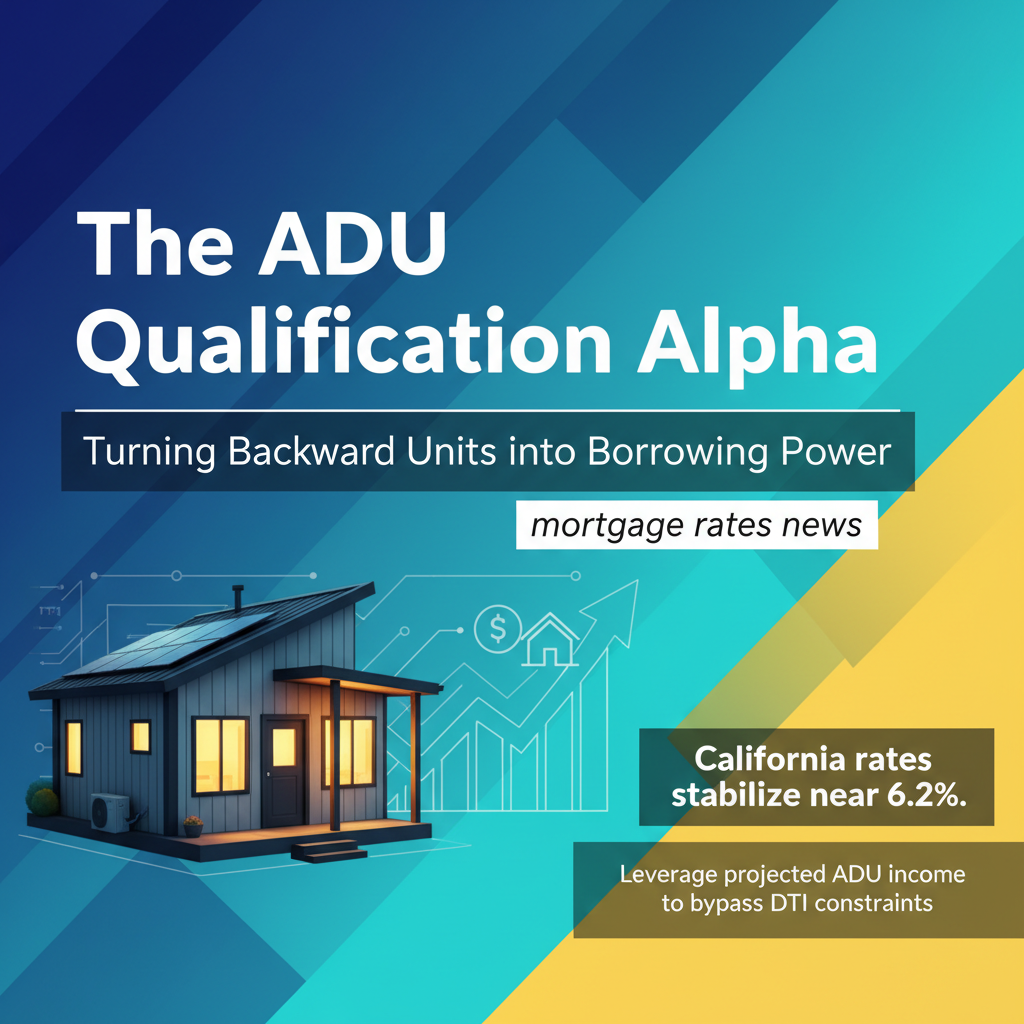
As of May 26, 2026, the average 30-year fixed mortgage rate in California has settled into a 'new normal' of 6.2%. While significantly lower than the peaks of previous years, the combination of sustained high prices and these rates has pushed the Debt-to-Income (DTI) ratios of many prospective buyers to the breaking point. However, a significant shift in secondary market guidelines—specifically from Fannie Mae and Freddie Mac—is providing a lifeline for California buyers: the ability to use projected rental income from Accessory Dwelling Units (ADUs) to qualify for higher loan amounts.
The Policy Shift: From 'Bonus' to 'Borrowing Base'
Historically, income from an ADU could only be used to qualify if the unit already existed and had a documented rental history. In 2026, the lending landscape has evolved. Under revised 'HomeReady' and 'Home Possible' frameworks, lenders are increasingly allowing buyers to factor in 75% of the projected market rent for a planned or existing ADU into their qualifying income. For a buyer in Los Angeles or the Bay Area, where a studio ADU can command $2,000 per month, this adds $1,500 in monthly qualifying income—effectively neutralizing the DTI impact of an additional $200,000 in mortgage debt at current rates.
Data Points: The California ADU Surge
According to the California Department of Housing and Community Development (HCD), ADU permit applications have increased by 22% year-over-year in 2026. This is largely driven by state laws like SB 9 and SB 10, which have streamlined the approval process. Furthermore, data from the California Association of Realtors (CAR) indicates that properties with ADU potential are now selling at a 12% premium compared to single-unit lots, as buyers recognize the 'qualification alpha' these properties provide. In high-cost counties like Orange and San Diego, where the median home price lingers near $1.1 million, the ADU income hedge is often the difference between a loan approval and a denial.
Strategic Implications for California Buyers
For those navigating the current market, the strategy has shifted from finding the 'perfect home' to finding the 'productive lot.' By identifying properties that meet the setbacks and zoning for a detached ADU, buyers can utilize construction-to-permanent financing to build the unit and simultaneously use the future rent to justify the total loan amount. This creates a dual benefit: it solves the immediate affordability crisis and builds long-term equity through a secondary revenue stream.
Practical Takeaways for 2026 Buyers
- Verify Local Rent Surveys: Lenders require a Form 1007 (Single-Family Comparable Rent Schedule) or a specific ADU appraisal addendum. Ensure your agent pulls rental comps for ADUs specifically, not just apartments.
- Understand the 75% Haircut: Remember that lenders rarely count 100% of projected rent. Budget your DTI based on 75% of the expected income to account for vacancies and maintenance.
- Target 'ADU-Ready' Infrastructure: Look for properties with existing detached garages or large flat backyards with accessible utility lines to minimize construction costs while maximizing the appraisal value.
- Consult a Niche Underwriter: Not all retail banks have fully integrated the new ADU income protocols. Seek out lenders specializing in 'portfolio' or 'expanded' guidelines who are familiar with California’s specific ADU legislation.