The Confluence of Connectivity: The New San Jose Reality
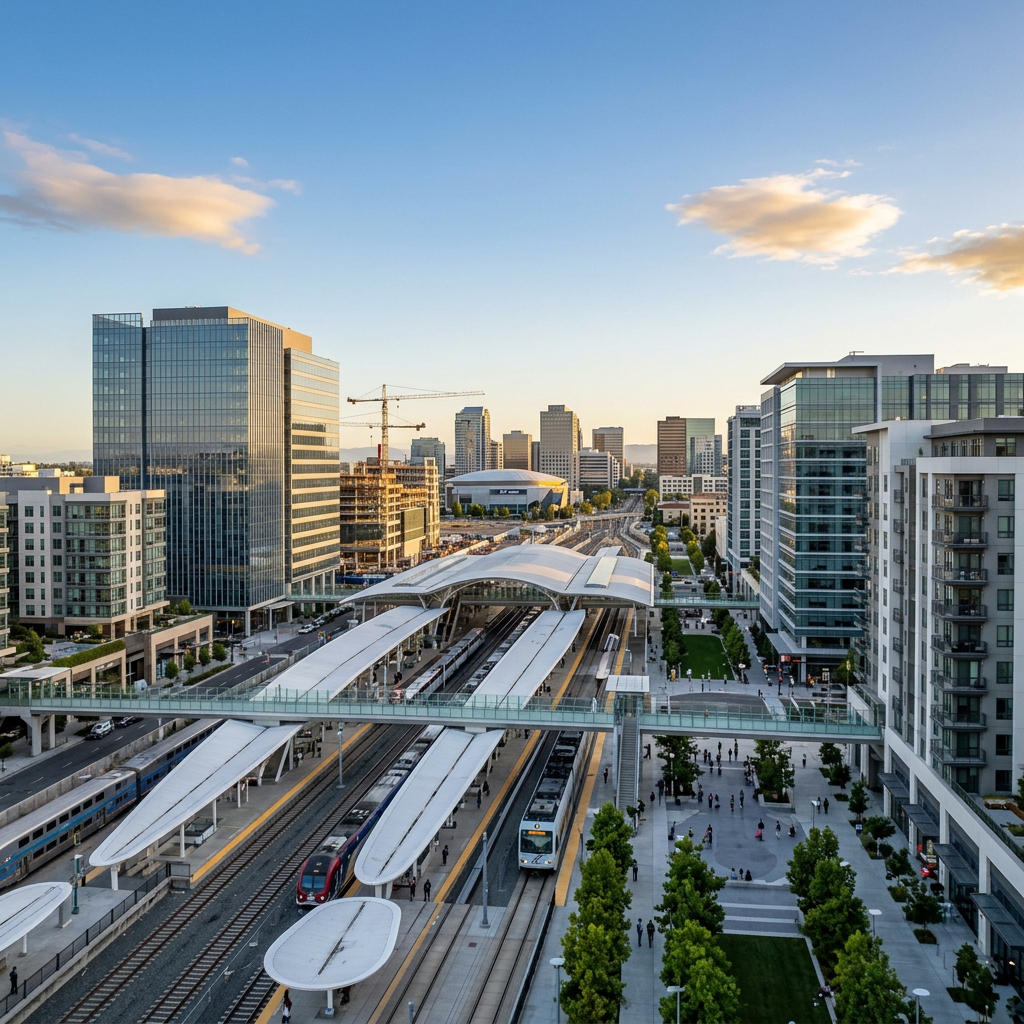
By April 2026, the narrative of San Jose as a sprawling silicon suburb has been decisively retired. In its place stands a vision of high-density urbanism centered around Diridon Station. Following the 2024 completion of Caltrain’s electrification—which has increased peak hour service to six trains per hour—and the steady progression of Google’s 80-acre ‘Downtown West’ project, the surrounding neighborhoods of Delmas Park and the historic Rose Garden have become the most watched real estate corridors in Northern California.
Infrastructure as an Equity Driver
The transformation is anchored by Diridon Station, now widely referred to as the ‘Grand Central of the West.’ With the BART Silicon Valley Phase II extension now deeper into its construction phase and the electrification of the rail line cutting commute times to San Francisco to under 60 minutes, the transit utility of the 95110 and 95126 zip codes has peaked. According to 2025 MLS year-end data, properties within a half-mile of Diridon Station saw a 12.4% appreciation in value over the preceding 12 months, significantly outpacing the broader Santa Clara County average of 5.1%.
The Neighborhood Split: Delmas Park and Rose Garden
Two distinct investment profiles have emerged in this transit-rich environment. Delmas Park has transitioned into a high-density hub for the ‘tech-urbanist.’ New-build mid-rise developments are dominating the skyline, catering to a demographic that prioritizes proximity to the SAP Center and the newly opened San Pedro Square expansion. Conversely, the Rose Garden neighborhood continues to serve as the region's premier historic anchor. Characterized by its 1920s architecture and the world-renowned Municipal Rose Garden, this area offers the ‘luxury of quiet’ while remaining a 10-minute bike ride from the future Google campus.
Education and Local Amenities
The area is supported by the San Jose Unified School District, with specialized programs like the Merritt Trace Elementary Spanish Immersion program attracting families who want urban proximity without sacrificing educational quality. For higher education, the proximity to San Jose State University and the newly minted tech-incubators near Little Italy provide a continuous pipeline of talent and rental demand.
By the Numbers: Market Insights
Recent data from the California Association of Realtors (CAR) and CBRE highlights the following trends for the San Jose Diridon Core as of Q1 2026:
- Inventory Compression: Active listings in the Diridon-adjacent zones are down 18% year-over-year, as owners hold out for the completion of the first phase of Downtown West office towers.
- Rent Growth: Institutional-grade multi-family assets in Delmas Park are commanding a 15% premium over traditional South San Jose apartments due to transit proximity.
- Commercial Synergy: Retail vacancy in the ‘Little Italy’ and ‘The Alameda’ corridors has hit a record low of 3.2%, driven by a surge in boutique fitness and artisanal dining.
Practical Takeaways for Stakeholders
For Buyers: Look toward the ‘The Alameda’ corridor. While prices have risen, it remains a transitional zone between the ultra-luxury of the Rose Garden and the high-density of Delmas Park, offering potential for long-term equity growth as the Google campus reaches full occupancy.
For Investors: Multi-family ‘missing middle’ housing—duplexes and fourplexes—in the 95126 zip code remains the highest yield play. With the city’s 2025 zoning relaxations, many of these lots now allow for increased density or ADU expansion.
For Sellers: Leverage the ‘transit-ready’ narrative. Highlighting walkability scores and the specific commute times to San Francisco and Palo Alto via the electrified Caltrain is currently yielding the highest closing-to-list price ratios.