The 2026 Reality: Finding Value in the 'Missing Middle'
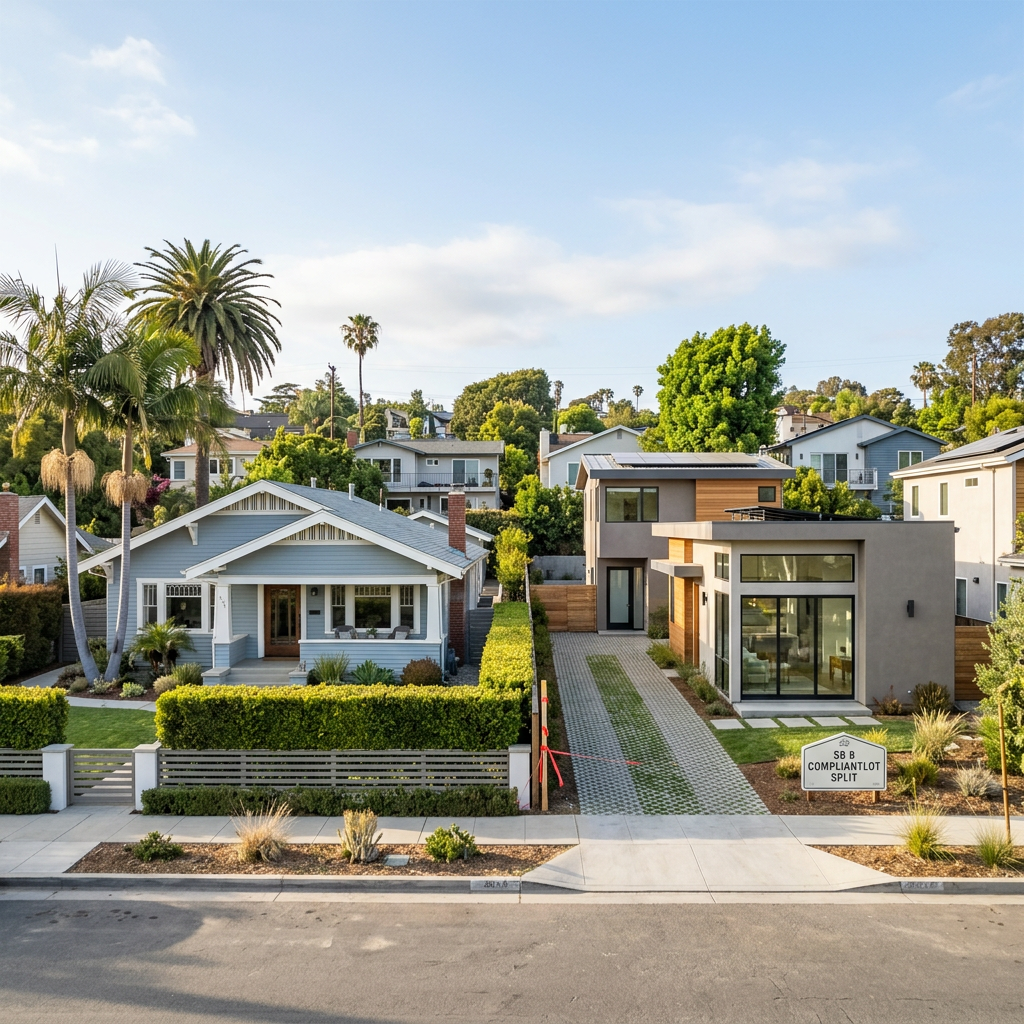
As of March 2026, the California housing market remains defined by a persistent inventory squeeze. However, a significant shift has occurred in how inventory is created. The California Housing Opportunity and More Efficiency (SB 9) Act, which initially faced municipal resistance, has matured into a viable path for buyers to secure prime urban real estate through lot splits and urban infill. For the savvy 2026 buyer, the opportunity lies not in finding the perfect house, but in identifying the perfect parcel with subdivision potential.
The Data Behind the Infill Trend
According to data from the Terner Center for Housing Innovation and recent 2025 year-end MLS reports, applications for urban lot splits in high-demand zones like San Diego, San Jose, and Los Angeles have increased by 22% year-over-year. While high interest rates in previous years slowed large-scale developments, individual buyers are increasingly utilizing the 'split-lot' strategy to offset mortgage costs or create multi-generational compounds. In 2026, approximately 12% of new residential listings in coastal CA metros are classified as 'infill' or 'subdivided' parcels, a record high for the state.
Navigating the Legal Landscape of SB 9
Success in this niche requires more than a standard home inspection. Buyers must understand the 'Objective Design Standards' that many California cities have implemented. While SB 9 allows for ministerial approval (bypassing discretionary hearings), cities can still enforce strict requirements regarding:
- Parking Mandates: Many municipalities require at least one off-street parking space per unit unless the property is within a half-mile of high-quality transit.
- Setback Limitations: State law generally limits setbacks to four feet, but local 'objective' standards for height and floor area ratio (FAR) can significantly impact the buildable footprint.
- Owner-Occupancy Affidavits: Buyers must be aware that current SB 9 provisions often require an affidavit stating they intend to occupy one of the units as their principal residence for at least three years from the date of the split.
Financing the Unconventional: Construction-to-Perm Loans
Traditional 30-year fixed mortgages are difficult to secure for undeveloped subdivided lots. In 2026, the 'Hybrid Construction Loan' has become the tool of choice. These products allow buyers to finance the acquisition of the split lot and the construction of the new dwelling simultaneously. Current market rates for these products are hovering around 6.4%, but they offer the advantage of interest-only payments during the construction phase.
Practical Takeaways for the 2026 Buyer
- Verify Infrastructure Capacity: Before closing on a split-lot, confirm with the local utility providers that the existing sewer and electrical lines can handle a second primary dwelling. Impact fees for new connections can range from $15,000 to $45,000 in California.
- Prioritize Transit-Adjacent Parcels: To bypass the most restrictive parking and setback requirements, target lots within a 'Transit Priority Area' as defined by the California Public Resources Code.
- Leverage Prefabricated Solutions: With CA labor costs reaching new highs in 2026, modular and panelized construction systems are the primary way infill buyers are maintaining equity. These units can be erected in 40% less time than site-built homes, reducing the duration of high-interest construction financing.
- Consult a Land-Use Consultant: In 2026, a standard Realtor's expertise may not suffice for SB 9 transactions. Ensure your team includes a consultant or attorney specialized in the California Subdivision Map Act.
The Bottom Line
The 2026 California buyer cannot afford to wait for a return to 2019 inventory levels. Mastery of the urban infill process represents the most effective way to secure a foothold in premium neighborhoods. By focusing on SB 9 logistics and specialized financing, buyers can manufacture their own inventory and build immediate equity in a competitive landscape.