The 2026 Spring Market: A New Normal for Lending
As of Wednesday, March 18, 2026, the mortgage landscape has entered a period of relative calm following the turbulence of the mid-2020s. According to the latest Freddie Mac Primary Mortgage Market Survey, the 30-year fixed-rate mortgage currently averages 6.24%, a significant departure from the peak volatility seen in late 2023. While rates remain higher than the historical lows of the pandemic era, the market has largely priced in the Federal Reserve's 'higher for longer' stance, providing a predictable environment for California buyers.
The 'Lock-In Effect' Begins to Thaw
For the past two years, the California housing market was paralyzed by the 'lock-in effect,' where homeowners with 3% rates refused to sell and trade up into 7% or 8% mortgages. However, recent data from the California Association of Realtors (CAR) suggests a shift. The inventory of existing single-family homes in California has increased to a 3.1-month supply—up from the 2.2-month lows seen in 2024. This increase is driven by sellers who have finally accepted that the 3% era is not returning and are moving due to lifestyle changes rather than timing the market.
Regional Impact: The California Affordability Gap
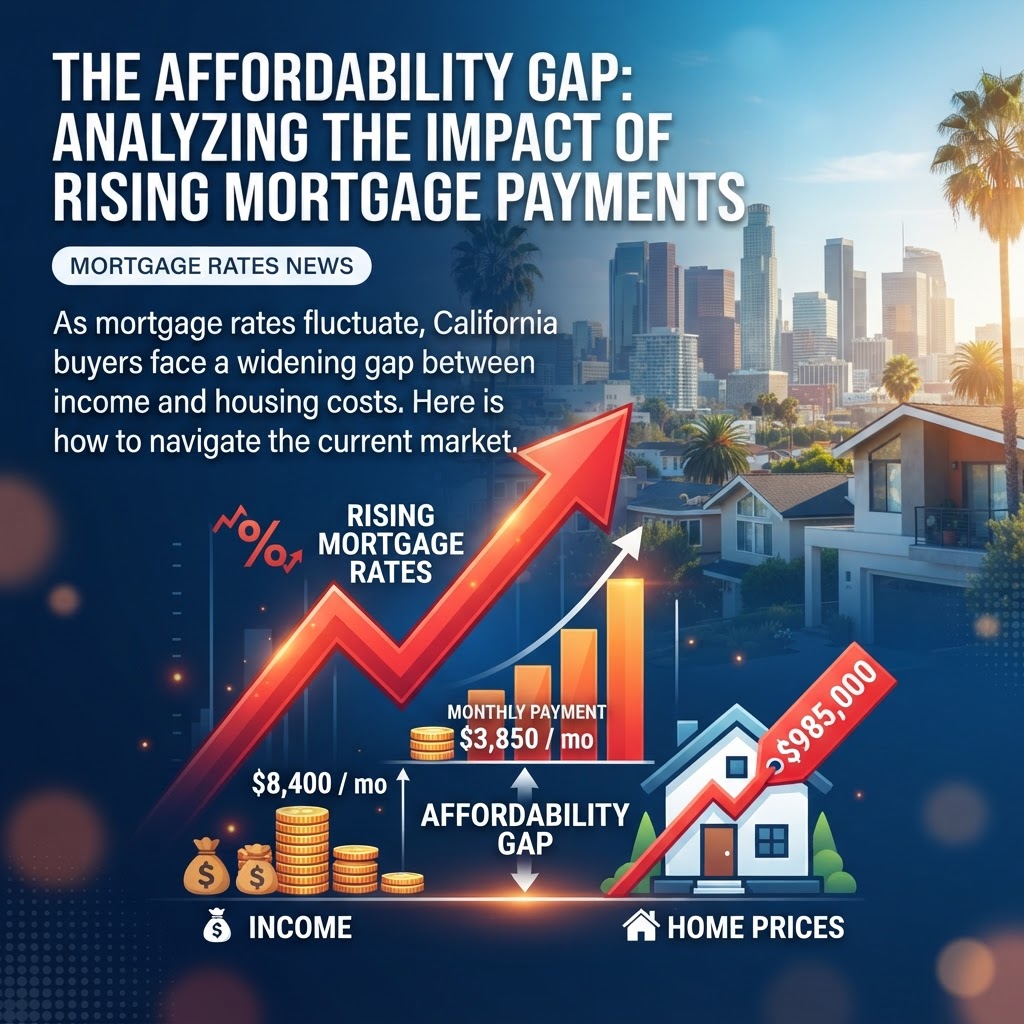
Despite the stabilization of rates, California remains one of the most challenged markets in the nation regarding affordability. The CAR Housing Affordability Index currently indicates that only 16% of California households can afford a median-priced home, which now nears $910,000 statewide. In coastal hubs like San Francisco and San Diego, the mortgage payment on a median-priced home at a 6.2% rate remains roughly 45% of the average household income, well above the traditional 30% threshold.
The Rise of Creative Financing and Portability
With traditional financing remaining expensive, 2026 has seen a surge in specialized lending products. We are seeing a marked increase in the use of:
- Temporary 2-1 Buydowns: Sellers are increasingly offering credits to buy down the buyer's interest rate for the first two years of the loan, easing the transition into homeownership.
- DSCR Loans for Investors: Debt Service Coverage Ratio (DSCR) loans have become the standard for California real estate investors, focusing on the property's cash flow rather than personal income, which is particularly useful in high-rent markets like Los Angeles.
- ADU Financing: Following the expansion of California’s accessory dwelling unit (ADU) laws, lenders have introduced construction-to-permanent loans that allow homeowners to leverage future rental income from an ADU to qualify for a larger primary mortgage.
Practical Takeaways for Buyers and Sellers
For those navigating the current California market, several strategic actions are recommended based on the current data:
- For Buyers: Focus on the 'Monthly Delta.' Rather than waiting for rates to drop to 5%, which economists at NAR suggest may not happen this year, calculate the cost of waiting. If prices continue to rise at the current 4% annual pace in California, a 0.5% rate drop next year could be offset by a higher purchase price.
- For Sellers: Incentivize over Slashing. Instead of a $20,000 price cut, consider offering that same amount as a permanent rate buydown for the buyer. This often provides more monthly relief to the buyer than a lower price would, making your listing more competitive.
- For Investors: Look to the Inland Empire and Central Valley. As coastal prices remain stagnant, cap rates in secondary California markets are showing more resilience, especially as remote work policies have stabilized into permanent hybrid models.
The 2026 mortgage environment is no longer defined by crisis, but by a calculated plateau. Success in this market requires moving beyond the hope of returning to 2021 rates and instead utilizing the current stability to make long-term equity plays.