The 2026 Market Pivot: From Gridlock to Velocity
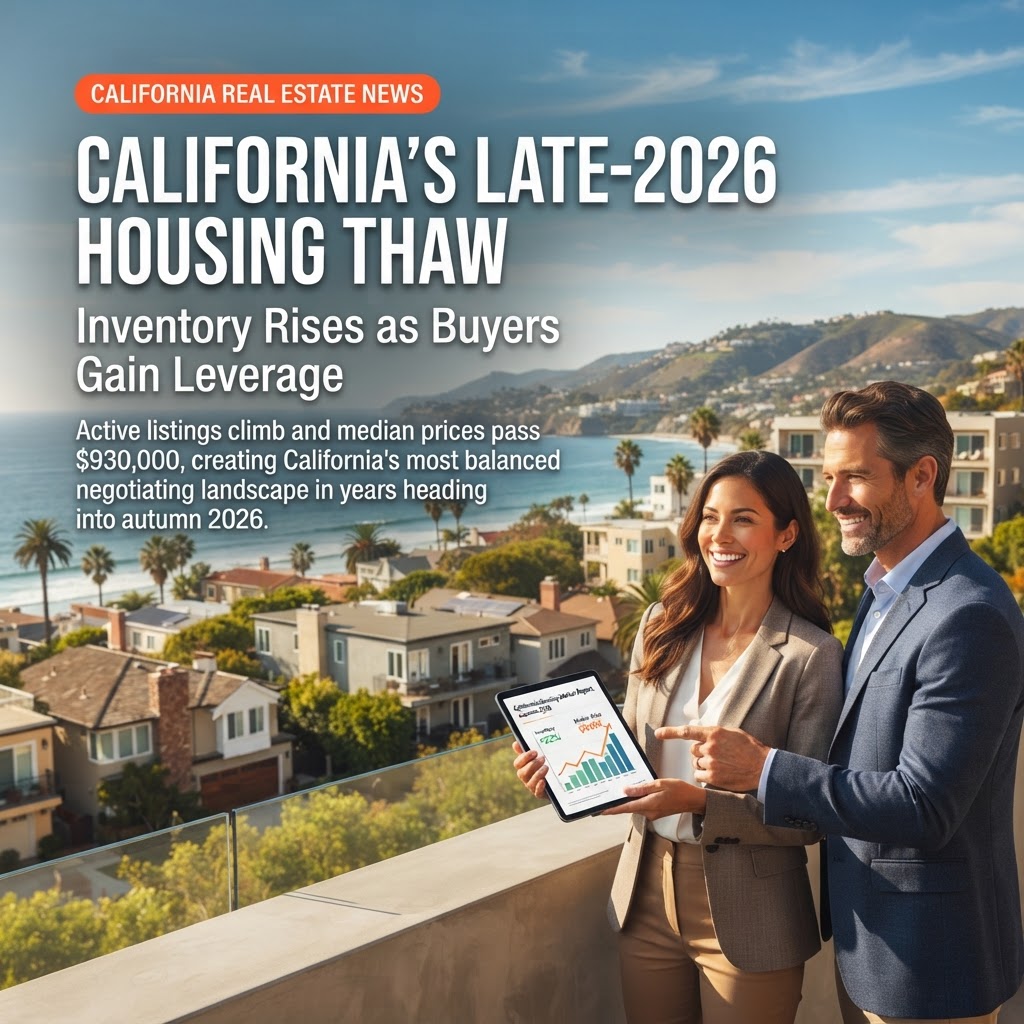
As of mid-March 2026, the California real estate landscape has officially shifted away from the 'lock-in' paralysis that defined the previous three years. According to the latest data from the California Association of Realtors (CAR), active listings across the Golden State have surged by 12.4% compared to March 2025. This influx of inventory is driven primarily by a wave of new multi-unit completions facilitated by Senate Bill 9 and a gradual acceptance among move-up buyers that the era of 3% interest rates is a relic of the past.
Data-Backed Movement: Rates and Pricing
Freddie Mac’s latest primary mortgage market survey shows the 30-year fixed-rate mortgage hovering at 5.75%, a significant decline from the 7% peaks of 2024. While still higher than the historical lows of the pandemic, this stabilization has spurred a 15% month-over-month increase in pending sales in the Central Valley and Inland Empire. However, coastal hubs like San Francisco and San Diego continue to see price appreciation, with the median home price in California now sitting at $842,000—a 3.8% increase year-over-year.
The Insurance Hurdle: The New Escrow Killer
The most pressing challenge in the March 2026 market is no longer the interest rate, but the 'insurance friction.' Despite the California Department of Insurance’s recent Sustainable Insurance Strategy reforms, many buyers in Wildfire Urban Interface (WUI) zones are finding that annual premiums have risen by 40% to 60%.
"We are seeing deals stall in the final ten days of escrow because buyers cannot secure an affordable policy that fits their debt-to-income ratio," says Elena Rodriguez, a senior analyst at a major California-based MLS. "In 2026, the insurance quote is just as vital as the appraisal."
Practical Takeaways for Market Participants
- For Buyers: Secure an insurance quote during the pre-approval process, not after an offer is accepted. In high-risk zones, factor in a 'buffer' for the FAIR Plan premiums which may exceed standard market rates.
- For Sellers: Transparency is your greatest asset. Providing a pre-inspected home and a transferable insurance lead can prevent deals from collapsing during the contingency period.
- For Investors: The 'Missing Middle' remains the strongest opportunity. With the state's continued push for density, small-scale multi-family conversions in transit-oriented districts are yielding the highest rental cap rates in 2026.
Conclusion
California’s real estate market in the spring of 2026 is one of cautious momentum. The supply of homes is finally catching up to demand, providing buyers with options they haven't seen in half a decade. However, the rising cost of ownership—specifically regarding climate-risk mitigation and insurance—means that the total cost of carry remains high. Success in this market requires a granular understanding of local zoning and a proactive approach to the evolving regulatory environment.