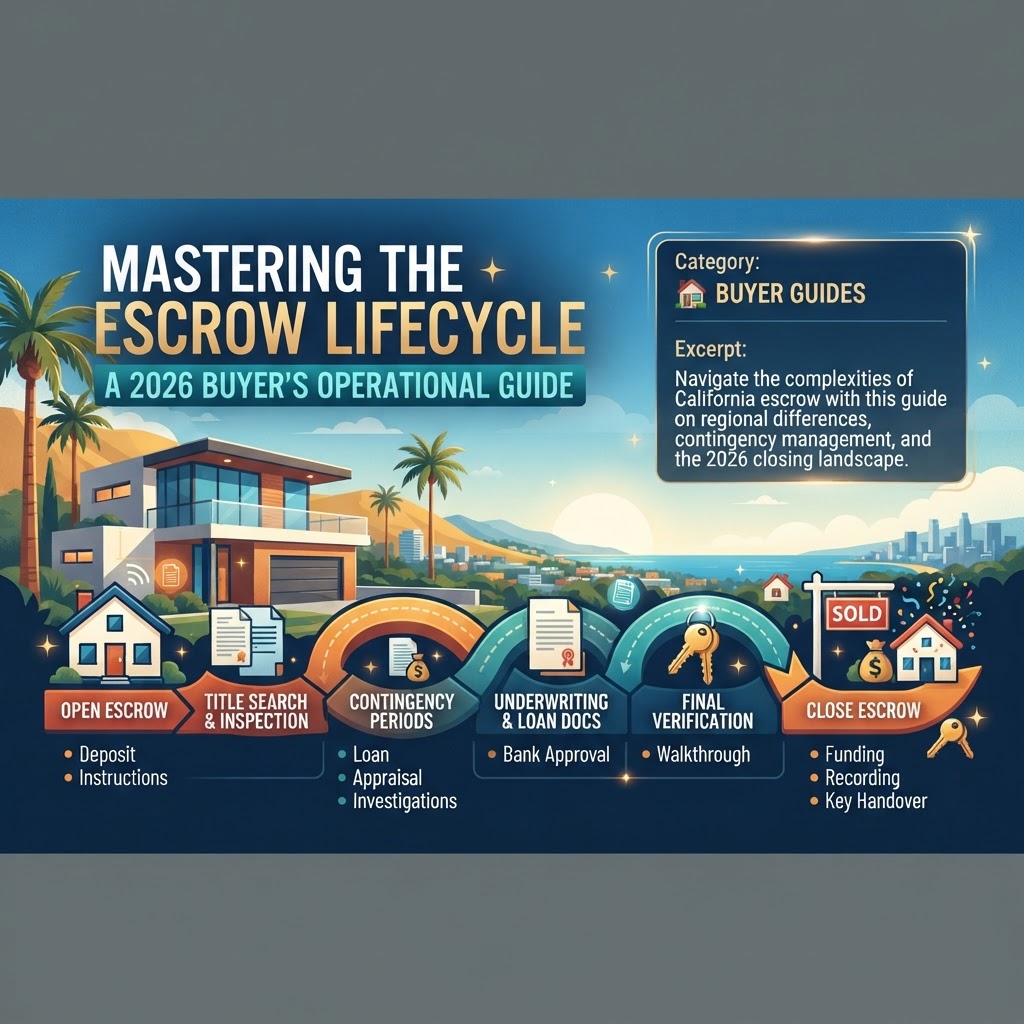
Mastering the California Escrow Lifecycle: A 2026 Buyer’s Operational Guide
For the modern California homebuyer, the period between offer acceptance and closing—the escrow process—is where the transaction is won or lost. As of late 2026, with mortgage rates creating a stark divide between existing homeowners and new entrants, understanding the mechanics of escrow is more critical than ever to protect your earnest money and ensure a successful close.
Regional Nuances: North vs. South
One of the most common points of confusion for Californians is the regional difference in escrow execution. In Northern California, title companies typically perform both title and escrow functions, often charging a single fee for both services. Buyers and sellers generally sign separate, unilateral escrow instructions near the end of the process. Conversely, in Southern California, it is standard practice to use independent, licensed escrow companies alongside title insurance providers. Here, parties typically sign joint, bilateral escrow instructions shortly after the purchase agreement is executed.
The Contingency Clock
In California, contingency periods are measured in calendar days, not business days, with the clock starting the day after contract acceptance. These periods are your primary safety net. During this window, you must complete your due diligence, including:
- Property Inspections: Beyond standard home inspections, consider specialized checks for pests, roofs, and foundations.
- Appraisal Contingencies: If the property appraises for less than the purchase price, this contingency allows you to renegotiate or exit the contract without penalty.
- Loan Underwriting: Ensure your lender is synchronized with your escrow timeline to avoid delays that could jeopardize your deposit.
Strategic Takeaways for 2026 Buyers
1. Understand Liquidated Damages: If you cancel a contract after removing all contingencies without a valid contractual reason, the seller may be entitled to retain your earnest money deposit as liquidated damages. Always ensure your contingency removal is documented in writing.
2. Monitor Legislative Shifts: Stay informed on local zoning changes. For instance, recent updates to ADU regulations and the Starter Home Revitalization Act (SB 1116) may impact the long-term utility or development potential of your property. Check your specific county’s interim zoning guidance to ensure your investment aligns with current land-use laws.
3. Leverage Neutrality: Remember that the escrow officer is a neutral third party. Their role is to hold funds, documents, and title until all conditions of the sale are met. If you encounter a dispute, rely on your real estate agent to facilitate communication rather than expecting the escrow officer to advocate for your position.
4. Prepare for the "Rate Gap": With approximately 75% of California homeowners currently holding mortgage rates below 5%, inventory remains tight. When you enter escrow, ensure your financing is robust; sellers are increasingly sensitive to the risk of loan fallout in a high-rate environment.
By treating the escrow process as a structured, time-sensitive project rather than a passive waiting period, you can mitigate risk and navigate the complexities of the 2026 California market with confidence.