Japantown San Jose: A Cultural Anchor in the 2026 Silicon Valley Market
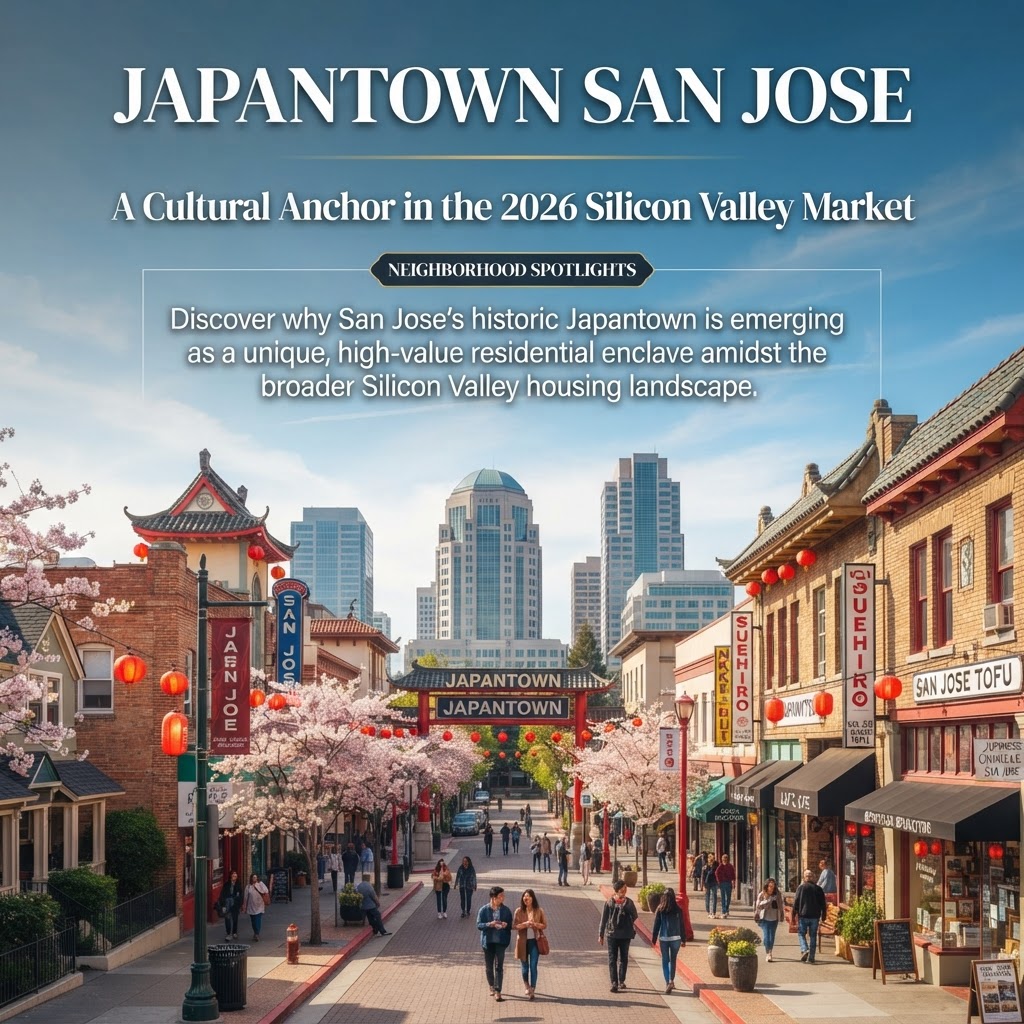
As Silicon Valley continues to navigate a complex real estate environment, buyers are increasingly looking beyond traditional tech-centric hubs toward neighborhoods that offer both historical character and long-term stability. Japantown, one of the last three remaining historic Japantowns in the United States, has emerged as a compelling focal point for those seeking a blend of cultural heritage and modern urban convenience.
A Unique Market Position
While the broader San Jose market saw a median home price of $1,100,000 as of September 2026, Japantown offers a distinct value proposition. Unlike the sprawling suburban developments common in Santa Clara County, this neighborhood provides a walkable, high-density environment that appeals to professionals and families who prioritize community connectivity over square footage. With properties in San Jose currently averaging 60 days on the market, homes in well-established, amenity-rich pockets like Japantown continue to see steady interest from buyers looking for proximity to the downtown core.
Community Features and Amenities
Japantown is defined by its vibrant streetscape, which serves as a living museum of local history. Residents benefit from a high concentration of independent businesses, including authentic culinary institutions, art galleries, and community-focused events that foster a tight-knit atmosphere. The neighborhood’s infrastructure is supported by the broader Santa Clara County R-1 School District, which provides access to a vast network of educational institutions, including 280 elementary schools and 166 middle schools, ensuring that the area remains attractive to families.
Transportation and Connectivity
For the modern commuter, Japantown’s location is a strategic asset. Its proximity to major transit arteries and the downtown San Jose transit hub allows for efficient access to the wider Silicon Valley tech corridor. As the region continues to prioritize transit-oriented development, the walkability of Japantown serves as a hedge against the volatility often associated with car-dependent suburban markets.
Practical Takeaways for 2026
- For Buyers: Focus on the long-term appreciation potential of historic districts. Japantown’s limited geographic footprint creates a natural supply constraint that protects property values even when the broader California market experiences fluctuations.
- For Investors: The neighborhood’s high walkability score and cultural appeal make it a prime candidate for rental demand, particularly among professionals who work in the nearby tech hubs but desire a neighborhood with a distinct identity.
- Market Context: With California’s statewide market currently in a balanced state—where supply and demand are roughly equal—buyers in Japantown should be prepared for competitive bidding on well-maintained, historic properties that rarely hit the market.
By prioritizing neighborhoods that offer a tangible sense of place, such as Japantown, residents can secure a foothold in one of the world’s most dynamic economic regions while enjoying a lifestyle that is increasingly rare in the modern suburban landscape.