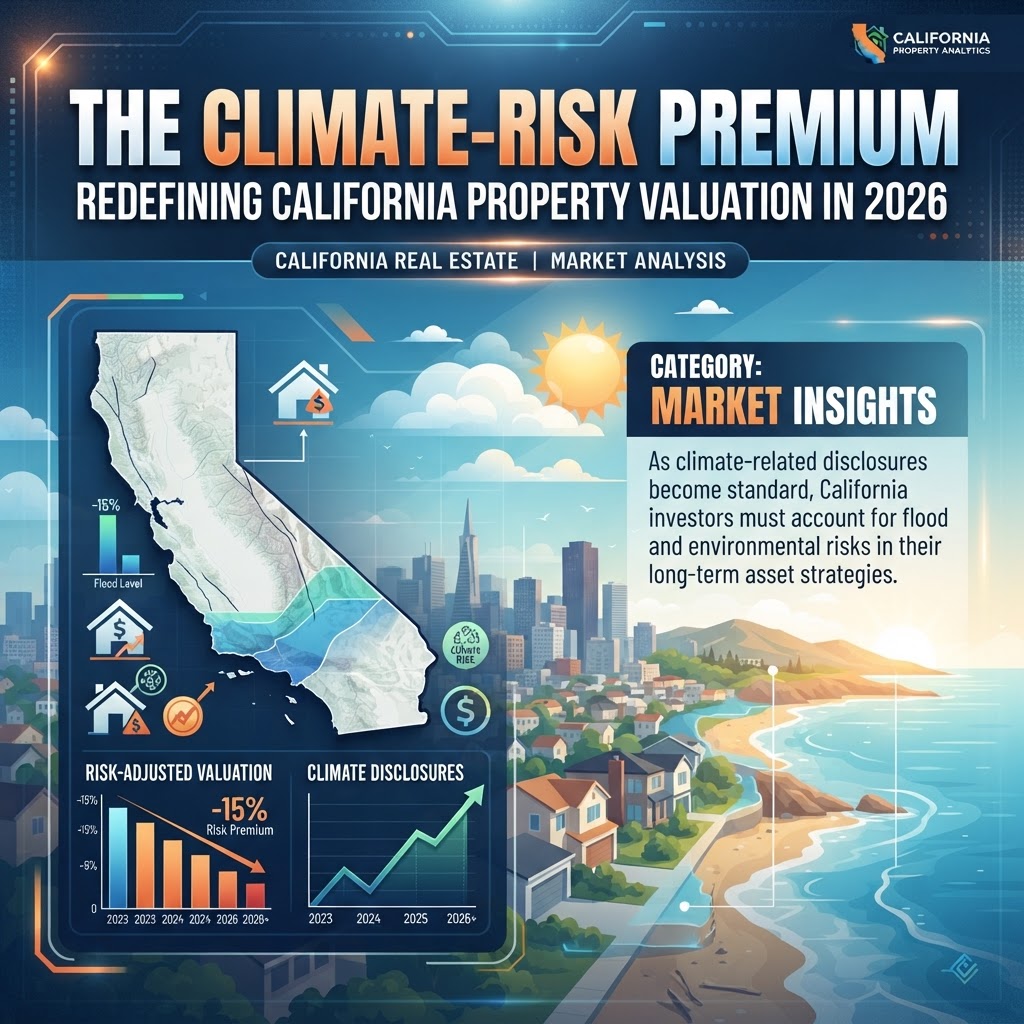
The Climate-Risk Premium: Redefining California Property Valuation in 2026
For decades, California real estate valuation was driven by the classic triad of location, square footage, and school district quality. As of late 2026, a fourth, increasingly critical variable has entered the equation: the climate-risk premium. With data from sources like Redfin indicating that thousands of properties in regions like Riverside and Oceanside face significant flood risks over the next 30 years, the market is beginning to price environmental vulnerability into asset values [7, 9].
The Shift in Risk Assessment
Investors and homeowners are no longer viewing climate events as "black swan" occurrences but as predictable, long-term liabilities. In cities like Murrieta, where specific property percentages are identified as being at risk of severe flooding, the impact on long-term appreciation is becoming a focal point for institutional and retail buyers alike [5]. This shift is forcing a recalibration of how we define a "stable" asset. Properties that were once considered prime real estate are now being scrutinized for their proximity to flood zones and wildfire-prone areas, creating a new layer of due diligence that goes beyond traditional title searches.
The Affordability-Risk Tradeoff
The current California housing landscape is defined by a stark affordability gap, where monthly payments for a two-bedroom home can exceed rental costs by as much as 66% [8]. This financial pressure is pushing buyers toward inland markets where entry prices are lower. However, these same inland areas often carry higher climate-risk profiles. Investors are now faced with a complex calculation: is the lower entry price in an inland market worth the potential long-term insurance premiums and depreciation risks associated with climate exposure?
Practical Takeaways for Market Participants
- For Investors: Conduct a "Climate Due Diligence" audit on all potential acquisitions. Utilize flood factor scores and local environmental reports to project potential insurance cost increases over a 10-year hold period.
- For Sellers: Transparency is becoming a competitive advantage. Proactively disclosing climate-mitigation improvements—such as upgraded drainage systems or fire-resistant landscaping—can help maintain property value in a market increasingly sensitive to environmental risk.
- For Buyers: Factor in the "hidden" costs of ownership. When calculating your PITI (Principal, Interest, Taxes, and Insurance), ensure that your insurance estimates account for potential climate-related surcharges, which are rising faster than general inflation in high-risk zones [3].
As California continues to navigate its housing shortage, the next phase of market maturity will be defined by resilience. The properties that will hold their value best in the coming decade are not just those in high-demand neighborhoods, but those that demonstrate a structural ability to withstand the state's evolving environmental realities.


