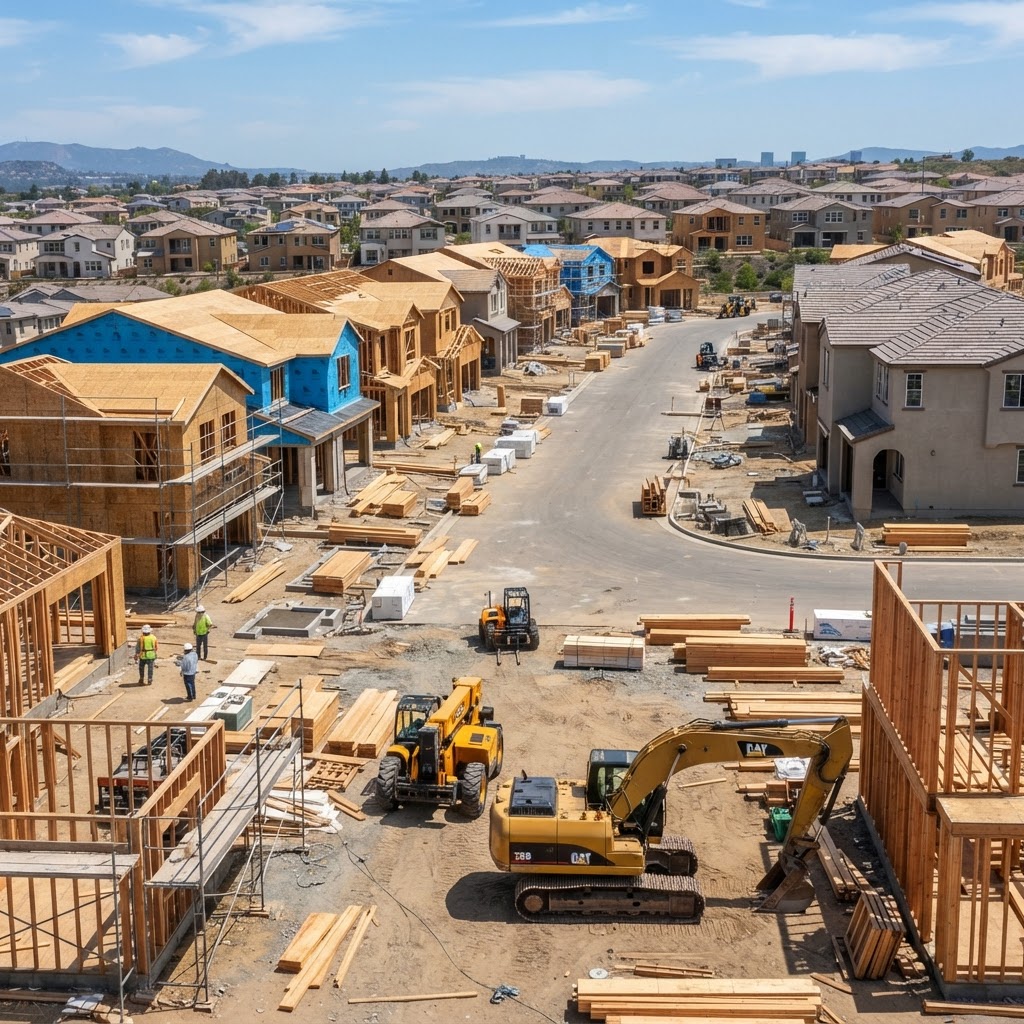
The Construction Bottleneck: Why Labor Scarcity is Stalling California Supply
While much of the discourse surrounding California’s real estate market focuses on interest rates and buyer affordability, a critical supply-side constraint is quietly intensifying: the residential construction labor shortage. Even as developers look to address the state's chronic housing deficit, the ability to break ground and complete projects is being hampered by a lack of skilled labor that has reached levels not seen since the mid-2000s.
The Data Behind the Shortage
According to recent data from the National Association of Home Builders (NAHB), the industry is grappling with widespread shortages across essential trades. More than half of surveyed builders reported significant difficulties in securing framing crews, rough and finished carpentry, masonry, and concrete work. Furthermore, nearly half of builders are struggling to find reliable plumbers, electricians, and drywall installers. This labor availability index has worsened significantly, with 47% of respondents reporting shortages—a figure that exceeds the levels seen during the 2004-2006 housing boom.
The Impact on Market Equilibrium
The current environment creates a paradox for the California market. While statewide inventory has climbed to over 154,000 listings, much of this stock remains concentrated in specific regions, and new construction is failing to keep pace with long-term demand. The labor shortage acts as a 'hidden' tax on development, driving up construction costs and extending project timelines. For investors and developers, this means that even if land is acquired, the path to profitability is increasingly narrow due to rising labor premiums and the risk of project delays.
Policy and Economic Headwinds
Beyond the immediate trade gaps, the industry is navigating complex regulatory and social pressures. Builders have noted that concerns regarding immigration enforcement are causing some legal workers to avoid job sites, further tightening the available labor pool. This uncertainty, combined with the high cost of capital, has led to a cautious approach among developers, who are hesitant to commit to new projects when the cost of labor remains volatile and unpredictable.
Practical Takeaways for Stakeholders
- For Investors: Focus on existing inventory rather than speculative new builds. The current labor-driven cost inflation makes the 'buy-and-hold' or 'value-add' strategy on existing stock more predictable than ground-up development.
- For Buyers: Expect new construction to remain at a premium. Because builders are facing higher labor costs, they are unlikely to lower prices on new inventory, keeping new homes at the higher end of the market spectrum.
- For Developers: Prioritize projects with pre-secured labor contracts. In a market where skilled trades are scarce, the ability to guarantee a workforce is now as valuable as the site location itself.
As California continues to navigate its high-cost equilibrium, the construction labor crisis serves as a reminder that housing supply is not just a matter of zoning or financing—it is a matter of human capital. Until the industry can stabilize its workforce, the dream of significantly increasing California's housing stock will remain a difficult target to hit.