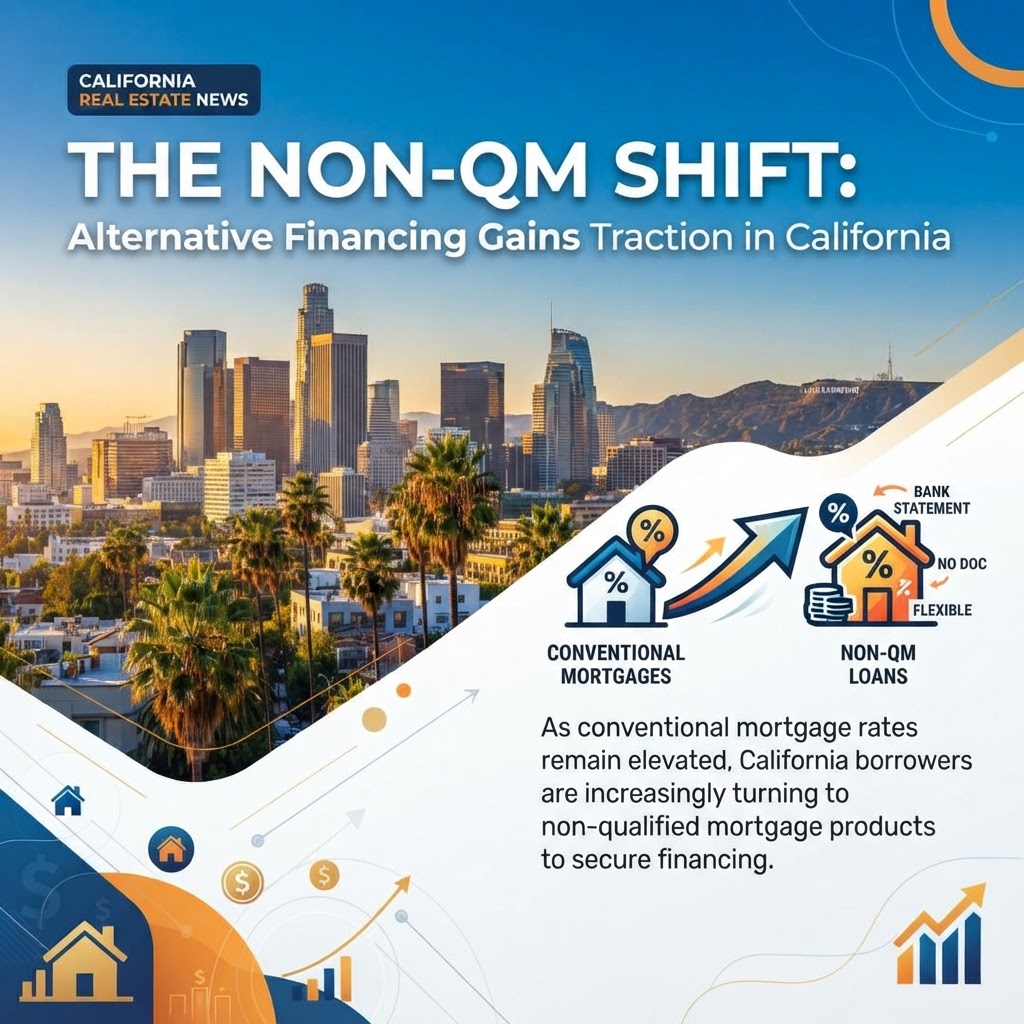
The Non-QM Shift: Alternative Financing Gains Traction in California
As of mid-October 2026, the California real estate landscape is defined by a persistent tension between high entry costs and evolving financing strategies. While the broader market continues to grapple with the impact of elevated interest rates on transaction volume, a notable shift is occurring in how buyers are funding their purchases.
The Rise of Non-QM Lending
With conventional mortgage rates hovering near 7.56% as of late September, many prospective buyers have found themselves priced out of traditional lending channels. According to recent industry reports, this environment has created a unique opening for non-qualified mortgage (non-QM) loans. Unlike conventional products, these loans often utilize alternative documentation—such as bank statements or asset-based qualification—rather than traditional W-2 income verification.
Market analysts note that because non-QM lenders often operate with different capital structures, their rates have increased more slowly than those of conventional lenders during recent volatility. This has made them an increasingly attractive, albeit specialized, tool for self-employed professionals and investors who remain active in the California market despite the high-rate environment.
Market Indicators and Regional Divergence
The state's housing market remains highly bifurcated. While urban centers continue to see inventory challenges, secondary markets are showing signs of shifting power dynamics. For instance, data from mid-October 2026 indicates that areas like Lake Arrowhead are currently experiencing a buyer-friendly market, with approximately 9.8 months of inventory available. Conversely, high-demand coastal regions continue to see inventory constraints, even as price reductions become more widespread in areas like the South Bay.
Practical Takeaways for Market Participants
- For Buyers: If you are self-employed or have a non-traditional income stream, consult with a mortgage broker regarding non-QM options. These products may offer more flexibility than conventional loans, potentially allowing you to enter the market sooner.
- For Sellers: With price reductions becoming more common in regions like the South Bay, pricing your property accurately based on the last 90 days of local MLS data is critical. Overpricing in a market where buyers are sensitive to monthly payments can lead to extended days on market.
- For Investors: Monitor the absorption rates in your target zip codes. Markets with over 6 months of supply, such as parts of the Inland Empire and mountain communities, may offer better negotiation leverage compared to the tighter coastal corridors.
As the state moves toward the end of 2026, the ability to navigate these alternative financing paths and understand hyper-local inventory levels will be the defining factor for successful real estate outcomes in California.


