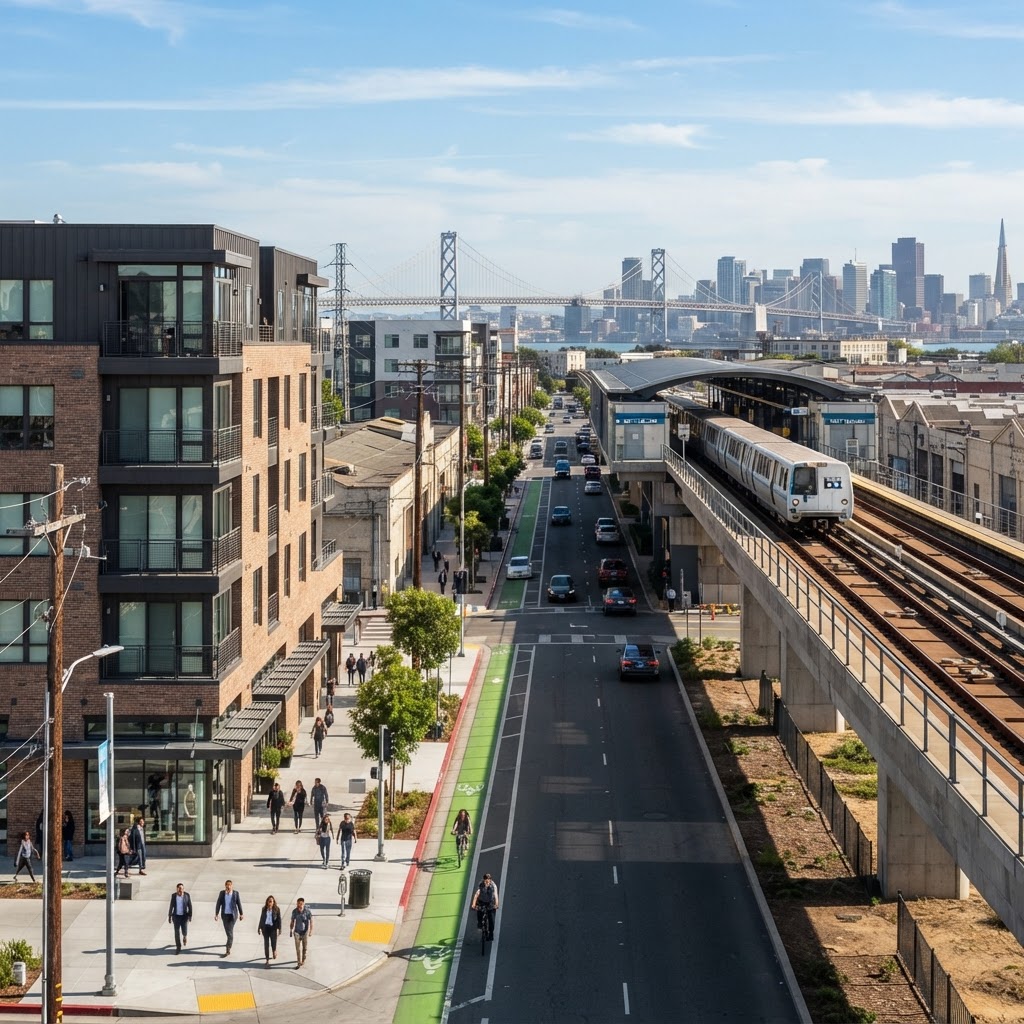
The Evolution of West Oakland
While many Bay Area neighborhoods are defined by established character, West Oakland is currently defined by transformation. As of mid-2026, the neighborhood is undergoing a significant shift, driven by the Mandela Station transit-oriented development project. This initiative is set to introduce a mix of new residential, retail, and office spaces, fundamentally altering the area's density and walkability profile.
Strategic Connectivity
For the modern commuter, West Oakland’s primary appeal remains its unparalleled access. The West Oakland BART station serves as a critical artery, providing rapid transit to San Francisco, Downtown Oakland, and Berkeley. According to recent regional infrastructure reports, ongoing improvements to BART system reliability and Caltrans freeway rehabilitation are designed to reduce commute friction, making neighborhoods with direct transit access increasingly attractive to professionals who prioritize time-efficiency.
Investment and Growth Potential
West Oakland is increasingly viewed as a long-term growth opportunity. Unlike neighborhoods that have already reached peak valuation, West Oakland offers a unique entry point for buyers looking to capitalize on the 'ripple effect' of regional infrastructure spending. The influx of new public infrastructure and private development is expected to enhance property values as the area becomes more connected and easier to navigate.
Practical Takeaways for Buyers and Investors
- Focus on Proximity: Prioritize properties within walking distance of the BART station or the upcoming Mandela Station development, as these areas are likely to see the highest appreciation as infrastructure projects conclude.
- Monitor Development Pockets: Keep a close watch on the specific blocks surrounding the transit hub. The variability in West Oakland means that value is often hyper-local; identifying areas with active renovation permits can signal a neighborhood's upward trajectory.
- Long-Term Horizon: Given the scale of the Mandela Station project, this is a market for buyers with a 5-to-10-year outlook. The neighborhood is transitioning from an industrial-adjacent area to a mixed-use urban center, a process that rewards patience over short-term flipping.
As the Bay Area housing market continues to stabilize in 2026, West Oakland stands out as a rare opportunity where infrastructure-led growth meets relative affordability. For those willing to look past the current construction phase, the neighborhood offers a blueprint for the future of transit-oriented urban living in Northern California.


