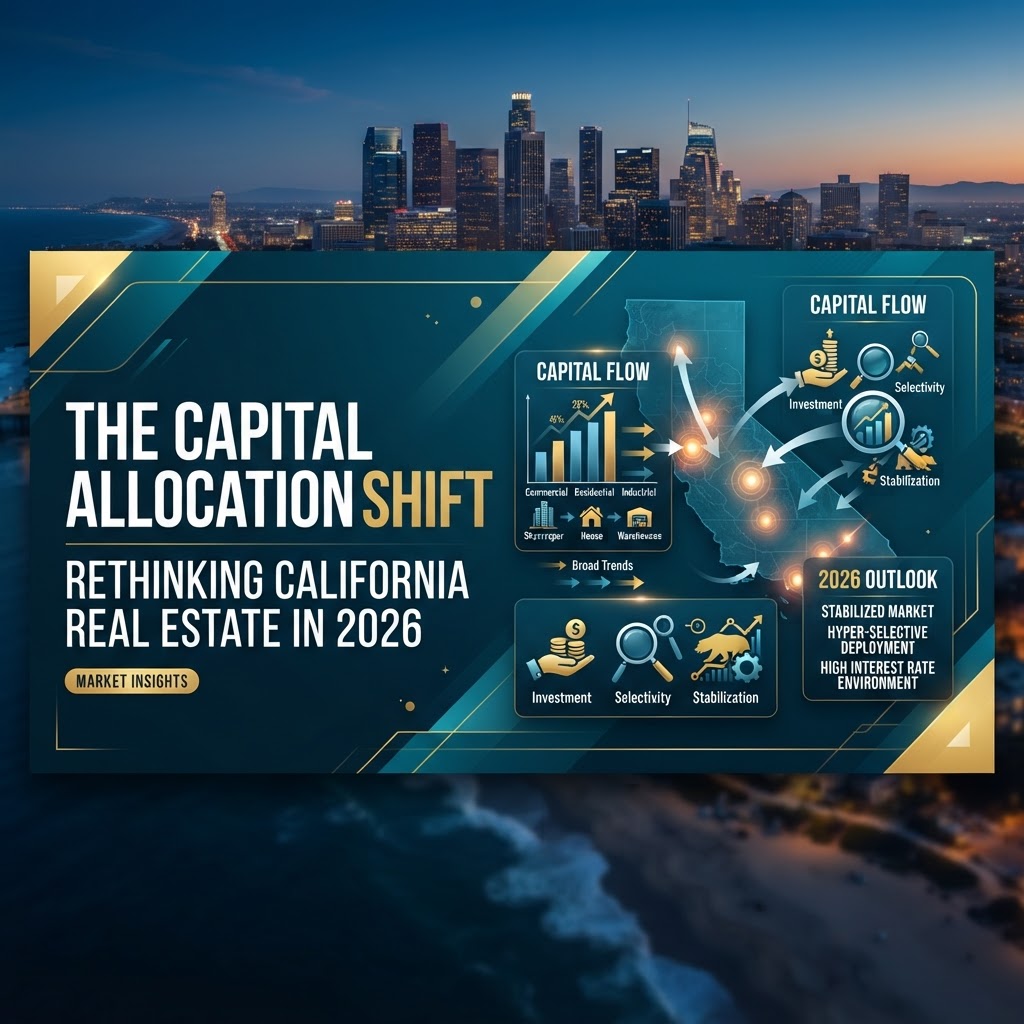
The Capital Allocation Shift: Rethinking California Real Estate in 2026
The California real estate landscape in late 2026 is defined less by volatility and more by a profound shift in how capital is deployed. With 30-year fixed mortgage rates hovering near 6.96% as of late September 2026, the era of speculative growth has been replaced by a period of disciplined, selective investment. For market participants, the statewide median price—often cited as approaching $883,000—is no longer a reliable benchmark for individual decision-making.
The End of the 'Statewide Median' Myth
Investors and homebuyers who rely on aggregate data are missing the structural reality of the current market. According to the California Association of Realtors (C.A.R.), affordability remains a significant hurdle, with only about 18% to 22% of households qualifying for a median-priced home. However, this figure masks a growing divergence between coastal hubs and inland regions. While coastal markets like Los Angeles and San Diego maintain seller leverage due to persistent supply constraints, inland areas like Sacramento are showing signs of a buyer-friendly environment where negotiation is once again a standard part of the transaction process.
Commercial Real Estate: The Rise of Selective Development
The commercial sector is undergoing a similar recalibration. The Summer 2026 Allen Matkins/UCLA Anderson Forecast indicates that developers have fully internalized the 'higher-for-longer' interest rate environment. This has led to a more surgical approach to project evaluation. Industrial and multifamily assets remain the primary focus for institutional capital, while the office sector continues to navigate a bifurcated recovery. The takeaway for commercial investors is clear: the market is not stagnant, but it is significantly more discerning regarding asset quality and location-specific demand profiles.
Practical Takeaways for 2026
- For Homebuyers: Stop chasing the statewide average. Focus on micro-market data where inventory levels are rising. In regions like Sacramento, the shift toward a buyer’s market provides an opportunity to negotiate terms that were impossible during the 2021-2022 peak.
- For Investors: Prioritize cash-flow stability over speculative appreciation. With borrowing costs elevated, the 'math' of acquisition must be stress-tested against current rates rather than historical averages. Look for assets in supply-constrained corridors where the 'customization premium'—the value of a move-in-ready, high-utility property—remains high.
- For Sellers: The market is rewarding those who present homes with genuine care. In a competitive, high-rate environment, properties that require significant capital expenditure are lingering longer. Strategic updates that improve immediate livability are currently yielding the highest returns.
As we move toward the end of 2026, the California market is not 'stuck'—it is simply maturing. By moving past the headlines of affordability ceilings and focusing on regional nuances, participants can find significant value in one of the world's most resilient, albeit complex, real estate ecosystems.