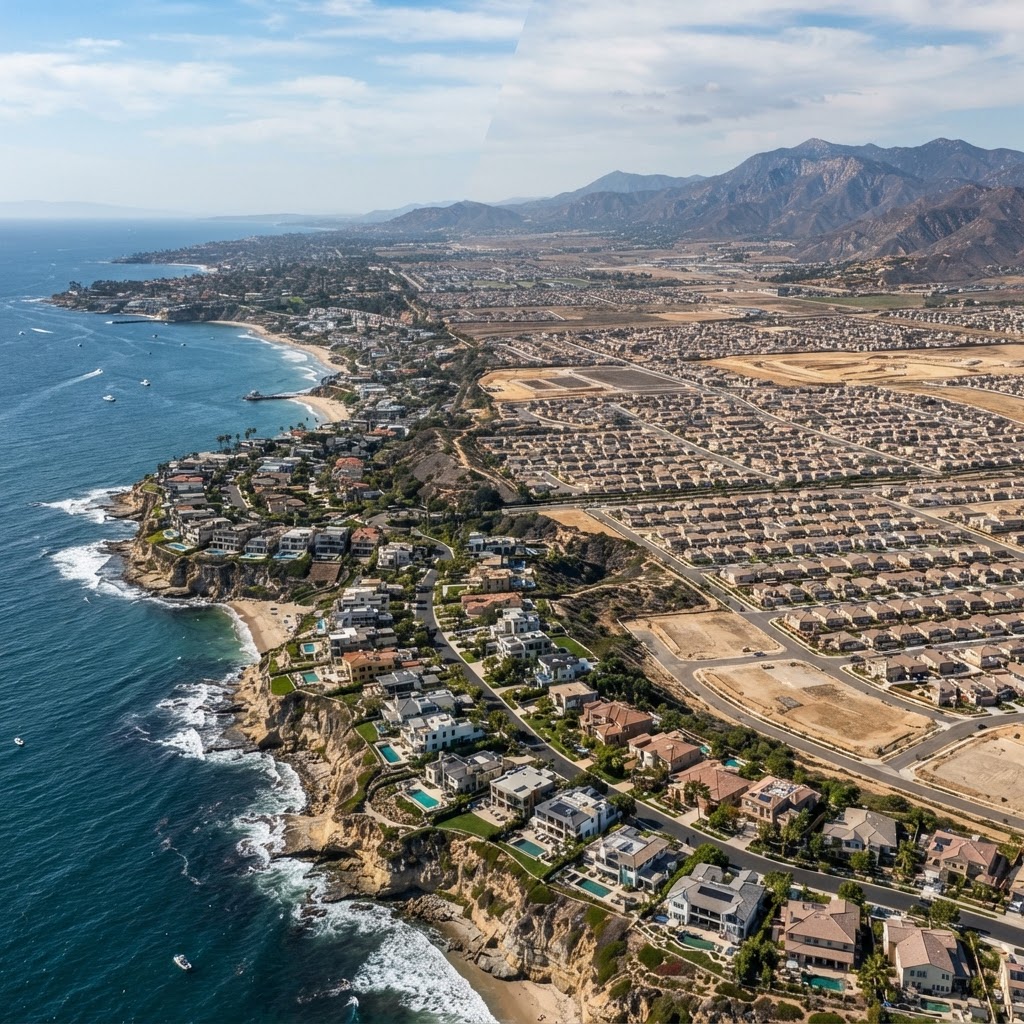
The Bifurcation of California Real Estate: Coastal Resilience vs. Inland Supply
As of October 2026, the California real estate landscape is no longer moving in a singular direction. Instead, the market has entered a period of profound bifurcation, where the performance of a property is increasingly dictated by its specific geography and the local balance of supply and demand.
The Coastal Fortress
In major coastal hubs like San Francisco, Silicon Valley, and San Diego, the narrative remains one of persistent scarcity. Despite broader economic headwinds, these markets continue to see strong rental demand, with vacancy rates consistently holding below 5% according to recent industry analysis. For investors and owners in these regions, the lack of developable land acts as a natural floor for valuations, allowing for sustained rent growth in the 4-5% range for well-managed assets.
The Inland Oversupply Challenge
Conversely, inland markets and areas with high concentrations of new construction are facing a different reality. In the Los Angeles metro area, for instance, the absorption of approximately 5,100 new units in the downtown core alone has pushed citywide vacancy rates to between 5.6% and 5.7%. This influx of inventory is forcing developers to offer concessions to attract tenants, a trend that stands in sharp contrast to the competitive bidding wars seen in coastal enclaves.
Sacramento serves as a cautionary tale for this trend; following years of aggressive supply delivery, the region saw rents turn negative in late 2025, highlighting the risks of over-building in secondary markets.
Data-Driven Market Realities
While the California Association of Realtors (C.A.R.) projects a modest 3.6% increase in median home prices to $905,000 for 2026, these figures mask the volatility at the local level. For example, while Mountain View has seen median home values climb by over 4.5% in the last year, other regions are experiencing flat growth or modest price corrections as inventory levels rise.
Practical Takeaways for Stakeholders
- For Investors: Prioritize assets in supply-constrained coastal markets where land-use barriers prevent rapid inventory expansion. In inland markets, focus on properties with unique value-add potential to compete against the influx of new, amenity-rich construction.
- For Buyers: Recognize that the 'California Market' is a collection of micro-markets. Buyers in inland regions may find more leverage to negotiate prices or concessions, whereas coastal buyers should prepare for continued competition despite higher interest rate environments.
- For Developers: The era of 'build anywhere' is over. With vacancy rates rising in high-supply zones, project viability now hinges on hyper-local absorption data rather than regional averages.
As we look toward the end of 2026, the primary driver of California real estate will remain the tension between legislative efforts to increase housing supply and the physical and economic realities of local market saturation.


