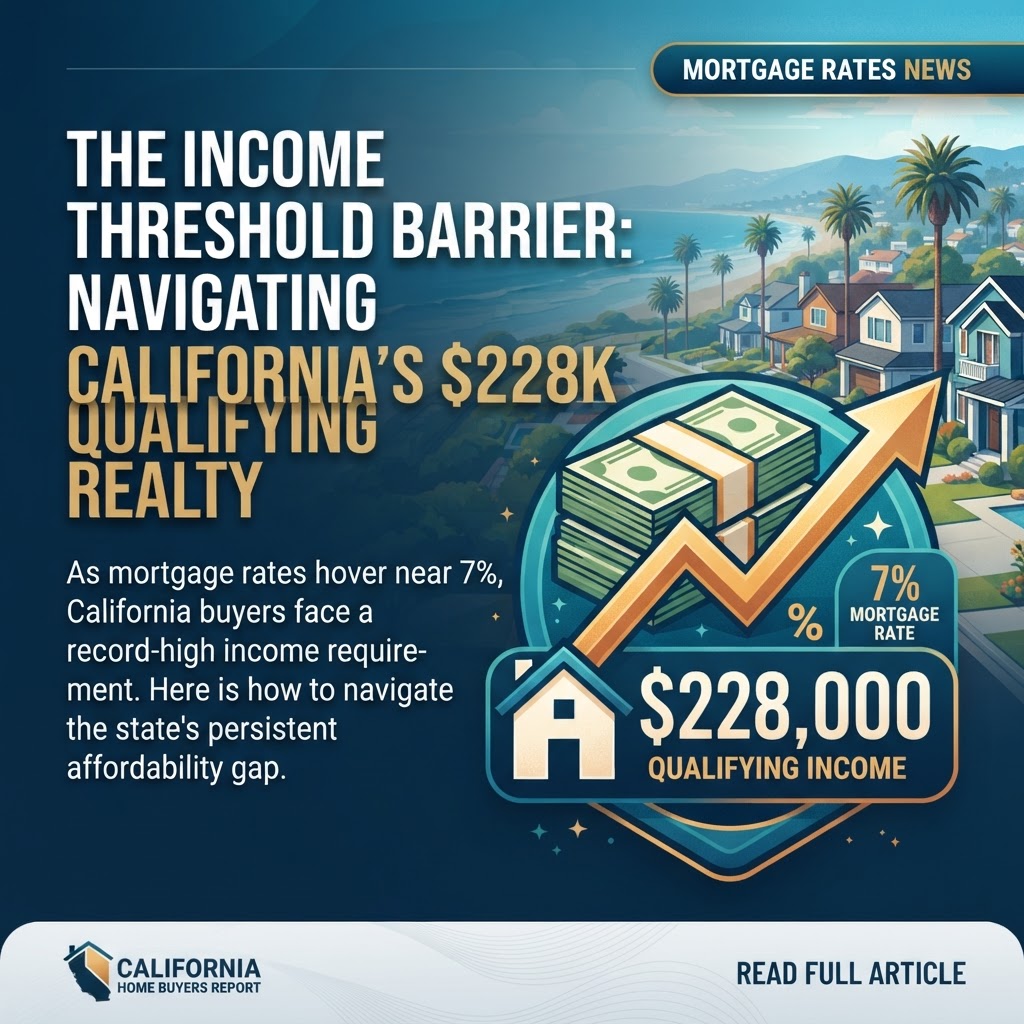
The California Affordability Gap: Adapting to the 7.6% Mortgage Plateau
As of October 2026, California's housing market is navigating a challenging interest rate environment, with 30-year fixed mortgage rates hovering around 7.6% [1]. This plateau, representing a three-year high, has created a distinct set of pressures for prospective buyers and current homeowners in the Golden State [7] [8].
The Price-Rate Disconnect
While earlier projections for 2026 suggested a potential decline in rates toward 5.4%, the reality has been a persistent climb [3]. Despite this, California home prices have remained resilient, with the statewide median reaching $930,260 earlier this year [10]. This creates a 'lock-in' effect where supply remains tight, as homeowners with lower legacy rates are hesitant to trade their current mortgages for the prevailing 7.6% market rate.
Implications for California Buyers
The affordability threshold remains a significant hurdle. With only 22% of California households able to afford a median-priced home as of early 2026, the current rate environment further compresses the pool of eligible buyers [2]. Buyers are increasingly forced to look toward:
- Condo and Townhome Alternatives: With a higher affordability rate of 32% compared to single-family homes, these properties are becoming the primary entry point for middle-income buyers [2].
- Geographic Diversification: Buyers are shifting focus toward regions like the Inland Empire, where the median price point is significantly lower than the San Francisco Bay Area, allowing for more manageable monthly PITI (Principal, Interest, Taxes, and Insurance) payments [2].
Practical Takeaways for the Current Market
For those looking to enter the market, the strategy must shift from timing the rate drop to managing the current cost of capital:
- Prioritize Loan-to-Value (LTV) Ratios: With average loan sizes in California exceeding $500,000, maintaining a strong credit profile is essential to securing the best available pricing within the current 7.6% range [1].
- Evaluate Adjustable-Rate Mortgages (ARMs): In a high-rate environment, some buyers are exploring shorter-term fixed periods to lower initial monthly obligations, provided they have a clear exit or refinancing strategy.
- Focus on Total Cost of Ownership: Given that California housing remains significantly more expensive than the national average, buyers should stress-test their budgets against current rates rather than relying on optimistic forecasts of rapid rate cuts [2].
As the market continues to adjust, the focus for California participants remains on inventory scarcity and the long-term commitment required to sustain homeownership in a high-interest-rate climate.