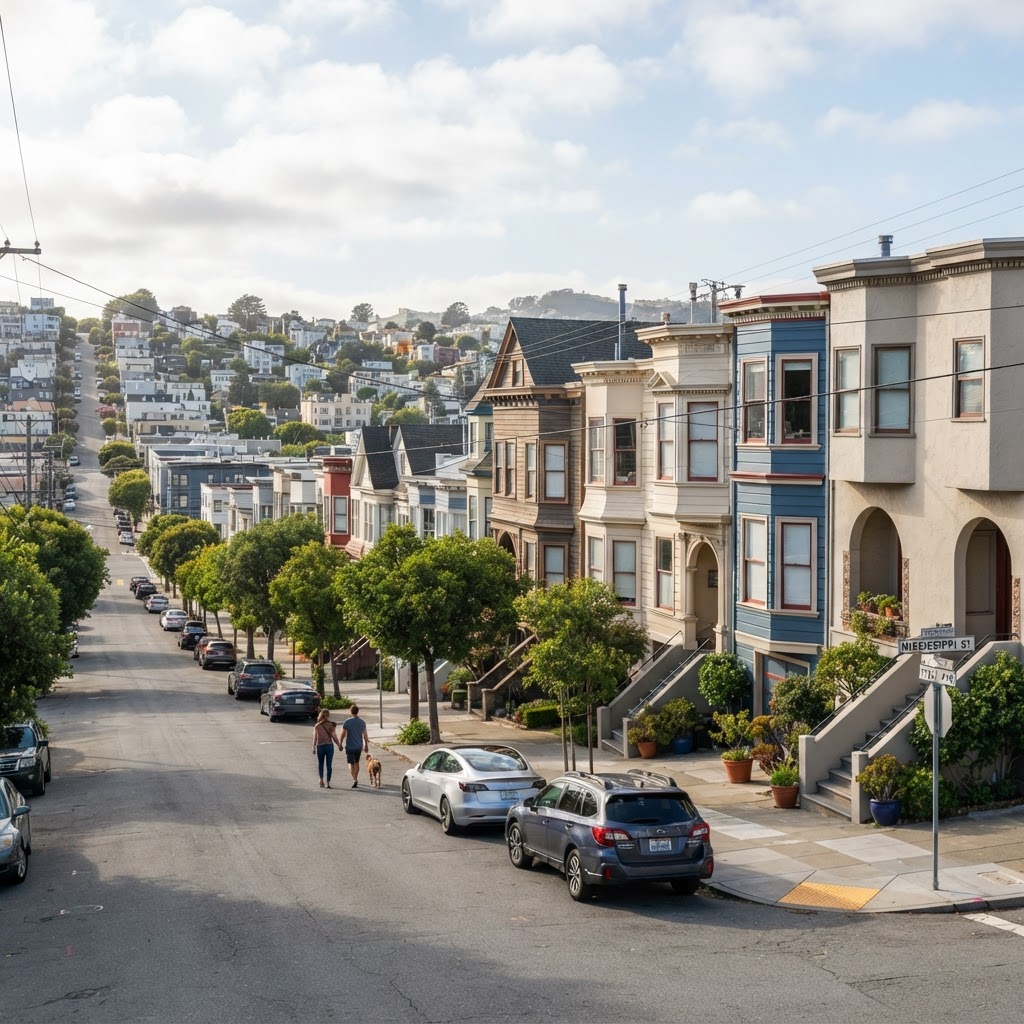
The Excelsior: San Francisco’s Resilient Value Play
In the shifting landscape of the 2026 San Francisco housing market, buyers are increasingly looking beyond the traditional high-prestige corridors. While neighborhoods like Noe Valley have seen prices stabilize after a 8–12% correction from 2022 peaks, the Excelsior district has quietly solidified its position as one of the city’s most accessible and culturally vibrant residential enclaves.
Community and Character
Located in the southern reaches of San Francisco, the Excelsior offers a distinct departure from the city's dense, high-rise centers. The neighborhood is defined by its diverse cultural fabric, which is prominently reflected in the local markets, family-owned restaurants, and community events that line the Mission Street corridor. Unlike the transient nature of some central districts, the Excelsior maintains a strong sense of neighborhood identity, characterized by a mix of classic California architecture and a tight-knit residential feel.
Transportation and Connectivity
For the modern professional, the Excelsior provides a strategic balance between residential tranquility and urban access. The neighborhood benefits from its proximity to major transit arteries, including easy access to the Balboa Park BART station and multiple Muni bus lines. This connectivity makes it a viable option for those who require occasional access to the Financial District or Silicon Valley, supporting the hybrid work models that have become the standard in 2026.
Practical Takeaways for Buyers
- Prioritize Financing: In competitive San Francisco sub-markets, sellers expect proof of financing with every offer. Ensure your pre-approval is current before beginning your search.
- Understand Micro-Climates: San Francisco’s weather varies significantly by neighborhood. The Excelsior generally benefits from more sun compared to the fog-heavy western districts, a factor that can influence both quality of life and energy efficiency.
- Long-Term Perspective: As a neighborhood that turns over more slowly than central hubs, the Excelsior is best suited for buyers looking for a long-term hold rather than a quick flip.
Market Outlook
Data from 2026 indicates that while the broader Bay Area market remains high-priced—with median home values in many areas exceeding $1.1 million—the Excelsior remains a relative value. For buyers priced out of the northern and central neighborhoods, the Excelsior offers the opportunity to secure a foothold in the city without sacrificing the essential amenities of urban life. Prospective investors and homeowners should focus on properties that offer potential for modest upgrades, as the neighborhood’s steady appreciation is driven by its fundamental utility and growing appeal to a diverse demographic of residents.


