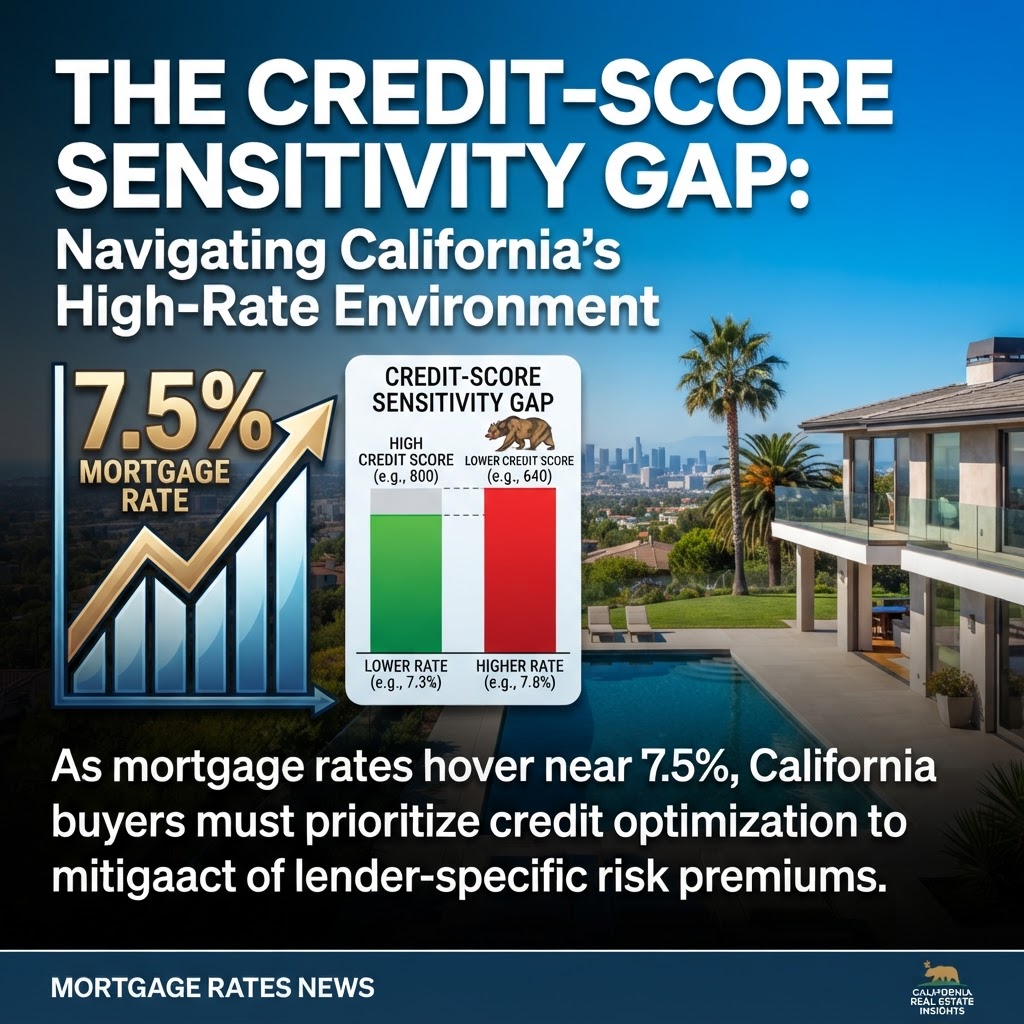
The Credit-Score Sensitivity Gap: Navigating California's High-Rate Environment
As of early October 2026, the national mortgage landscape remains in a state of heightened volatility. With the 30-year fixed-rate mortgage averaging approximately 7.51% [8, 9], California home buyers are facing a market where the cost of borrowing is not just high, but increasingly sensitive to individual borrower profiles. While national averages provide a baseline, the reality for Californians—who often require larger loan amounts—is defined by a widening 'sensitivity gap' between standard conforming rates and the risk-adjusted pricing applied by lenders.
The Mechanics of the Risk Premium
In the current economic climate, lenders are exercising extreme caution. Data indicates that mortgage rates are no longer a monolithic figure; they are a reflection of perceived risk [2, 4]. For California buyers, this means that a 7.5% headline rate can quickly escalate based on credit score, debt-to-income (DTI) ratios, and down payment size [2]. Lenders are currently pricing in a higher risk premium for borrowers who do not meet 'ideal' credit thresholds, effectively creating a two-tiered market where the cost of capital varies significantly between applicants with 740+ scores and those in the 680-720 range.
Strategic Implications for California Buyers
For those looking to enter the California market, the strategy must shift from 'rate shopping' to 'profile optimization.' Here are three actionable steps to navigate this environment:
- Credit Scrubbing: With rates at these levels, even a 20-point increase in your credit score can result in a meaningful reduction in your APR. Review your credit report for minor errors or unpaid legacy bills that may be artificially suppressing your score [4].
- The Jumbo vs. Conforming Threshold: Given California's high property values, many buyers are pushed into the jumbo loan category. Jumbo rates are currently showing increased volatility (averaging 7.64% [8]), making it essential to compare the cost of a larger down payment to stay within conforming loan limits versus the interest expense of a jumbo mortgage.
- Float-Down Provisions: Because the market remains fragile—with upcoming economic reports, such as the September jobs data, expected to trigger further fluctuations [8]—buyers should inquire about 'float-down' options. This allows you to lock in a rate while retaining the ability to secure a lower rate if market conditions improve before closing [4].
Looking Ahead
The current environment is characterized by a delicate balance between economic data and lender risk appetite. As we move through October, the primary driver for mortgage rates will remain the 10-year Treasury yield and the spread between mortgage-backed securities and government bonds [5, 7]. For the California buyer, the takeaway is clear: in a high-rate environment, your financial profile is your most valuable asset. By focusing on credit health and understanding the nuances of lender-specific risk pricing, buyers can mitigate the impact of the current 7.5% reality.


