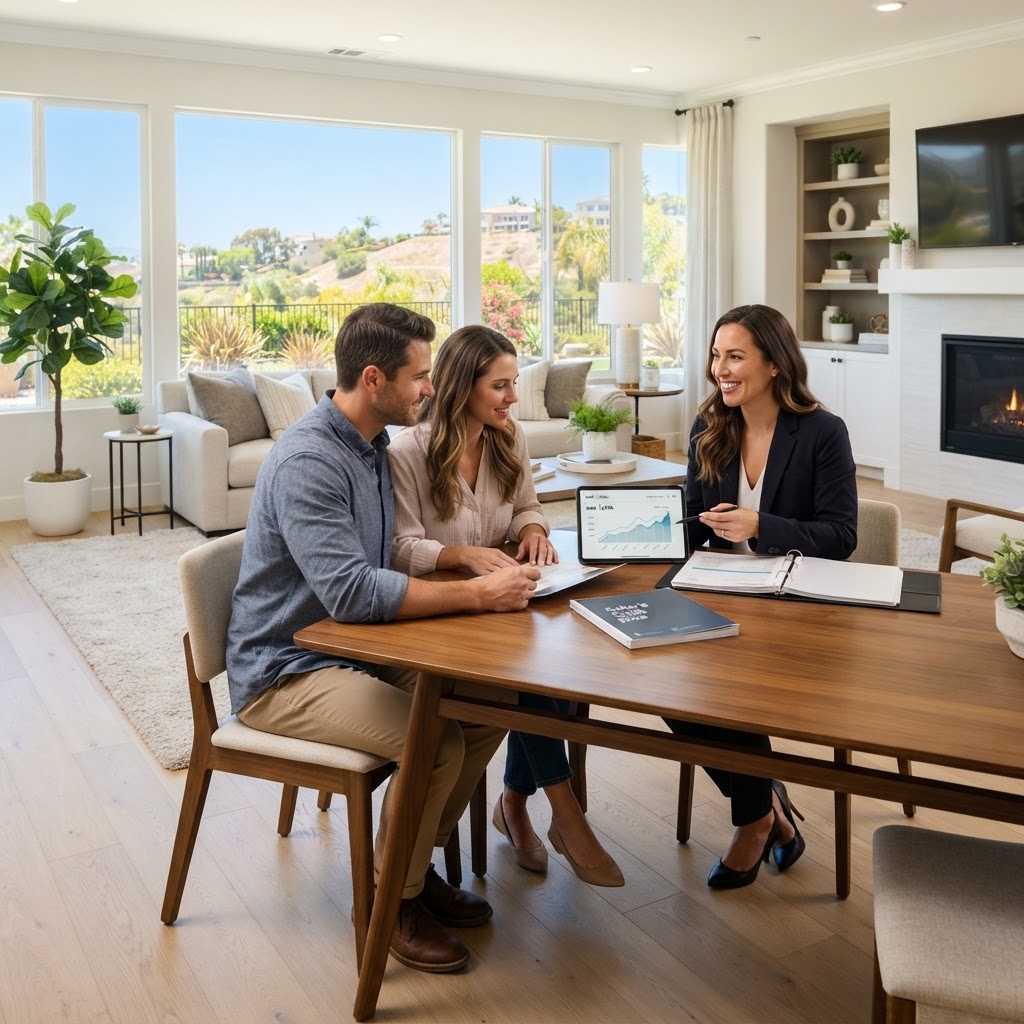
The 2026 California Seller’s Guide: Mastering Buyer Psychology and Valuation
In the current 2026 California housing market, where affordability remains a significant hurdle—with only 22% of households able to afford a median-priced single-family home as of Q1 2026 [2]—sellers must move beyond standard listing practices. With a statewide median price hovering near $843,390 [2], buyers are increasingly analytical, making emotional connection and strategic pricing the primary drivers of a successful sale.
1. The Psychology of Pricing in a High-Interest Environment
With mortgage rates fluctuating near 7% [6], buyers are hyper-sensitive to monthly payment shocks. Pricing your home correctly is not just about market value; it is about qualifying the buyer pool. Overpricing in this environment often leads to longer days on market, which can stigmatize a property. Use local micro-market data—such as the specific absorption rates in your city—rather than statewide averages to set a price that triggers immediate interest [4].
2. Leveraging Visual Storytelling
In a market where buyers are cautious, professional staging is no longer a luxury; it is a competitive necessity. Data suggests that staging helps create an emotional connection, allowing buyers to visualize themselves in the space [9]. Focus on high-impact, low-cost improvements that enhance the "first impression"—the moment a buyer walks through the door. In California’s diverse climate, ensure your staging highlights energy efficiency and indoor-outdoor flow, which remain top priorities for modern buyers.
3. Transparency as a Competitive Advantage
California’s disclosure requirements are among the most rigorous in the nation [5]. Rather than viewing the Transfer Disclosure Statement (TDS) as a hurdle, use it as a tool to build trust. Providing comprehensive, honest disclosures upfront reduces buyer uncertainty and minimizes the risk of escrow fallout. Buyers who feel they have full transparency are often more willing to negotiate on price or terms, knowing they are avoiding future surprises [9].
4. Practical Takeaways for 2026 Sellers
- Analyze Your Micro-Market: Do not rely on statewide medians. Look at the Unsold Inventory Index in your specific zip code to determine if you are in a seller-leaning or buyer-leaning micro-market [6].
- Prepare for the 30-45 Day Window: A typical California transaction takes 30–45 days [5]. Align your moving timeline with this reality to avoid the stress of bridge financing.
- Focus on "Net Proceeds" over "List Price": In a market with a 98.9% sale-to-list ratio [6], prioritize offers with strong financing contingencies and clear proof of funds over those with inflated, unrealistic offer prices.


