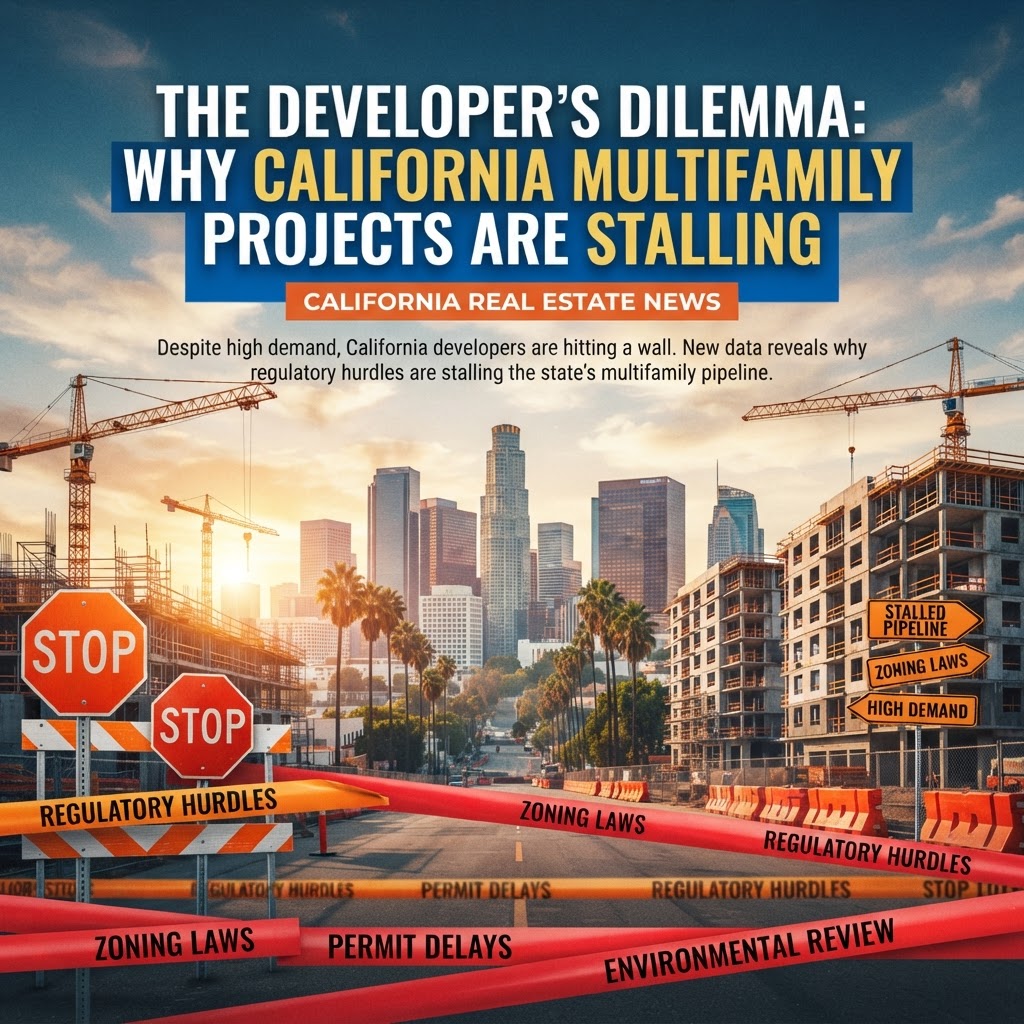
The Developer’s Dilemma: Why California Multifamily Projects Are Stalling
As of October 2026, California’s housing market is defined by a stark contradiction: while demand for multifamily units remains at historic highs, the actual delivery of new housing is failing to keep pace. According to the Summer 2026 Allen Matkins/UCLA Anderson Forecast, a significant majority of industry professionals—75% in Northern California and 64% in Southern California—expect demand to outpace supply for the next three years. Yet, the pipeline remains constricted, not by a lack of interest, but by a complex web of non-market barriers.
The Regulatory Bottleneck
While interest rates and construction costs have dominated headlines, developers are increasingly pointing to "soft" costs as the primary deterrent to new projects. The survey highlights that entitlement delays, local impact fees, and persistent regulatory hurdles are effectively neutralizing the economic incentive to build. Even as the market stabilizes, these friction points create a "developer’s dilemma" where the cost of navigating the approval process often exceeds the projected margins of the project itself.
A Bifurcated Development Landscape
The current environment has forced a shift in strategy. Developers are becoming hyper-selective, moving away from speculative projects toward "shovel-ready" sites that minimize exposure to long-term entitlement risks. This has led to a bifurcated market: while high-density, transit-oriented developments in major metros continue to attract capital, smaller-scale multifamily projects are struggling to secure financing due to the uncertainty of local permitting timelines.
Practical Takeaways for Stakeholders
- For Investors: Focus on projects with pre-approved entitlements. In the current climate, the value of a project is increasingly tied to its "regulatory readiness" rather than just its location or architectural design.
- For Developers: Prioritize partnerships with municipalities that have demonstrated a commitment to streamlining the CEQA process. The ability to navigate local bureaucracy is now as critical as traditional construction management.
- For Buyers: Expect the supply-demand gap to persist. With developers pulling back on new starts due to regulatory fatigue, the inventory of new, modern multifamily units will likely remain tight, keeping upward pressure on rents and purchase prices in high-demand urban corridors.
As California moves into the final quarter of 2026, the focus of the real estate industry is shifting from interest rate sensitivity to a broader battle against structural inefficiency. Until the state can bridge the gap between housing policy goals and the reality of local development hurdles, the "missing middle" of California’s housing stock will remain exactly that—missing.


