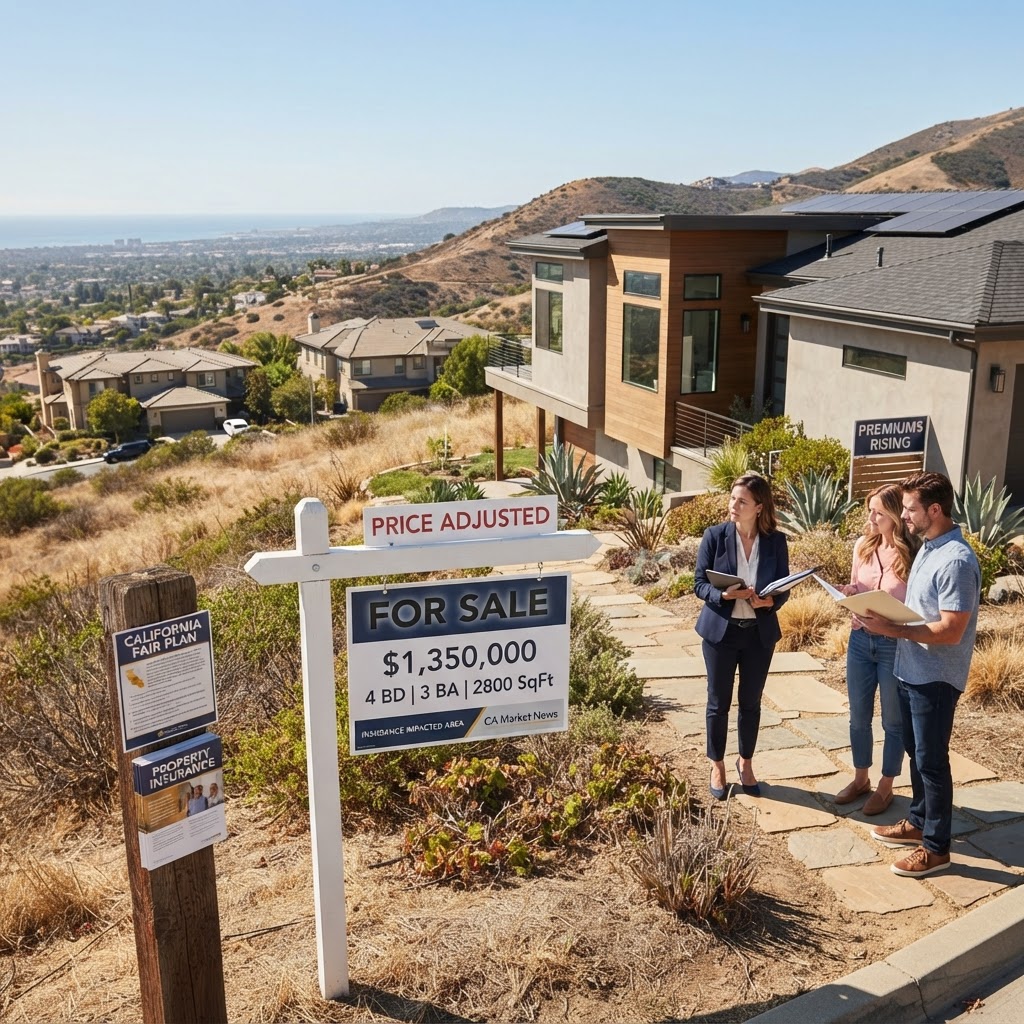
California’s Insurance Crisis: How Rising Premiums Are Reshaping Valuations
For decades, California real estate valuation models focused primarily on location, square footage, and interest rate sensitivity. In Q4 2026, a new, immovable variable has taken center stage: the total cost of ownership (TCO) driven by the accelerating insurance crisis.
The New Math of Asset Valuation
While the 'Payment Math' of interest rates has dominated headlines, a quieter, more systemic shift is occurring. Data from the California Department of Insurance and recent MLS transaction analysis indicates that in high-risk zones—particularly those prone to wildfire or complex flood disclosures—insurance premiums have increased by an average of 42% over the last 24 months. This is no longer a peripheral cost; it is now a fundamental drag on capitalization rates.
For investors, this has led to the 'Insurance Discount' phenomenon. Properties in vulnerable corridors are seeing a softening in list-to-sale ratios as buyers demand price concessions to offset the massive jump in non-mortgage monthly expenditures.
Regulatory Drag and the 'Insurability Gap'
The state's regulatory environment, intended to stabilize the market, has inadvertently created an 'insurability gap.' As major carriers continue to limit exposure or exit certain zip codes, the reliance on the FAIR Plan (California's insurer of last resort) has reached record levels. However, the FAIR Plan's limitations—often providing less coverage at higher premiums—are forcing commercial and residential owners to reconsider their risk exposure.
According to recent analysis from CRE industry observers, commercial properties with heavy fire-risk exposure are seeing an expansion of cap rates by 50 to 75 basis points compared to similar assets in lower-risk coastal or urban infill zones, purely as a function of rising operating expenses related to risk mitigation.
Practical Takeaways for Market Participants
For Buyers and Investors:
- Pre-Offer Due Diligence: Never rely on a seller’s current insurance costs. Secure a 'letter of insurability' and a premium quote from a carrier early in the escrow period. The cost you see today may be significantly higher once the policy is transferred or renewed.
- Risk-Adjusted Cap Rates: When analyzing investment properties, stress-test your pro-forma with insurance premiums increasing at 10-15% annually, rather than standard inflation rates.
For Sellers:
- Hardening Your Asset: Invest in verifiable fire-hardening improvements (e.g., ember-resistant vents, non-combustible siding, roof upgrades). In 2026, these are no longer just aesthetics; they are financial instruments that can make your property insurable when neighboring homes struggle to find coverage.
- Transparency Wins: Providing a history of comprehensive insurance coverage can reduce buyer anxiety, potentially keeping a deal from falling apart during the inspection phase.
The Path Forward
The California real estate market is resilient, but it is moving toward a bifurcated reality. Properties that can demonstrate lower risk profiles through infrastructure and mitigation will command a premium, while those unable to manage the 'insurance tax' will see their valuations stagnate. Understanding this shift is the key to navigating the final quarter of 2026 and beyond.


