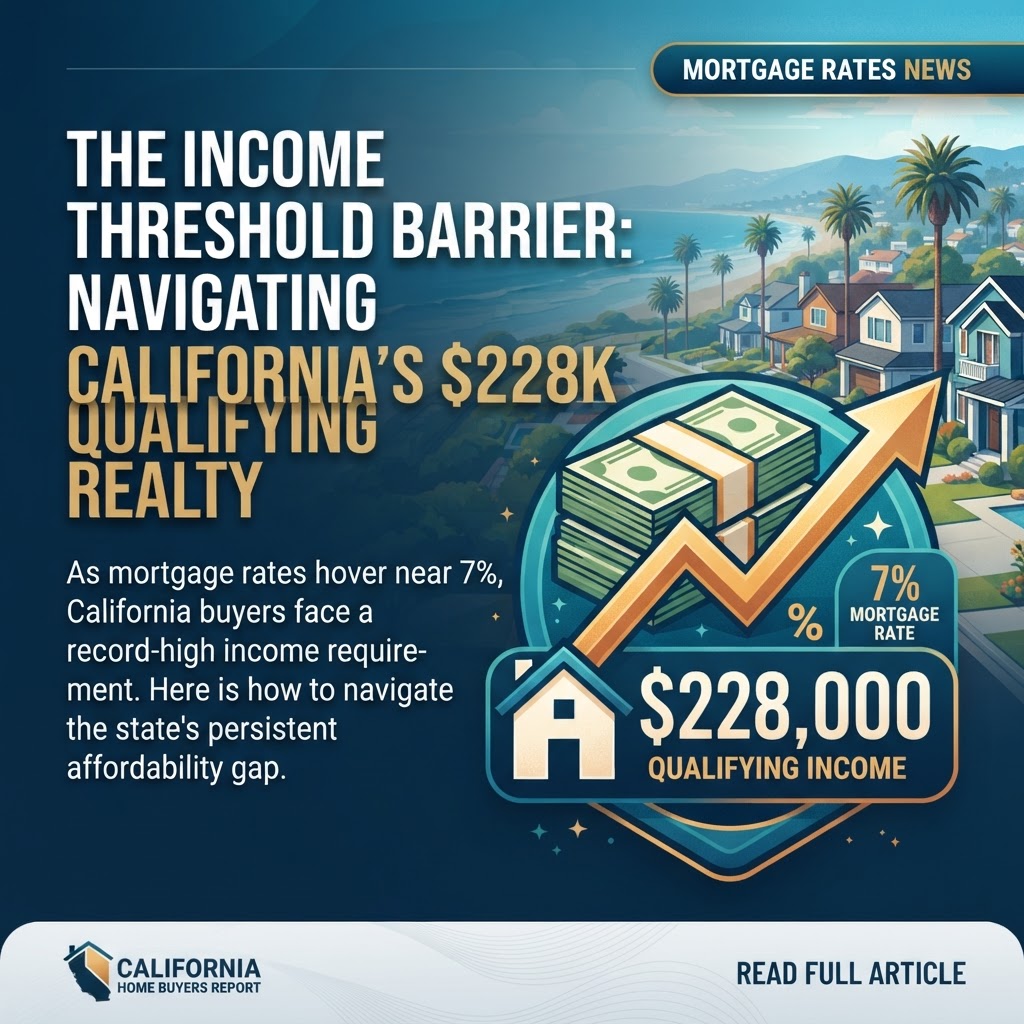
The October Surge: Adapting to the 7.3% Mortgage Reality in California
As of early October 2026, the California housing market is grappling with a significant shift in borrowing costs. According to Freddie Mac’s Primary Mortgage Market Survey, the 30-year fixed-rate mortgage has climbed to an average of 7.28% as of October 1, 2026, marking a sharp increase from the 7.03% recorded just one week prior. This surge represents a 20-month high, creating a challenging environment for prospective homeowners across the state.
Understanding the Current Rate Environment
The recent upward trajectory in mortgage rates is largely driven by broader economic pressures, including persistent inflation and rising Treasury yields. While the Federal Reserve maintains the Federal Funds Rate at 3.63%, the spread between the Fed’s benchmark and mortgage rates has widened, signaling increased market uncertainty. For California buyers, this means that the cost of financing a home has become significantly more expensive than it was even a few months ago, with some daily market reports pushing rates as high as 7.60%.
Implications for California Home Buyers
The impact of these rates is twofold: reduced purchasing power and increased market hesitation. As borrowing costs rise, many buyers are finding that their monthly mortgage payments have ballooned, forcing a re-evaluation of their budgets. This has led to a noticeable uptick in purchase cancellations and a general cooling of housing activity, as reported by recent industry data.
Practical Takeaways for Market Participants
- Prioritize Rate Locks: In a volatile environment where rates can shift by double-digit basis points in a single week, securing a long-term rate lock as early as possible in the escrow process is critical to protecting your monthly payment.
- Explore Alternative Loan Products: With 30-year fixed rates hovering above 7%, buyers should consult with lenders about 5/1 ARMs, which currently offer lower entry points (averaging around 6.06%) for those who do not plan to stay in their home for the full 30-year term.
- Leverage Down Payment Assistance: Programs like those offered by CalHFA remain vital for first-time buyers. Even in a high-rate environment, these programs can provide the necessary liquidity to bridge the gap between rising interest costs and home prices.
- Focus on Total Cost of Ownership: Rather than focusing solely on the interest rate, buyers should conduct a comprehensive analysis of property taxes, insurance, and potential maintenance costs to ensure long-term affordability in a high-rate climate.
While the current market is undoubtedly difficult, the resilience of the California housing market persists. By staying informed on weekly rate fluctuations and working closely with experienced lending professionals, buyers can still find opportunities to navigate this high-rate cycle effectively.