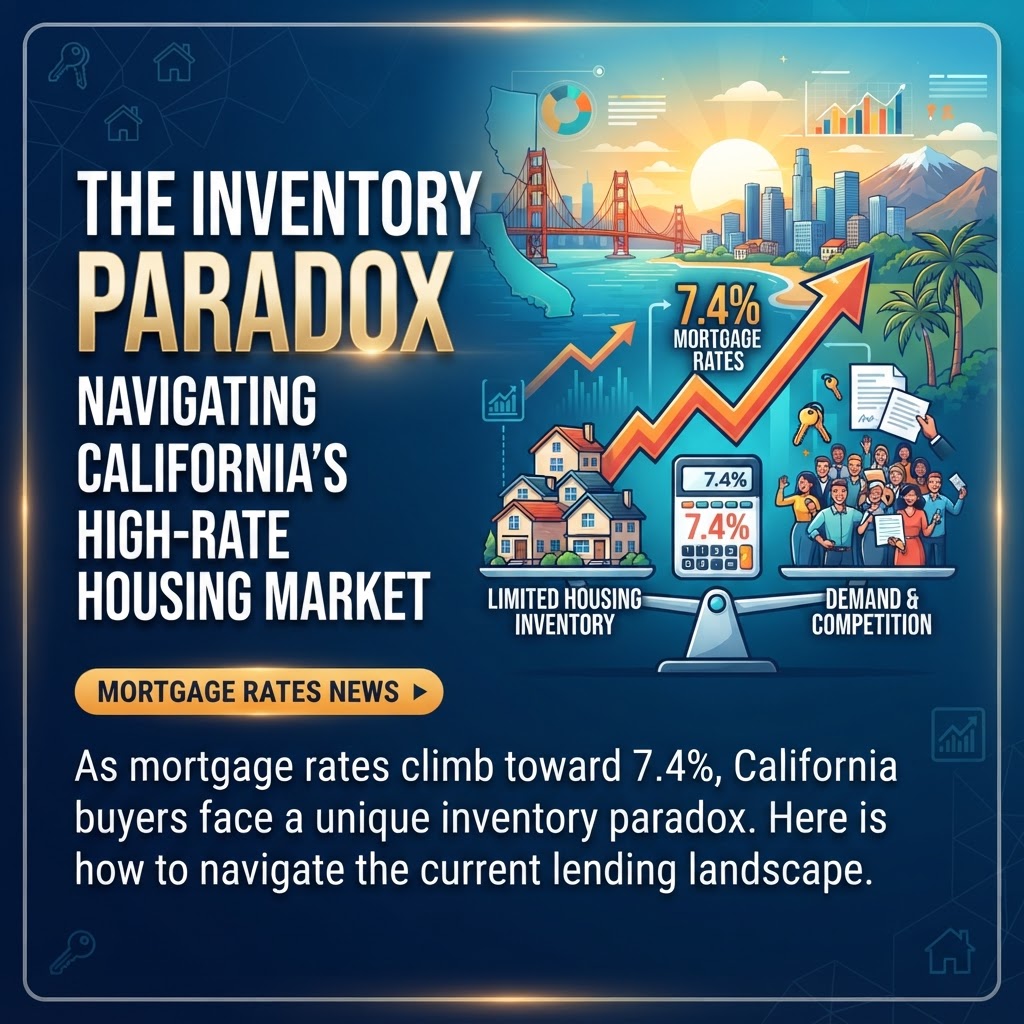
The Inventory Paradox: Navigating California's High-Rate Housing Market
As of September 30, 2026, the national mortgage landscape has shifted significantly, with the average 30-year fixed-rate mortgage reaching approximately 7.38% APR [7]. This upward trajectory, which saw rates jump 15 basis points in a single week earlier this month [5], has created a complex environment for California real estate participants.
The Inventory-Rate Tug-of-War
California is currently experiencing a distinct inventory paradox. While high interest rates typically cool demand, they also discourage existing homeowners from selling—a phenomenon known as the 'lock-in effect.' Despite these pressures, active listing counts in California reached 73,896 in August 2026 [6]. Buyers are finding themselves in a market where supply remains constrained by homeowners unwilling to trade their sub-4% legacy rates for current market pricing, yet demand persists among those who can no longer wait for a rate correction.
Lending Realities for California Buyers
The current rate environment has widened the gap between different loan products. While the 30-year fixed sits at 7.38%, specialized products like the 15-year fixed are averaging 6.75%, and jumbo loans are hovering around 7.55% [7]. For California borrowers, where the average loan size often exceeds $500,000 [10], these basis point differences translate into significant monthly payment variations.
Practical Takeaways for Market Participants
- Prioritize Loan-to-Value (LTV) Optimization: With rates elevated, reducing the loan amount through a larger down payment is one of the few ways to directly lower the monthly debt service.
- Evaluate ARM Alternatives: While 30-year fixed rates are the standard, borrowers should analyze the 7/6 adjustable-rate mortgage options, which may offer a lower initial interest rate compared to fixed-term counterparts [7].
- Focus on Total Cost of Ownership: Buyers should look beyond the interest rate and account for the total cost of homeownership, including property taxes and insurance, which remain high in California.
- Leverage Professional Guidance: Given the volatility, working with lenders who provide comprehensive educational modules and mortgage calculators is essential for stress-testing personal finances against various rate scenarios [1].
The current market requires a shift in strategy: moving away from waiting for a 'perfect' rate and toward securing a property that fits long-term financial goals, while remaining prepared for potential future refinancing opportunities should the economic climate stabilize.


