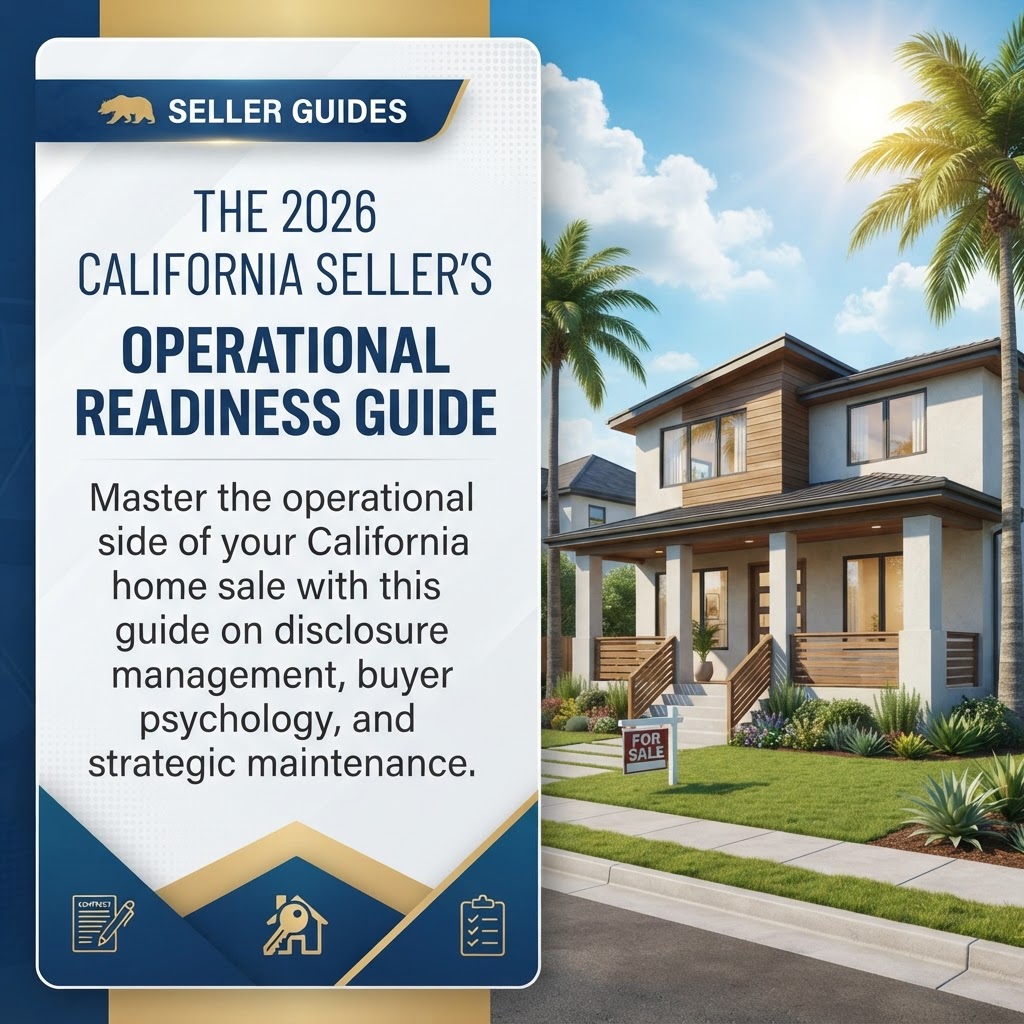
The 2026 California Seller’s Compliance & Risk Mitigation Handbook
In the current California real estate market, where inventory has risen by 18% and the market is shifting toward a more balanced state, the difference between a smooth closing and a legal dispute often lies in the quality of your disclosures. With median home prices hovering around $914,810, protecting your equity requires more than just a fresh coat of paint; it requires a rigorous adherence to California’s stringent disclosure laws.
The Disclosure Foundation: Protecting Your Equity
California law operates on a “good faith” standard, but the burden of proof rests heavily on the seller. The Transfer Disclosure Statement (TDS) is the non-negotiable cornerstone of your sale. Under California Civil Code §1102, you are required to disclose any known material defects. Failing to do so does not just risk a price reduction; it invites litigation that can erode your net proceeds long after the keys have changed hands.
Mandatory Reporting Checklist
- Transfer Disclosure Statement (TDS): The primary document for disclosing known material facts.
- Natural Hazard Disclosure (NHD): California is the only state that mandates this report, covering earthquake, flood, seismic, and wildfire hazard zones.
- Seller Property Questionnaire (SPQ): A supplemental form that provides deeper insight into the property’s history and condition.
- Lead-Based Paint Disclosure: Required for any residential property built before 1978, per federal law.
- Safety Compliance: Ensure your property meets State Fire Marshal standards for smoke detectors and that water heaters are properly strapped.
Strategic Risk Mitigation
Even when selling a home “as-is,” you are not exempt from disclosure requirements. “As-is” simply means you are not performing repairs; it does not mean you are absolved from revealing known issues. To minimize risk in 2026, consider these practical steps:
- Pre-emptive Inspections: Commission your own property inspection before listing. This allows you to disclose issues upfront, preventing “surprise” findings during the buyer’s due diligence period that could lead to a contract collapse.
- Document Everything: If you have performed repairs, keep receipts and permits. Providing a clear paper trail of maintenance builds buyer confidence and reduces the likelihood of post-closing claims.
- Stay Current on Local Mandates: Beyond state law, cities may have specific requirements regarding energy efficiency, gas appliance retrofits, or local fire hazard disclosures. Consult with a local professional to ensure your disclosure package is complete.
Market Strategy: Balancing Speed and Value
With only 18% of California households currently able to afford a median-priced home, your buyer pool is sensitive to both price and condition. If you are weighing a cash offer against a traditional listing, remember that while cash offers provide speed and certainty, they often come at a discount to the market price. If you choose to list, focus on transparency. In a balanced market, buyers are more discerning; a seller who provides a comprehensive, honest disclosure package often gains a competitive advantage by reducing the buyer's perceived risk, which can lead to a faster, more reliable closing.
Practical Takeaways
- Start Early: Begin gathering your disclosure documents as soon as you decide to sell. Missing records can delay escrow.
- Consult Professionals: Use the California Association of Realtors (C.A.R.) forms and consult with a licensed agent or real estate attorney to ensure your disclosures meet the latest 2026 standards.
- Prioritize Transparency: When in doubt, disclose. The cost of a disclosed repair is almost always lower than the cost of a legal defense.