The 2026 California Buyer’s Transactional Roadmap
Entering the California housing market in late 2026 requires more than just capital; it demands a precise understanding of a regulatory landscape that has shifted significantly over the past 24 months. With a statewide median home price hovering around $904,640 as of June 2026, buyers must navigate both high entry costs and a new procedural framework for agent representation.
The New Agency Reality
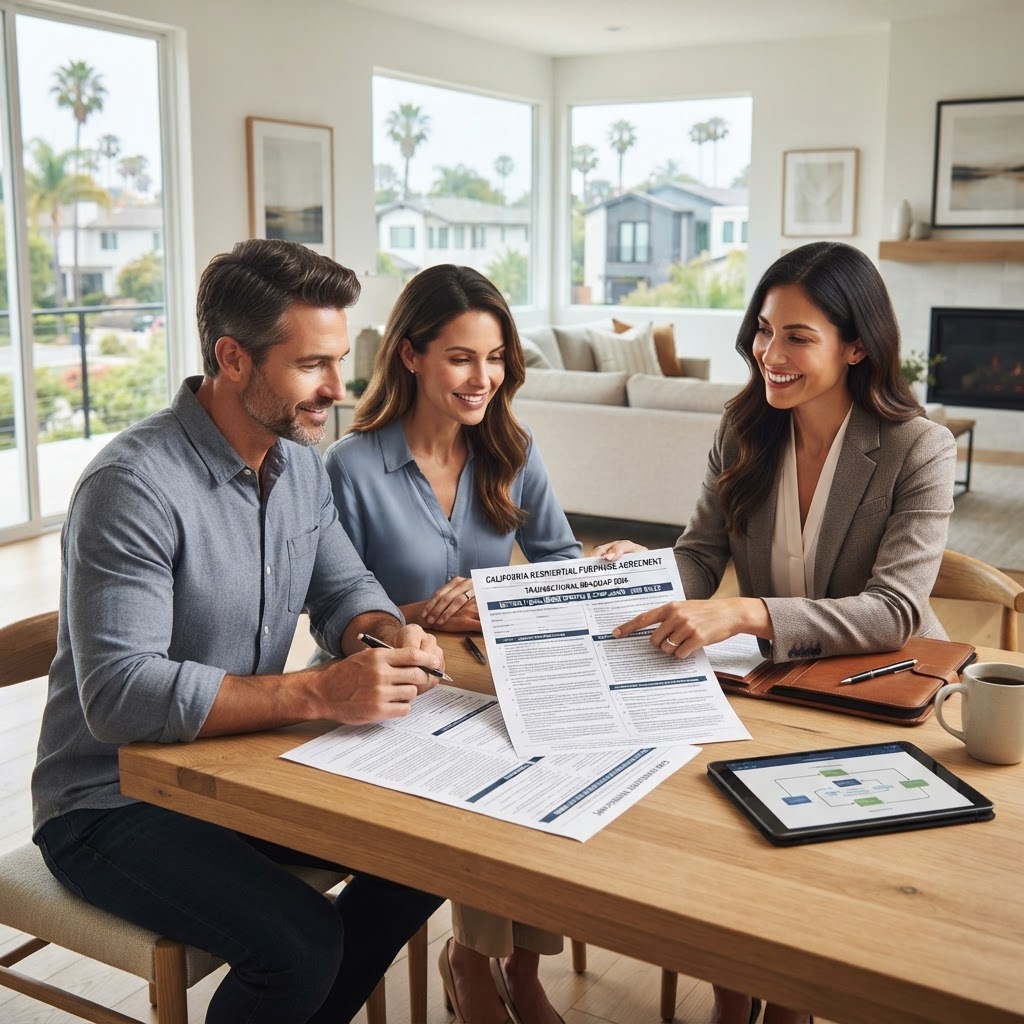
Since January 1, 2025, California law has mandated that buyers sign a written agreement before touring any property. This is not merely a formality; it is a binding contract that defines your agent’s compensation. Because offers of buyer-agent compensation are no longer listed on the Multiple Listing Service (MLS), you must be prepared to negotiate these fees as part of your purchase offer. Treat your buyer-broker agreement as a critical financial document—clarify whether you are responsible for the difference if a seller refuses to cover the full commission.
Closing Cost Transparency
While many buyers focus exclusively on the down payment, closing costs in California typically range from 2% to 5% of the purchase price. These are separate, out-of-pocket expenses that include:
- Documentary Transfer Taxes: A base of $1.10 per $1,000 of the sale price, with many municipalities adding supplemental local taxes.
- Escrow and Title Fees: In Southern California, escrow acts as a neutral third party to ensure all contractual obligations are met.
- Withholding Requirements: Be aware of specific state income tax withholding requirements (3 1/3%) that may apply in certain transactions.
Market Dynamics and Strategy
With affordability at approximately 18%, the market remains highly competitive despite a slight cooling from the record-high prices seen in May 2026. Mortgage rates, fluctuating between 6.65% and 6.75%, necessitate a rigorous approach to debt-to-income ratios. Buyers should prioritize:
- Pre-Approval Precision: Given the volatility, ensure your pre-approval is updated within the last 30 days to reflect current interest rate environments.
- Concession Negotiation: In the current climate, requesting seller concessions to cover closing costs or buy down interest rates has become a standard, effective strategy to bridge the affordability gap.
- Tax Planning: Remember that under Proposition 13, your property tax will be assessed at 1% of the purchase price, plus local voter-approved bonds, typically resulting in an effective rate of 1.1% to 1.55%.
Practical Takeaways for the 2026 Buyer
- Vet Your Representation: Since you are now contractually obligated to your agent, interview them regarding their experience with the post-2025 commission negotiation landscape.
- Budget for the 'Hidden' 5%: Always set aside an additional 5% of the purchase price for closing costs to avoid liquidity issues at the final hour.
- Leverage Data: Use the California Association of Realtors (C.A.R.) market reports to understand if your specific micro-market is seeing inventory growth or contraction before submitting an offer.


