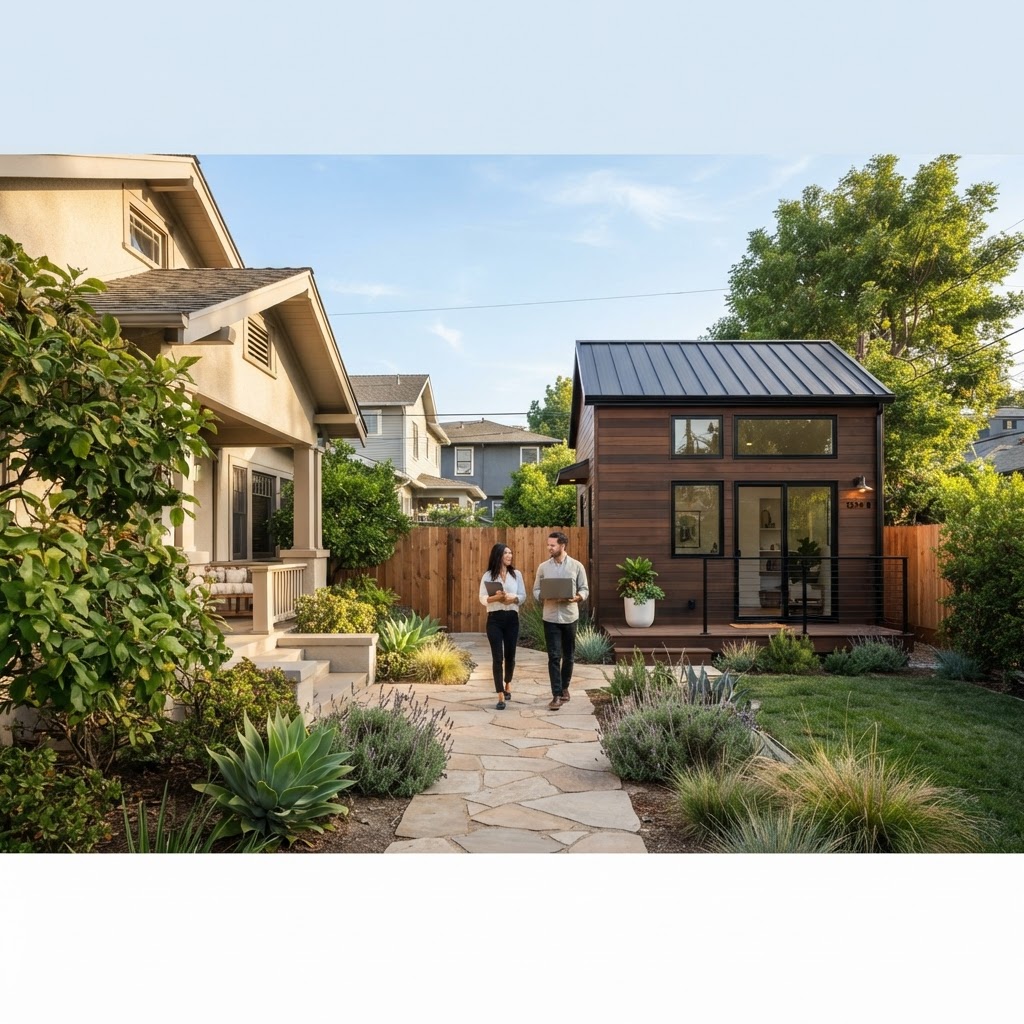
The ADU Multiplier: Unlocking Hidden Density in California’s Stagnant Market
While the broader California housing market navigates a complex landscape of stalled price growth and stubborn affordability—with only 18% of households currently able to afford a median-priced home—a quiet revolution is occurring in the state's residential backyards. As of mid-2026, the focus of supply-side solutions has shifted from large-scale developments to the rapid proliferation of Accessory Dwelling Units (ADUs).
The Data Behind the Density
Recent analysis indicates that California is on a trajectory to add over 30,000 ADUs annually. This is not merely a construction trend; it is a structural response to a market where traditional inventory remains tight despite modest gains. With the statewide median home price hovering around $901,420 as of August 2026, homeowners are increasingly leveraging their existing land to create income-generating assets, effectively bypassing the high-interest-rate environment that has sidelined many traditional buyers.
Investment Perspectives: Beyond the Primary Residence
For investors and homeowners alike, the ADU represents a unique hedge against market volatility. Unlike speculative flipping, which carries significant risk in a cooling price environment, ADU development provides two distinct advantages:
- Yield Optimization: In coastal markets like San Francisco and San Diego, where rental vacancy rates remain below 5%, an ADU provides a consistent, high-demand rental stream that helps offset the cost of primary mortgage payments.
- Asset Appreciation: By increasing the square footage and utility of a property, ADUs provide a tangible boost to property value that is less dependent on broader market fluctuations than raw land value.
Practical Takeaways for Stakeholders
For Homeowners: If you are sitting on significant equity but are deterred by the current 6.65%–6.75% mortgage rates, consider a cash-out refinance or a home equity line of credit (HELOC) to fund an ADU. The rental income generated can often cover the cost of the construction loan, effectively creating a self-funding asset.
For Investors: Shift your focus toward 'infill' opportunities. Properties with large lots in high-demand, supply-constrained metros offer the best ROI. Prioritize municipalities with streamlined permitting processes, as the 'friction' of local bureaucracy remains the primary barrier to entry for ADU development.
For Buyers: When evaluating potential purchases, look for properties that are 'ADU-ready.' A home with an existing garage conversion or sufficient setback space for a detached unit offers a built-in exit strategy and a way to subsidize your own housing costs in a high-price environment.
As California’s market continues to balance between stagnant prices and persistent demand, the ADU is no longer just an accessory—it is becoming the cornerstone of a more resilient, decentralized housing economy.