The Inventory Paradox: Why California Listings Are Rising Amid Rate Pressure
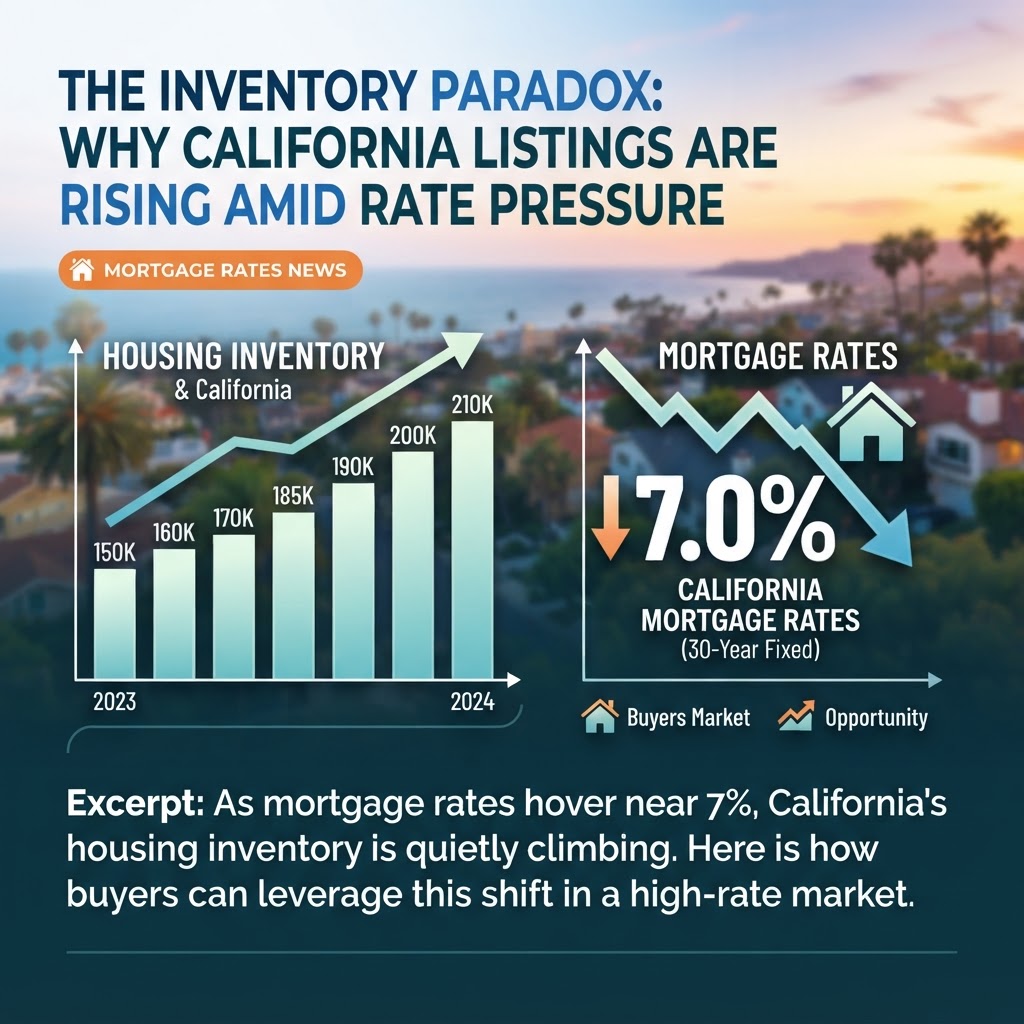
For much of 2026, the California housing market has been defined by a 'lock-in' effect, where homeowners with low-interest rates refused to sell. However, as of September 2026, a subtle but significant shift is occurring. Despite 30-year fixed mortgage rates hovering near the 6.95% mark, active housing inventory in California has steadily climbed to 73,896 units as of August, up from 65,685 in April.
The Data Behind the Shift
The current rate environment, characterized by 30-year fixed rates reaching 6.95% by mid-September, has historically cooled buyer demand. Mortgage applications have seen a 2.7% decline as of early September, according to the Mortgage Bankers Association. Yet, the rise in inventory suggests that the 'Golden Handcuff' phenomenon is beginning to fray. Sellers who have held off for years are increasingly forced to list due to life events, creating a unique window for buyers who can navigate the current cost of capital.
Implications for California Buyers
The increase in active listings provides a rare opportunity for buyers to negotiate. With more options on the market, the 'bidding war' intensity of previous years is waning. Buyers should consider the following strategies:
- Prioritize Rate Locks: Given the volatility in the 10-year Treasury yield, securing a rate lock early in the escrow process is essential to protect against sudden spikes.
- Explore ARM Alternatives: With the ARM share of applications rising to 8.5%, many buyers are opting for adjustable-rate mortgages to lower their initial monthly payments, betting on a potential rate environment shift in the coming years.
- Focus on 'Days on Market': As inventory grows, properties that have sat for more than 30 days may offer significant room for price concessions or seller-paid closing costs.
Looking Ahead
While inflation concerns—exacerbated by global geopolitical tensions—continue to keep upward pressure on mortgage rates, the expansion of inventory is a stabilizing force. For the California buyer, the market is transitioning from a pure 'seller's market' to one where patience and financial preparation are the most valuable assets. By focusing on long-term affordability rather than chasing the lowest rate, buyers can find value even in a high-interest environment.