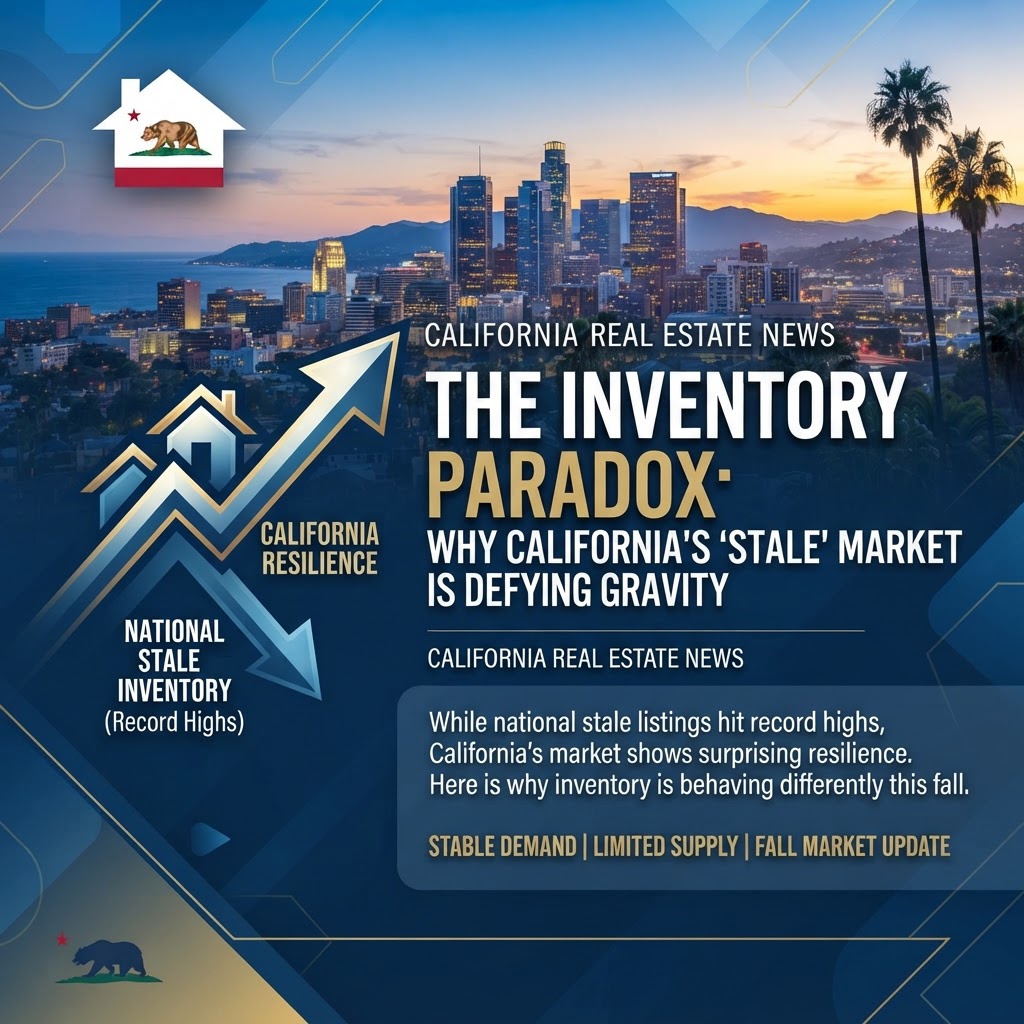
The Inventory Paradox: Why California's 'Stale' Market is Defying Gravity
As of September 2026, the national housing narrative is dominated by a surge in 'stale' listings—homes sitting on the market for over 60 days without a contract. However, California’s real estate landscape is telling a more nuanced story. Despite a national active listing count that climbed to over 1.14 million units in August 2026, California remains a distinct outlier in its ability to absorb inventory.
The Resilience of the Golden State
Data from early 2026 indicated that while the U.S. struggled with a 52.2% stale listing rate, major California metros continued to outperform. Even in regions like Riverside, where stale listings reached 48.8%, the figures remained below the national average. This resilience is largely attributed to a persistent supply-demand imbalance that prevents the inventory pile-up seen in other parts of the country.
Regional Divergence: Stockton as a Case Study
Local market data from August 2026 highlights the localized nature of this trend. In Stockton, for instance, the median home price settled at $470,000, with properties averaging 57 days on the market. This slight uptick in days-on-market compared to the previous year (55 days) suggests a cooling period, yet the market remains far from the stagnation seen in oversupplied national markets.
Practical Takeaways for Market Participants
- For Sellers: The 'stale' threshold is shifting. In California, homes that hit the 60-day mark are not necessarily doomed. Because inventory remains tight relative to historical norms, sellers who adjust pricing strategies in the second month of listing are finding success without the deep discounts seen in other states.
- For Buyers: The current environment favors those who can identify 'stale' listings in high-demand corridors. With the statewide median price hovering near $904,640, buyers should look for properties that have sat for 60+ days, as these sellers are often more motivated to negotiate terms, even if the headline price remains firm.
- For Investors: Focus on the 'affordability gap.' With only 18% of California households able to afford a median-priced home, the rental market remains the most stable asset class. Investors should prioritize properties in secondary markets where the price-to-rent ratio is more favorable than in the ultra-luxury coastal enclaves.
As we move into the final quarter of 2026, the California market is proving that it is not immune to national trends, but it is certainly insulated by its unique inventory constraints. Monitoring the delta between active listings and pending sales will be the most critical metric for any stakeholder navigating the remainder of the year.


