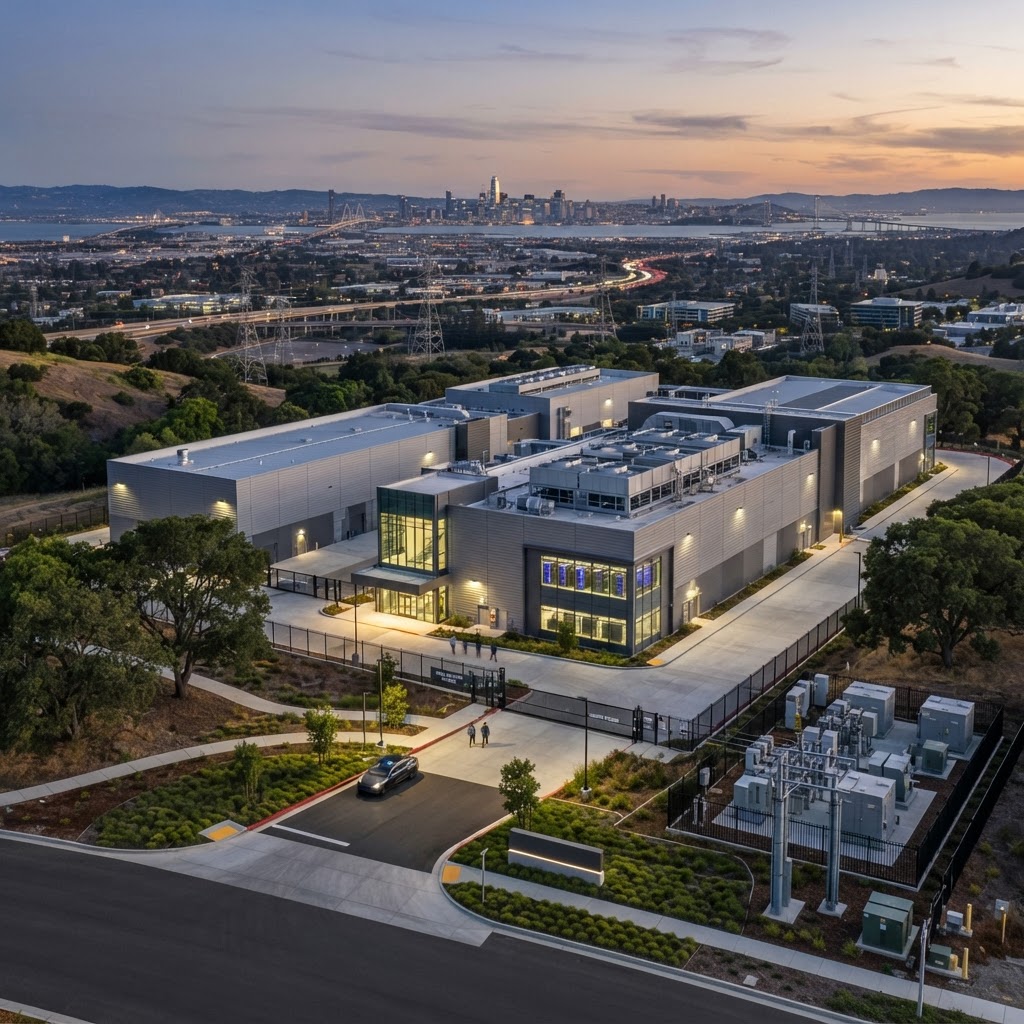
The Tech-Infrastructure Nexus: Assessing California’s Data Center Corridor
As we move through the latter half of 2026, California’s commercial real estate narrative is pivoting away from traditional office and retail concerns toward a more specialized focus: the intersection of power infrastructure and digital real estate. While much of the market remains fixated on residential inventory, a silent transformation is occurring within California’s industrial corridors—one driven by the insatiable demand for artificial intelligence (AI) compute capacity.
The Power-Real Estate Correlation
In 2026, the primary constraint on California real estate development is no longer just land availability or entitlement speed—it is the availability of high-voltage power. Data centers, which require consistent, high-capacity electricity, are increasingly dictating property values in submarkets previously overlooked for industrial use.
Recent data from the California Energy Commission and localized grid reports indicate that large-scale industrial sites with "shovel-ready" power connections are currently commanding a 30% to 50% premium over standard warehouse assets. Investors are shifting their lens from occupancy rates to kilowatt availability, treating the local utility substation as the most critical amenity in any portfolio.
The Geographic Shift: Moving Beyond Silicon Valley
While Silicon Valley remains the traditional hub for tech, land scarcity and high cost-per-square-foot are pushing heavy infrastructure development into secondary and tertiary zones. Northern California’s Central Valley and select Southern California industrial pockets near renewable energy transmission lines are emerging as the new "Data Corridor."
- Infrastructure-First Investing: Savvy investors are prioritizing sites based on proximity to the "backbone" of the state's transmission grid rather than traditional transit hubs.
- The Dual-Use Dilemma: Planners are balancing the need for massive data centers with the state's mandate for affordable residential development, leading to complex multi-zoning negotiations.
Economic Implications for Investors
The traditional industrial model—focused on last-mile logistics—is being challenged by these capital-intensive digital infrastructure projects. For the average investor, this suggests a move toward specialized REITs or infrastructure-backed private equity. Furthermore, the convergence of renewable energy generation (specifically solar and battery storage) with data center co-location sites is becoming a standard hedge against California’s volatile energy pricing.
Practical Takeaways for Market Participants
Whether you are managing a portfolio or evaluating a land acquisition, consider these strategic shifts:
- Audit Your Utility Entitlements: For industrial property owners, verify your parcel’s current power capacity. A site with untapped heavy-duty electrical infrastructure is now a tier-one value driver.
- Diversify Beyond Logistics: As logistics demand fluctuates with global trade, infrastructure-linked real estate offers a defensive hedge due to long-term tenant leases (often 10–20 years) and mission-critical necessity.
- Monitor Local Grid Capacity: Before entering a new market in California, consult local utility capacity maps. If a municipality cannot guarantee power throughput for the next five years, the viability of industrial or high-density development is significantly curtailed.
In conclusion, the California market is entering an era where energy—not just location—is the true multiplier of real estate value. Investors who align their strategy with the state’s digital backbone will find the most resilience in the coming decade.