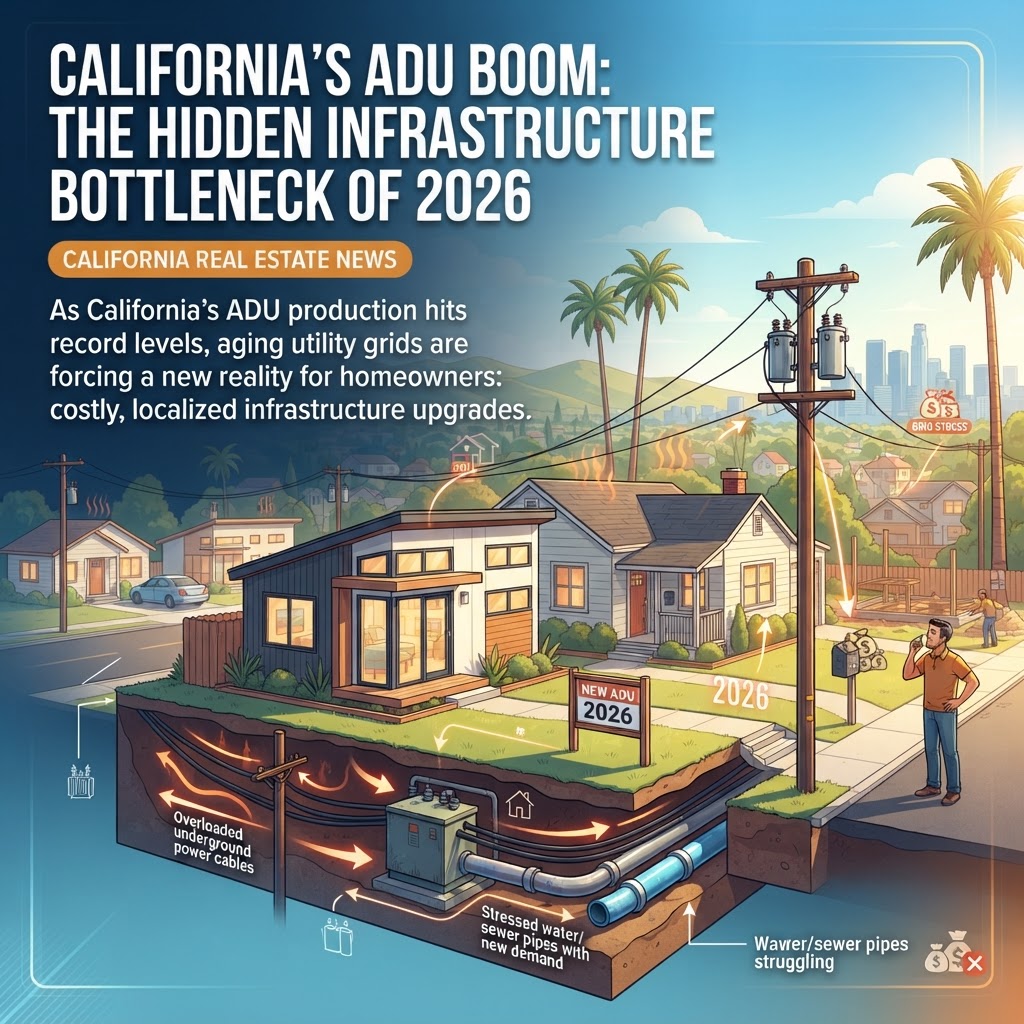
California’s ADU Boom: The Hidden Infrastructure Bottleneck of 2026
For the past three years, Accessory Dwelling Units (ADUs) have been the golden child of California’s housing policy. As of September 2026, data from the California Department of Housing and Community Development indicates that ADUs now account for nearly 22% of all new housing completions in the state. However, a new, unforeseen challenge has emerged: the physical grid's inability to keep pace with this rapid, decentralized densification.
The Hidden Cost of Electrification
While state legislation has successfully cleared the path for permits, it has largely ignored the "last mile" of infrastructure. Many California neighborhoods, particularly those developed in the mid-20th century, are seeing transformer failures and localized power instability as multiple properties on a single block add high-draw appliances, EV chargers, and HVAC systems for secondary units. According to recent reports from the California Energy Commission, utility-side connection fees and mandatory panel upgrades are increasingly falling on the homeowner, often adding $15,000 to $40,000 to the total construction cost.
Market Movement: The Appraisal Gap
This infrastructure bottleneck is creating a widening "appraisal gap" for ADU projects. Because these utility upgrades are non-discretionary, they consume a significant portion of a homeowner's construction budget without always yielding a commensurate increase in appraised property value. Lenders are becoming more cautious, with some regional banks tightening loan-to-cost (LTC) requirements for ADU-focused construction loans to mitigate the risk of cost overruns tied to utility compliance.
Practical Takeaways for Stakeholders
- For Sellers/Homeowners: Before breaking ground, request a formal 'load letter' from your local utility provider. Understanding whether your neighborhood transformer requires an upgrade early in the planning phase can prevent project-killing expenses later.
- For Investors: Focus on properties in newer master-planned communities or areas where recent municipal bond measures specifically allocated funds for grid hardening. These areas are far less likely to incur surprise utility connection fees.
- For Buyers: When evaluating a property with an existing ADU, verify if the electrical panel was upgraded during the ADU construction. If it was not, factor the cost of a future 200-amp service upgrade into your offer price to avoid post-purchase volatility.
The Road Ahead
The success of California’s ADU initiative now hinges on whether the state can bridge the gap between housing policy and utility infrastructure investment. Until municipal utilities can stabilize the grid for high-density infill, the "cost-effective" promise of ADUs will remain a moving target for the average Californian.


