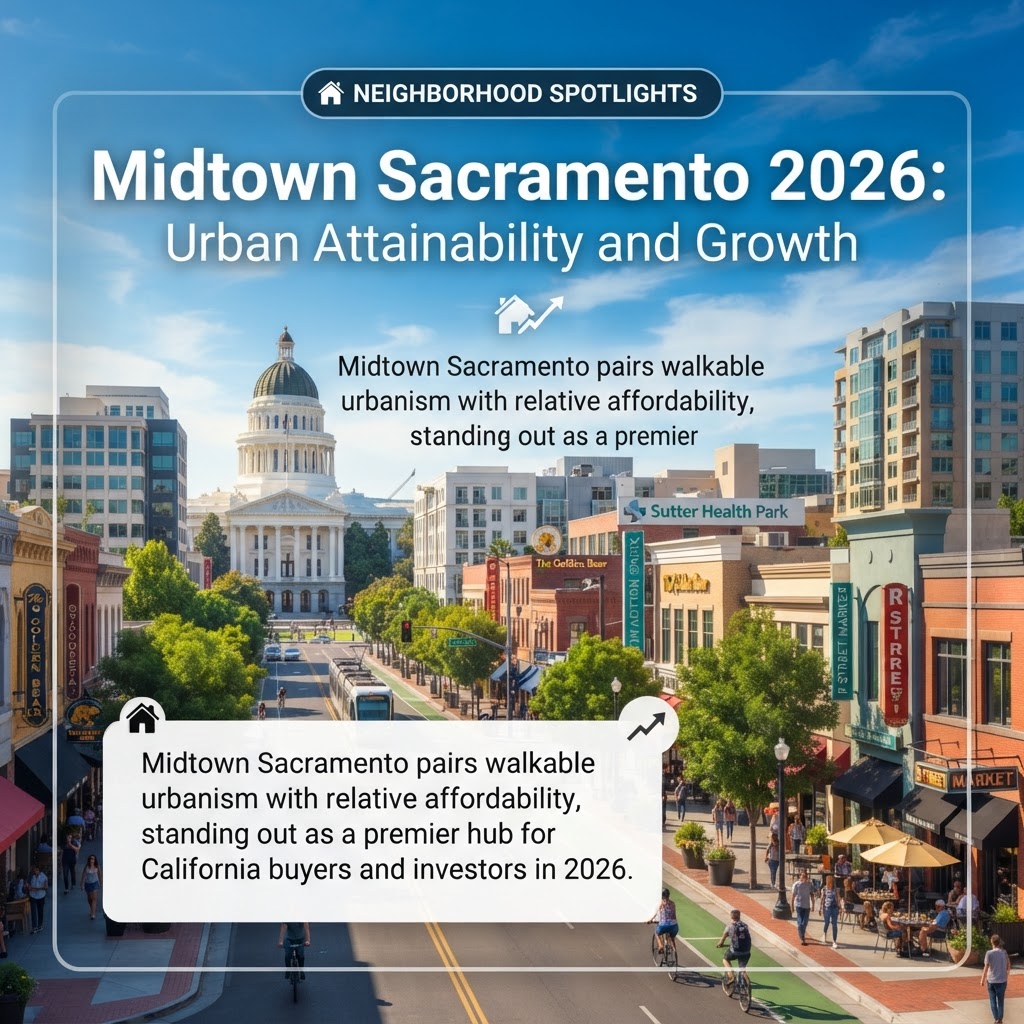
As California’s housing landscape hits historical valuation highs—with the California Association of Realtors projecting the statewide median single-family home price to surpass $905,000 according to market forecasts highlighted by City Ventures—prospective homebuyers, young professionals, and investors are increasingly navigating an equity barrier. While traditional coastal enclaves demand seven-figure commitments for entry-level footprints, Midtown Sacramento has carved out a unique position in 2026: an architecturally vibrant, transit-rich, and pedestrian-forward core offering a distinct price-to-lifestyle arbitrage.
The Value Equation: Regional Macroeconomics and Market Dynamics
Midtown stands out within Northern California because it balances urban density with affordability. According to comparative regional data compiled by Sammamish Mortgage, the citywide median home value in Sacramento sits near $481,741, well below Los Angeles ($951,035) and the broader California median. Even within Midtown's prime historic sectors, buyers encounter price-per-square-foot metrics that remain accessible relative to Bay Area or coastal Southern California urban cores.
This affordability differential has catalyzed consistent net-inbound migration among hybrid workers and regional professionals. Sacramento's stable employment anchors in state governance, healthcare delivery networks (UC Davis Health, Sutter Health), and emerging biotech research hubs provide dependable local demand, cushioning the neighborhood from dramatic cyclical corrections.
Urban Fabric and Community Amenities
Midtown is defined by tree-lined gridded corridors, historic architectural heritage, and an active neighborhood streetscape. The housing stock features an eclectic mix of Victorian, Craftsman, and early 20th-century bungalows alongside modern mid-rise infill developments and contemporary townhomes constructed under California's recent housing density initiatives.
Key community features include:
- Walkability and Micro-Mobility: Designed around a flat, legible street grid, Midtown boasts some of the highest walk and transit scores in the Central Valley, enabling daily car-independent living.
- Culinary and Cultural Scene: Centered along J, K, and 16th Street corridors, residents access Michelin-recognized dining, craft breweries, boutique coffee roasters, and local art galleries anchored by the historic MARS (Midtown Association) arts district.
- Green Infrastructure: Abundant open spaces such as Sutter’s Fort State Historic Park and neighborhood parks provide recreational amenities, farmers markets, and dog parks under a dense urban tree canopy.
Schools and Regional Transit Infrastructure
Midtown is served by the Sacramento City Unified School District (SCUSD), with access to specialized charter schools and competitive magnet options throughout the central city. For families seeking specialized curricula, central Sacramento offers notable arts and language immersion programs, alongside close proximity to higher education anchors like Sacramento State and the UC Davis Medical Center campus.
Transit connectivity in Midtown provides strong commuter optionality:
- SacRT Light Rail: The Gold and Blue lines provide direct links between Midtown, Downtown state offices, and East Sacramento.
- Capitol Corridor Rail: The nearby Sacramento Valley Station offers easy Amtrak service across the Northern California megaregion, linking commuters directly to Berkeley, Emeryville, and Silicon Valley hubs.
- Freeway Corridors: Immediate access to the Capital City Freeway (Business 80), Highway 50, and Interstate 5 ensures regional mobility throughout Northern California.
Practical Takeaways for Buyers, Sellers, and Investors
For Homebuyers
First-time buyers should explore down payment assistance programs, such as CalHFA, which can significantly reduce upfront capital requirements in Sacramento County. Purchasing an older Craftsman or Victorian offers long-term upside, but buyers should allocate capital reserves for structural, electrical, and foundation updates common in historic properties.
For Investors
Midtown’s high renter concentration—driven by legislative staff, healthcare residents, and remote workers—supports low vacancy rates. Infill multifamily and properties with Accessory Dwelling Unit (ADU) potential offer strong cap rates and revenue diversification compared to single-unit coastal investments.
For Sellers
Inventory for turnkey, modern-renovated historic homes remains scarce. Sellers who highlight energy efficiency improvements, dedicated work-from-home layouts, and private outdoor living spaces can capitalize on active interest from relocatees exiting pricier Bay Area submarkets.


