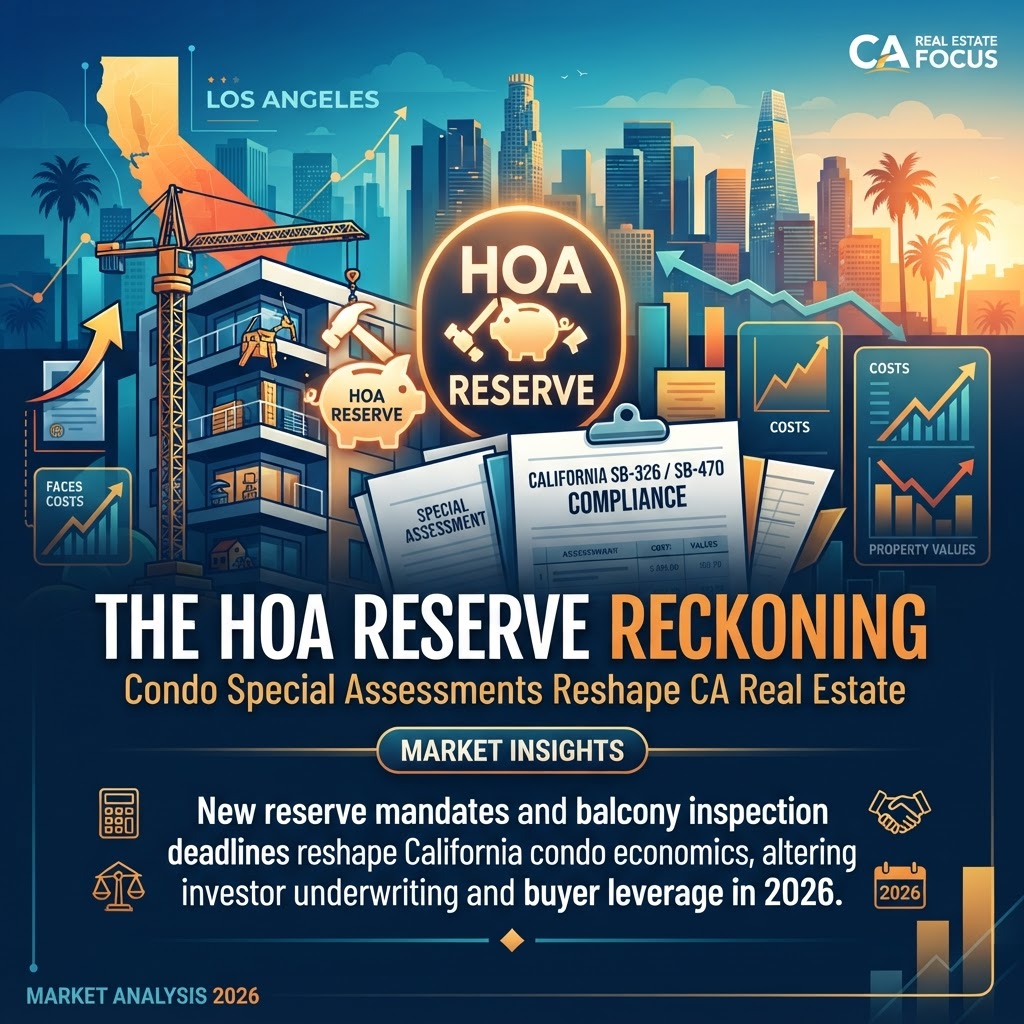
Across California’s residential landscape in late 2026, single-family homes and luxury detached estates continue to command historically steep valuations. Yet beneath the high-level metrics reported by the California Association of Realtors (C.A.R.), an acute valuation divergence has emerged within attached housing. Condominium associations and common-interest developments across coastal hubs like Los Angeles, San Diego, and the San Francisco Bay Area are confronting a structural reckoning: aggressive reserve replenishment mandates, structural safety compliance requirements, and ballooning special assessments.
The Structural Trigger: Balcony Deadlines and Reserve Mandates
Much of this capital pressure stems from legislative shifts that reached operational maturity in 2026. Following the phased implementation of laws such as SB 326 (often termed California's "Balcony Law"), associations governing multi-family and common-interest buildings must complete rigorous structural inspections of exterior elevated elements and load-bearing components. Coupled with revised homeowner association (HOA) disclosure standards and reserve fund calculations highlighted by ManageCasa's 2026 California housing analysis, HOAs are being forced to true up underfunded balances.
For decades, many California common-interest boards deferred capital improvement assessments to keep monthly dues artificially suppressed. That strategy has hit a hard regulatory wall. As engineering assessments conclude, boards are presenting owners with special assessments ranging from $25,000 to over $100,000 per unit, or imposing recurring HOA fee increases of 25% to 50% to satisfy long-term reserve minimums.
Valuation Discounting and Deal Friction
In a lending environment where 30-year fixed mortgages remain in the mid-to-upper 6% range, increased monthly HOA dues compress buyer debt-to-income (DTI) ratios dramatically. According to data tracked on the St. Louis Fed (FRED) Active Listing Count for California, inventory levels have seen regional shifts as properties linger when buyers encounter opaque association finances.
A $300 monthly hike in HOA dues reduces an aspiring buyer’s purchasing power by roughly $40,000 to $50,000 in loan principal. Consequently, a bifurcated attached-housing market has taken hold:
- Well-Capitalized Class A Associations: Buildings that proactively funded reserves and addressed SB 326 structural evaluations maintain strong liquidity, trading at slight discounts relative to historical highs.
- Deferred-Maintenance Class B/C Condos: Complexes burdened by impending special assessments or deficient reserves face prolonged days on market (DOM) and steep price concessions as conventional lenders and secondary mortgage purchasers scrutinize HOA balance sheets.
Actionable Strategies for Buyers, Sellers, and Investors
For Homebuyers: Pre-Offer Reserve Scrutiny
Never rely solely on current monthly HOA dues when calculating total cost of ownership. Require a complete HOA disclosure packet early in contract discussions, focusing on the Reserve Study Summary and recent meeting minutes. If the association’s funded ratio sits below 70%, request explicit seller credits or price reductions to offset potential assessment levies before closing.
For Condo Sellers: Preemptive Association Transparency
Sellers in associations facing capital calls must take control of the narrative. Offering upfront inspection certificates and transparent documentation of completed reserve studies mitigates financing derailments during escrow. In buildings actively levying assessments, paying off the assessment balance via escrow funds often yields a higher net transaction price than leaving buyers to absorb the future cash-flow burden.
For Real Estate Investors: Capitalizing on the Attached Housing Gap
Value-oriented investors can target liquidity-strained condo units in core coastal job centers where overall rental vacancy remains beneath 5%. Well-capitalized cash buyers can negotiate aggressive double-digit purchase discounts on properties entangled in upcoming special assessments, extinguish the HOA liability via lump-sum cash, and capture strong recurring yields given California's structural single-family affordability deficit.


