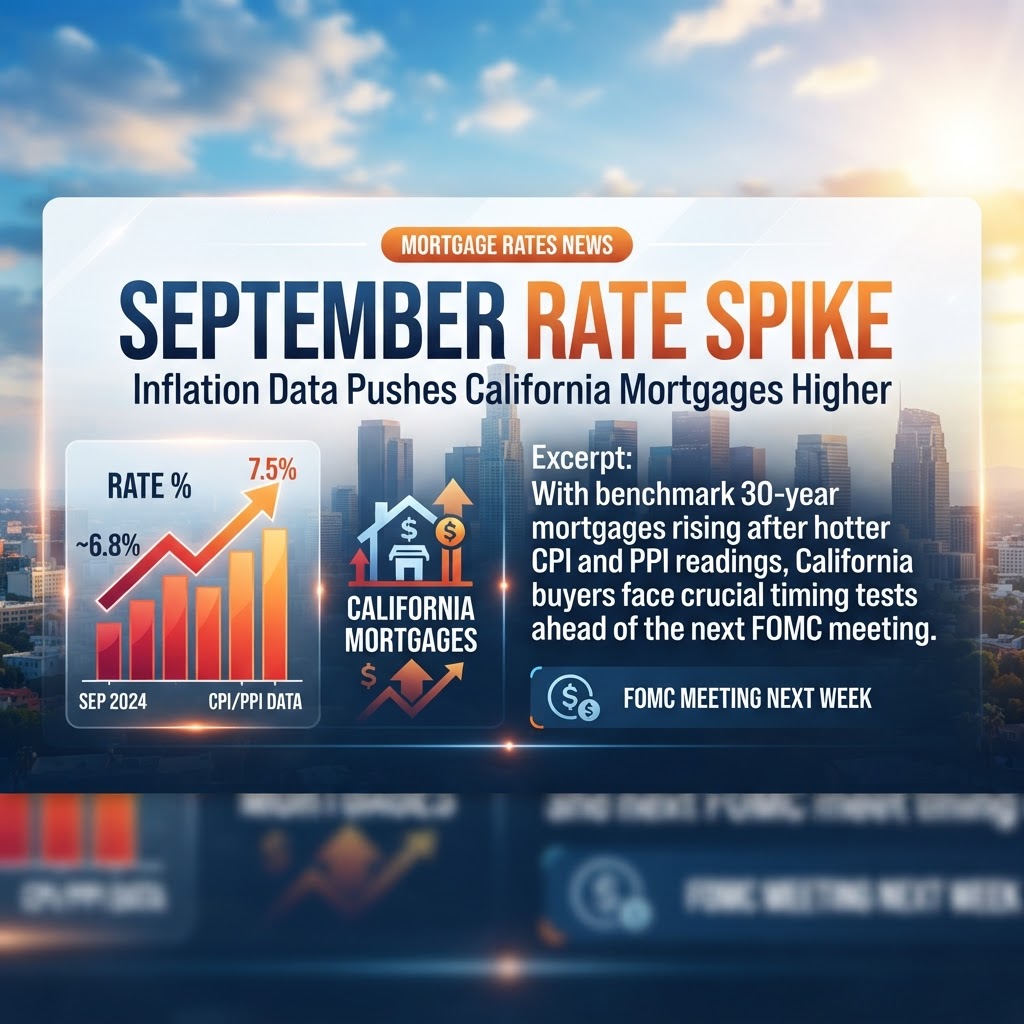
Borrowing costs have resumed their upward pressure in mid-September 2026. After drifting lower through early 2026 to touch near 6.01% in February, mortgage benchmarks climbed throughout the spring and summer, landing around 6.71% in late August per Bankrate’s tracking and continuing upward through September 11 and 12, as reported by Fortune and The Mortgage Reports. With benchmark 15-year fixed loans crossing 6.10% and the 10-year Treasury yield challenging 4.88%, bond investors are intensely reacting to wholesale Producer Price Index (PPI) figures, sticky energy costs, and anticipation surrounding consumer inflation data.
The Macro Trigger: Bond Yields and Inflation Worries
Mortgage rates do not move directly with the Federal Funds rate; rather, mortgage-backed securities (MBS) price off the yield curve, particularly the 10-year Treasury note. Following consecutive days of rate increases entering Saturday, September 12, market sentiment remains cautious. WTI crude oil prices pressing toward $99 a barrel have renewed concerns that transport and manufacturing input costs will feed directly into headline consumer inflation.
As Federal Reserve policymakers prepare for their September 15–16 policy session, traders are paring expectations of aggressive rate cuts through late 2026. A resilient wholesale pricing index and stubborn inflation expectations have reduced the likelihood of monetary easing, keeping mortgage interest rates pinned near their annual highs.
The High-Balance Reality for California Borrowers
While a national average rate climbing from 6.6% to near 6.8% represents a minor monthly adjustment for an entry-level starter home in the Midwest, the leverage dynamics across California amplify every single basis point. Across coastal metros and inland hubs, median home values require financing balances that quickly cross above the $600,000 to $800,000 threshold.
Consider an $850,000 loan balance on a median California single-family purchase:
- At 6.25%: The monthly principal and interest payment is approximately $5,234.
- At 6.75%: The monthly payment increases to roughly $5,513—an immediate increase of nearly $280 each month, or $3,348 annually.
For California underwriting standards, this $280 monthly shift requires roughly $800 in additional gross monthly household income under a standard 35% front-end debt-to-income (DTI) limitation. Consequently, consecutive days of yield spikes can abruptly sideline marginal pre-approvals on the eve of escrow.
Actionable Strategies for California Buyers Navigating Current Volatility
With macroeconomic indicators driving rate swings day-to-day, prospective buyers and active house hunters in California should implement strict structural safeguards:
- Re-test Debt-to-Income Cushions: Buyers who were pre-approved when rates dipped toward 6.2% earlier in the cycle must re-verify their limits. Ensure underwriting scenarios account for at least a 25 to 50 basis point buffer above current daily averages.
- Leverage Seller Strategy Over Concession Cash: If purchasing where listing days on market have extended into early fall, target price renegotiations toward lender fees or permanent rate reductions rather than simple cosmetic allowances.
- Monitor Key Bond Data Releases: Treasury yields move rapidly around monthly economic data releases. Coordinate closely with your loan officer to monitor scheduled inflation and FOMC events so rate locks are timed strategically rather than reactively.


